
Technological trends are redefining modern circuit breakers

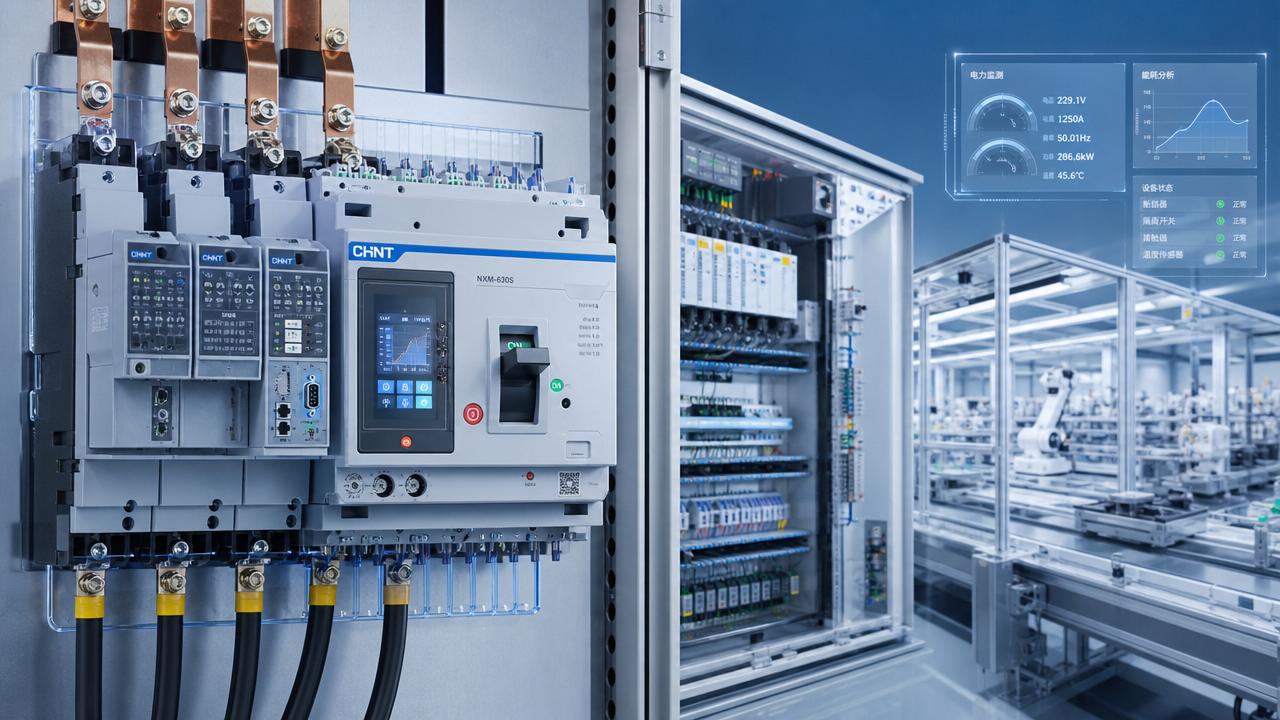
Technological trends are reshaping how modern circuit breakers are designed, tested, and deployed across industrial systems. For technical evaluators, understanding these shifts means looking beyond basic protection functions to assess digital monitoring, material performance, compliance demands, and lifecycle efficiency. This article explores how evolving technologies are influencing circuit breaker reliability, integration, and decision-making in increasingly complex manufacturing and electrical environments.
In industrial settings, a circuit breaker is no longer judged only by interrupting capacity or enclosure size. Evaluation teams now compare communication readiness, thermal endurance, predictive maintenance potential, and compatibility with automated production lines. As electrical hubs become more connected and manufacturing assets run with tighter uptime targets, technological trends directly affect procurement risk, system resilience, and total cost of ownership.
For global OEMs, panel builders, and distributors following GHTN’s approach to precision-driven industrial intelligence, the priority is clear: choose circuit breakers that match both current loads and future operational complexity. That means assessing not only today’s protection demands, but also the next 3–7 years of digital integration, regulatory change, and sustainability pressure.
Why technological trends matter in modern circuit breaker evaluation
Technical evaluators typically work across 4 decision layers: electrical safety, mechanical durability, system integration, and lifecycle economics. Technological trends affect all four. A breaker that performed well in a conventional switchboard 10 years ago may not be suitable for a connected facility where data sampling, remote diagnostics, and rapid fault isolation are required within seconds.
The change is especially visible in factories operating 16–24 hours per day. In those environments, unplanned downtime can create cascading losses across motors, drives, pneumatic controls, and process tooling. Breakers are therefore being evaluated as intelligent assets rather than passive protection components. Features such as event logging, trip history, and network communication can shorten troubleshooting time from 2 hours to 20 minutes in many practical maintenance workflows.
From standalone protection to connected infrastructure
Traditional low-voltage breakers were often selected using a narrow set of parameters: rated current, breaking capacity, trip curve, and installation format. Those factors remain essential, but technological trends now add new criteria, including digital status visibility, integration with SCADA or PLC environments, and support for condition-based maintenance.
This shift is important for technical evaluators in mixed industrial ecosystems, where one facility may combine CNC machines, injection molding equipment, conveyors, compressors, and robotic cells. Each load profile behaves differently during startup, overload, or short-circuit events. Breakers must be reviewed in relation to the real application, not only the nameplate values.
Key questions evaluators are now asking
- Can the breaker provide usable operating data over a 12–36 month maintenance cycle?
- Is it compatible with digital monitoring modules or retrofit accessories?
- How stable is performance at elevated ambient temperatures such as 40°C–60°C?
- Does the product support selective coordination in multi-level distribution systems?
- Will future compliance changes require redesign of the panel or busbar arrangement?
The table below outlines how technological trends are changing the evaluation framework for industrial circuit breakers.
The main conclusion is that technological trends widen the definition of value. A lower upfront price can become more expensive over 24–60 months if the breaker lacks diagnostic visibility, requires frequent manual checks, or complicates coordination studies during facility expansion.
Core technologies redefining breaker design and field performance
Several technological trends are reshaping the breaker itself, not just the way it is purchased. For technical evaluators, the most influential changes involve sensing, materials, arc management, and modular accessory architecture. These design shifts improve not only safety, but also data quality and service predictability.
Digital sensing and real-time status visibility
Modern circuit breakers increasingly support auxiliary modules that provide trip indication, operating counters, alarm contacts, and communication outputs. In more advanced assemblies, current, temperature, and event data can be transferred into local HMI or supervisory systems at intervals as short as 1–5 seconds. This makes fault diagnosis more precise, especially in multi-feeder industrial boards.
For evaluation teams, the question is not whether every breaker needs smart functions, but where the return is highest. Main incomers, critical motor feeders, process heating circuits, and automation power segments usually justify higher monitoring capability because one unexpected trip can halt multiple downstream operations.
Material engineering and thermal stability
Thermal stress remains a major reliability factor in industrial enclosures. As panel densities increase and ambient conditions vary, material improvements in contact systems, insulating housings, and arc chambers become more important. Technical evaluators should review whether a breaker maintains stable performance across typical operating ranges such as -5°C to 55°C or under elevated heat around drives and transformers.
Material selection also affects aging behavior. Contact wear, insulation degradation, and mechanical fatigue can shift operating characteristics over thousands of switching cycles. In facilities with frequent load changes, that difference becomes visible well before the nominal end of service life.
Arc interruption and compact power density
Another of the major technological trends is the push for higher interruption performance within smaller footprints. Industrial users want compact assemblies, but compactness cannot come at the expense of clearances, heat dissipation, or fault containment. Evaluators should review test documentation, mounting conditions, and derating guidance carefully, especially where breaker density exceeds older panel conventions.
Technical checkpoints before approval
- Confirm rated breaking capacity against the actual short-circuit study, not a generic estimate.
- Review derating curves for enclosure temperature and grouping effects.
- Check accessory interoperability if future communication modules may be added within 12–24 months.
- Verify mechanical endurance and electrical endurance against the real switching frequency.
- Assess service access space for torque inspection, replacement, and thermal scanning.
The next table helps compare the practical implications of these technology shifts during technical review.
A useful takeaway is that technological trends create both opportunity and engineering discipline. Better data and smaller devices can improve plant performance, but only if thermal, coordination, and maintenance requirements are validated early in the design review.
How technical evaluators should assess selection, compliance, and lifecycle cost
The most effective evaluation method combines application analysis with field constraints. A circuit breaker for a machine tool spindle feeder, for example, should not be assessed the same way as a breaker for a molding line heater bank or a facility main distribution board. Technological trends make it necessary to match device capability to operational criticality.
A 5-step selection workflow for industrial projects
- Define the load profile, including inrush, duty cycle, and upstream-downstream coordination.
- Map environmental conditions such as vibration, dust, humidity, and ambient heat zones.
- Confirm standards and project documentation requirements for the destination market.
- Evaluate monitoring, auxiliary functions, and future expansion needs over at least 3 years.
- Compare lifecycle cost, including maintenance labor, spare strategy, and replacement lead time.
This process reduces the common error of selecting by rating alone. In many industrial projects, 10%–15% oversimplification at the review stage can later produce much larger cost exposure through nuisance tripping, redesign, or maintenance inefficiency.
Compliance and documentation are now procurement variables
One of the less visible technological trends is the rising importance of documentation quality. Technical evaluators increasingly need product data that supports panel approval, cross-border trade, and customer audits. Incomplete information on coordination, thermal performance, accessory compatibility, or installation position can delay projects by 1–3 weeks during design verification.
For buyers working across multiple regions, documentation should be reviewed as part of the technical package, not as an afterthought. That includes wiring diagrams, mechanical dimensions, torque values, accessory references, and clear application limitations.
Common evaluation mistakes to avoid
- Assuming that two breakers with the same current rating have equivalent coordination performance.
- Ignoring heat buildup when multiple devices are mounted in a compact enclosure.
- Purchasing communication-ready products without checking protocol compatibility.
- Focusing on initial price while overlooking spare availability over a 5-year horizon.
- Approving a product before verifying service access for inspection and replacement.
Lifecycle thinking supports better capital decisions
In the GHTN view of industrial components, the most resilient buying decisions link precision selection with operational continuity. A breaker that reduces manual inspection frequency from quarterly to semiannual intervals may deliver measurable labor savings. A model with better fault diagnostics may reduce mean time to repair during outages. These gains often matter more than small differences in purchase price.
Technical evaluators should therefore build a simple cost model covering 4 elements: acquisition, installation, maintenance, and downtime exposure. Even without exact plant-wide statistics, this framework provides a more realistic basis for comparing alternatives in critical electrical systems.
Where technological trends are heading next in industrial electrical systems
Looking ahead, technological trends will likely push circuit breakers further into the digital infrastructure of industrial facilities. Instead of acting as isolated protective devices, breakers will increasingly support energy visibility, remote maintenance planning, and integration with broader asset management platforms.
Three practical directions to watch
First, more breakers will be selected with communication readiness even if monitoring is not activated on day one. This allows staged modernization over 12–36 months without replacing the protection base. Second, thermal and material performance will receive more attention as panel density and electrification levels continue to rise. Third, buyers will expect stronger alignment between electrical protection, sustainability goals, and long-life serviceability.
For technical evaluators, these shifts mean that selection criteria must stay dynamic. Specifications written around yesterday’s operating model can become restrictive when a plant adds automation, energy metering, or remote service capabilities. The most robust approach is to specify both present requirements and controlled upgrade pathways.
Questions for the next sourcing cycle
- Will this breaker remain suitable if the facility digitizes maintenance within 2 years?
- Can it support selective and stable protection as connected loads increase?
- Are accessories, spares, and technical documents available for international projects?
- Does the design fit a long-service industrial environment rather than a short-term price target?
Technological trends are redefining modern circuit breakers by expanding what performance really means: not only interrupting faults, but also supporting data-driven maintenance, tighter compliance control, and more adaptable industrial design. For technical evaluators, the best decisions come from balancing protection fundamentals with digital readiness, thermal reliability, and lifecycle efficiency.
If you are reviewing circuit breaker options for OEM equipment, industrial panels, or cross-border component sourcing, GHTN can help you connect technical detail with practical market insight. Contact us to discuss your application, request a tailored evaluation framework, or learn more solutions for precision electrical component selection.
Related News