
Vietnam Requires QR Traceability for Imported Breakers

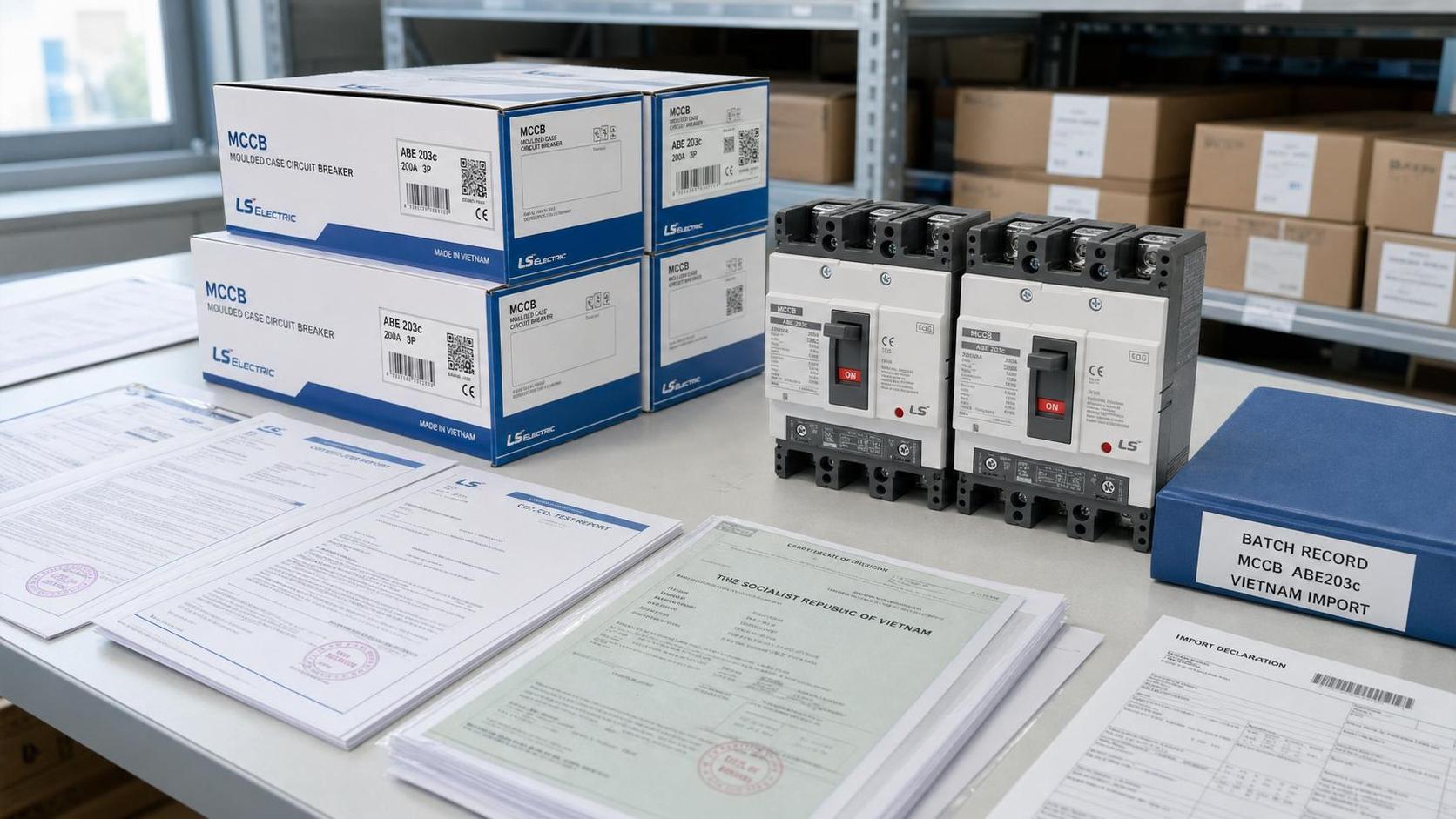
From August 1, 2026, imported circuit breakers entering Vietnam will face a new traceability requirement tied to QR labeling and data submission to the VNM-TRACE platform. The change follows a notification issued by the Ministry of Industry and Trade and matters not only for exporters of miniature, molded-case, and frame circuit breakers, but also for import operations, compliance review, shipment preparation, and delivery scheduling. What deserves closer attention is that this is not just a labeling adjustment at the point of sale; it adds a pre-clearance data preparation layer that may affect how goods are documented and released.
What the new requirement specifically covers
According to the information provided, Vietnam's Ministry of Industry and Trade (MOIT) issued Notification No. 22/2026/TT-BCT on June 28, 2026. The notification requires that, starting August 1, all imported circuit breakers, including miniature, molded-case, and frame types, must carry a unique QR code on the smallest sales unit.
The same information states that production batch details, CNAS certification number, and factory inspection data must be uploaded in real time to the national traceability platform VNM-TRACE. It also indicates that this requirement is expected to increase the amount of preparation needed before customs clearance, and recommends that exporting companies register platform accounts in advance and complete data interface integration.
Where the pressure is likely to appear in the supply chain
Export shipment preparation is likely to become more documentation-driven
From an industry perspective, exporters of circuit breakers may be affected first because the new rule links physical labeling on the minimum sales unit with real-time traceability data submission. That means shipment readiness may no longer depend only on product availability and standard export paperwork, but also on whether QR codes, batch data, certification references, and inspection records are aligned before goods move.
The operational impact is likely to be felt in packaging, labeling workflows, document matching, and internal release checks. Companies involved in exports should pay close attention to whether the required traceability fields are prepared in a format that can be used consistently across shipments.
Importers and channel operators may need earlier compliance checks
Import-side participants and distribution businesses may also face practical adjustments, because the rule is tied to goods entering the market rather than only to manufacturer-side recordkeeping. If the QR code and traceability upload become part of pre-clearance readiness, importers may need to verify compliance before cargo arrival rather than resolving issues after landing.
This may shift attention toward supplier onboarding, shipment document review, and product-unit labeling confirmation at an earlier stage. For channel operators, the smallest sales unit requirement is especially relevant because it places traceability obligations directly on sale-ready packaging rather than only on outer cartons or shipment lots.
Certification and inspection support functions may become more time-sensitive
Analysis shows that businesses supporting certification, testing, and inspection documentation could also be affected indirectly. The uploaded information must include a CNAS certification number and factory inspection data, which means the timing, completeness, and consistency of those records may matter more in shipment execution.
Even without additional execution details, companies that rely on third-party compliance documentation should review whether their current document handoff process is fast enough for a real-time upload requirement connected to customs preparation.
What companies should review now
Check whether packaging and data systems can work together
The immediate issue is not only generating a QR label, but making sure the code on the minimum sales unit corresponds to the batch, certification, and inspection records that must be uploaded to VNM-TRACE. Companies should therefore focus on whether packaging teams, compliance teams, and data management systems are working from the same product-level information.
Reassess lead time assumptions before customs clearance
Based on the information provided, the measure is expected to increase preparation time before customs clearance. Observably, this means delivery planning, booking schedules, and customer commitments may need a wider compliance buffer, especially for shipments prepared close to the effective date.
Confirm readiness for account registration and interface integration
The event summary specifically advises exporters to register accounts in advance and complete data interface connection work. It is more appropriate to understand this as a practical readiness issue rather than a secondary administrative task. If registration or interface setup is incomplete, the resulting delay may appear before clearance rather than after goods are already in circulation.
Watch for execution wording beyond the headline requirement
The information provided confirms the core obligation, but does not include detailed operating guidance. For that reason, companies should continue to watch for further clarification on submission practice, review expectations, and how the requirement will be applied in routine shipment processing. At this stage, that remains a monitoring point rather than a confirmed implementation outcome.
Why this looks like an execution signal, not just a policy statement
Analysis shows that the significance of this development lies in the combination of unit-level QR labeling and real-time submission to a national traceability platform. That combination suggests a more operational form of compliance, where packaging, certification records, and shipment data need to line up before import processing moves smoothly.
At the same time, it would be premature to treat all downstream effects as settled. The current information is enough to identify a rule that has taken effect from a specified date, but not enough to conclude how strictly each procedural detail will be interpreted in daily execution. For industry participants, the prudent reading is that this is an active compliance signal with practical consequences, while implementation details still deserve close observation.
How this development is best understood for now
For the circuit breaker trade, this update is best read as a concrete compliance change affecting pre-import preparation, traceability management, and shipment coordination into Vietnam. It does not merely add a formal label requirement; it connects product-unit identification with platform-based data reporting.
A neutral reading is that the measure has clear operational relevance today, especially for exporters and import-facing supply chain teams, while the full market response and detailed execution practice still need to be tracked through follow-up guidance and business feedback.
About the basis of this article
This article is generated from the user-provided news title, event date, and event summary. The factual basis used here is limited to the provided information concerning the MOIT notification, the August 1, 2026 effective date, the QR traceability labeling requirement for imported circuit breakers, the VNM-TRACE upload requirement, and the note that pre-clearance preparation time may increase.
For events of this kind, relevant source types commonly include official regulatory notices, publications from trade or industry authorities, customs-related releases, industry association updates, standard-setting documents, and reporting by established professional media. However, a specific official source link was not provided in the input, so the underlying official publication path still requires continued verification.
Further observation should focus on any detailed implementation guidance, certification handling practice, tender or procurement document changes, market feedback, and how affected companies carry out account registration, interface connection, and shipment-level compliance execution.