
AI-Ready Industrial Connectors Debut at COMPUTEX 2026

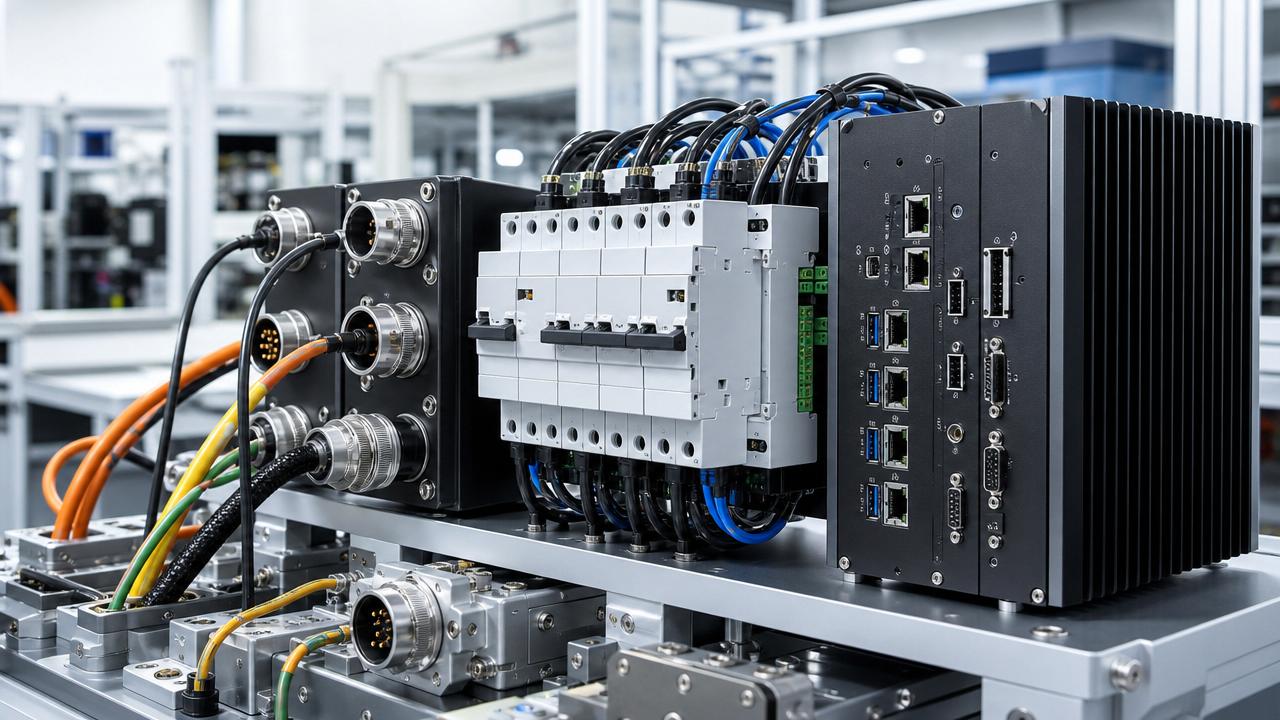
At the opening of COMPUTEX 2026 on June 2, leading connector manufacturers including Luxshare Precision and AVIC Jonhon introduced new industrial-grade connector products positioned for AI PC and smart circuit breaker coordinated control systems. The update is noteworthy not simply as a product launch, but because the products were presented with support for PCIe 6.0 and TSN and with dual certification to UL 62368-1:2026 and IEC 61000-6-4:2026, signaling a practical compliance and procurement reference point for manufacturers, buyers, certification-related service providers, and supply-chain participants involved in industrial connectivity and control applications.
What has been confirmed at the show
According to the provided event information, COMPUTEX 2026 opened on June 2, 2026. During the event, major connector manufacturers including Luxshare Precision and AVIC Jonhon collectively released new industrial connector products described as “AI Ready.” The released products support PCIe 6.0 and TSN time-sensitive networking, and they have obtained dual certification under UL 62368-1:2026 and IEC 61000-6-4:2026. The same product series has already been introduced into production lines of Siemens and Bosch, with the stated application being coordinated control systems linking AI PCs and smart circuit breakers.
Why the compliance signal matters across the chain
For component makers, specifications are becoming part of market access
From an industry perspective, connector manufacturers may be affected first because the disclosed product positioning ties technical capability directly to certification status and named application scenarios. The main impact is likely to appear in product definition, technical documentation, qualification files, and customer-side specification alignment. What deserves closer attention is whether future procurement and bid documents begin to treat support for PCIe 6.0, TSN, and the cited certification combination as baseline requirements rather than optional advantages.
For equipment buyers, certification may move closer to sourcing criteria
Procurement teams for industrial control, AI PC integration, and smart electrical systems may need to pay closer attention to the consistency between technical claims and certification evidence. The practical effect is likely to fall on supplier screening, approved vendor lists, technical review procedures, and delivery acceptance. Buyers should especially watch how certification documents, test reports, and product application statements are presented in tender materials or supply contracts.
For exporters and delivery teams, documentation discipline becomes more important
Analysis shows that where products are marketed for industrial coordinated control use, export-facing and delivery-facing teams may see greater scrutiny on product files, conformity statements, and traceable technical records. Even without additional trade-rule details in the current event summary, the combination of updated standards references and named industrial use cases suggests that shipment documentation, model consistency, and after-sales traceability may become more important in customer review and cross-border delivery discussions.
For testing and certification service providers, demand may shift toward application-based review
Testing bodies and compliance support firms may also be affected because the event highlights not only a product release but a standards-and-certification framing tied to a concrete deployment scenario. The likely impact is not merely more certification activity, but more review work around whether product design claims, EMC performance, and intended industrial use descriptions remain aligned across reports, datasheets, and customer submissions.
What companies should check now
Review whether certification files match marketed use cases
Companies promoting similar products should verify whether their product literature, declarations, and certification materials describe the same technical scope. Where a product is being positioned for AI PC and smart circuit breaker coordinated control, any mismatch between application claims and compliance files could create issues in customer review, bid evaluation, or acceptance.
Track how customers translate these standards into procurement language
Observably, one of the most immediate practical questions is not whether the standards exist, but how major customers write them into technical specifications, sourcing requirements, and qualification thresholds. Firms should therefore monitor updates in tender documents, approved component lists, and technical questionnaires rather than assuming that exhibition releases alone establish a uniform market rule.
Prepare technical records for delivery and quality traceability
Businesses involved in production and supply should organize product certificates, test materials, model identification records, and change-control documents in advance. The event summary confirms dual certification and deployment into named production lines, which means downstream customers may place more emphasis on documentary completeness and consistency during onboarding and delivery review.
Watch for execution details rather than assuming a settled rulebook
The provided information confirms the product release, certifications, and initial production-line adoption, but it does not provide detailed enforcement guidance, procurement clauses, or broader regulatory interpretation. Companies should therefore treat this as a strong execution signal while continuing to watch for official wording, customer-side implementation standards, and feedback from actual project rollout.
How this development is best understood at this stage
Analysis shows that this development is more appropriately understood as a market-facing compliance signal than as a stand-alone technology announcement. The notable point is the combination of high-speed interconnect support, TSN capability, dual certification, and identified industrial deployment. That combination suggests that for some industrial control scenarios, technical performance and certification framing are beginning to move together in customer communication and adoption decisions. At the same time, it would be premature to treat this single event as proof of a universal purchasing rule across the entire sector, because the current input does not provide broader regulatory mandates, detailed implementation rules, or market-wide adoption evidence.
A practical reading for the market
In practical terms, the event points to a clearer link between industrial connector design, certification readiness, and customer-side deployment in AI-linked control systems. For companies in connectors, circuit-breaker-related systems, industrial integration, procurement, testing, and delivery management, the more useful takeaway is not that a fully settled rule change has arrived, but that compliance-backed specification alignment is becoming more visible in real project introduction. It is more appropriate to understand this as an executed market signal with follow-up implications for sourcing, qualification, and documentation review.
Basis of this article and what still needs verification
This article is based on the user-provided news title, event date, and event summary. For developments of this type, relevant source categories would typically include official company announcements, exhibition releases, regulator publications, trade or customs authority updates, industry association materials, standards organization documents, certification records, and reporting by established industry media. No specific official source link was provided in the input, so the underlying official documentation and any follow-on implementation details still require continued verification. What should continue to be monitored includes later official wording, certification interpretation in practice, changes in tender or procurement documents, industry feedback, and the extent of enterprise-level execution.