
DoD 1260H Update Raises Compliance Pressure

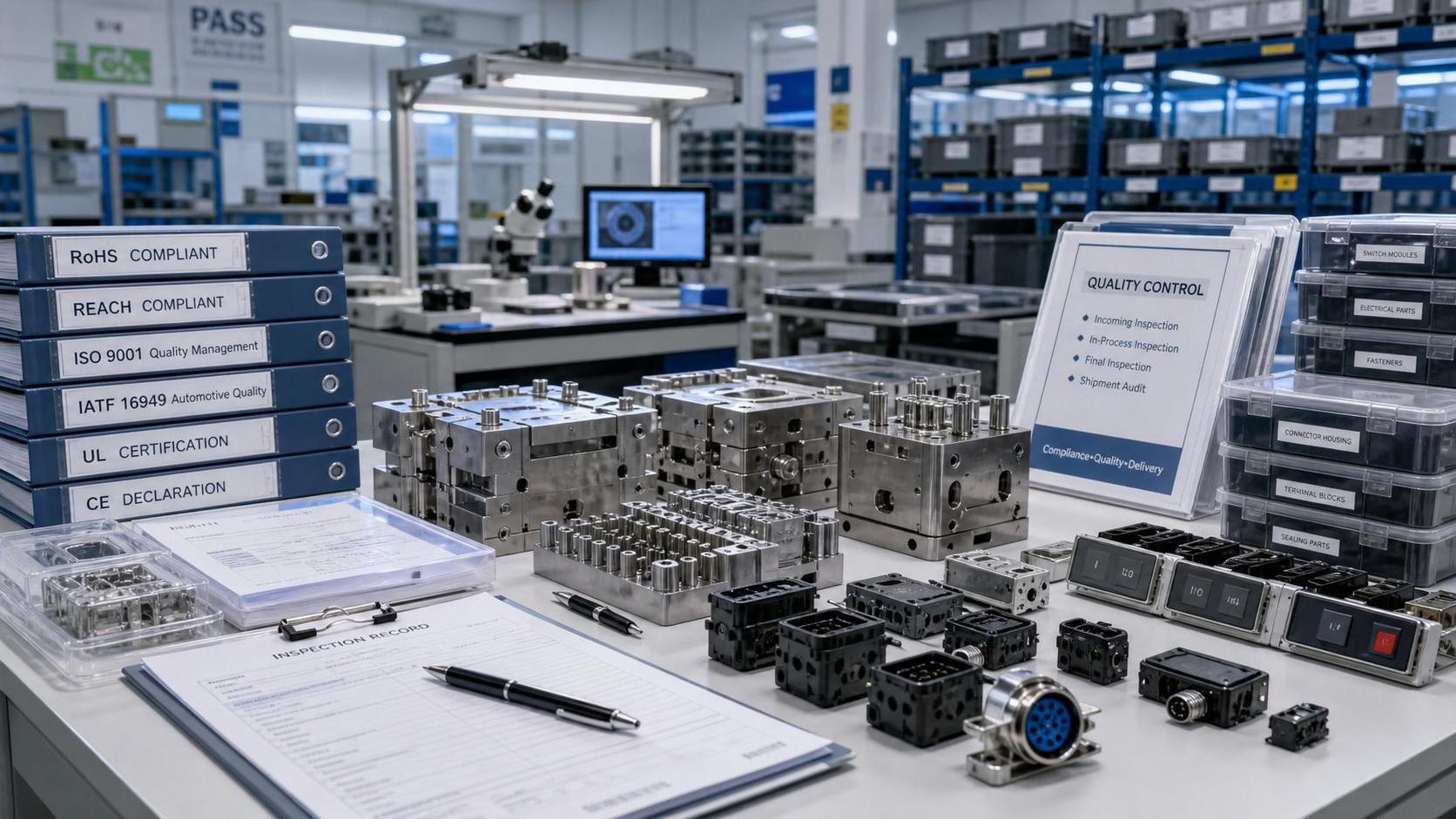
On June 8, 2026, the U.S. Department of Defense updated its 1260H Chinese military companies list, adding about 64 entities across precision mold manufacturing, industrial connectors, and smart switches. Although inclusion on the list does not itself create direct sanctions, the update matters because it is now linked to a DoD direct procurement ban taking effect on June 30 and is also being used as a screening reference by OFAC and BIS. For suppliers, exporters, OEM sourcing teams, and supply chain service providers connected to these product categories, the practical issue is no longer only list status, but how customer screening, procurement qualification, and delivery-related compliance checks may tighten in response.
What the June 8 update confirmed
The confirmed facts are limited but commercially significant. The DoD updated its 1260H list on June 8, 2026 and added approximately 64 companies. The sectors mentioned in the provided information include precision mold manufacturing, industrial connectors, and smart switch products. The provided summary also states that the list itself does not directly trigger sanctions, but that it has become linked to a DoD direct procurement ban effective June 30. In addition, OFAC and BIS are described as using the list as a review reference, and multiple North American OEM customers have already asked their Chinese suppliers to provide proof of 1260H screening.
Where the operational pressure is likely to appear first
Supplier qualification may tighten before orders move
From an industry perspective, mold, connector, and switch suppliers may feel the first impact in customer onboarding and approved-vendor review rather than in a formal trade stop. If buyers are requesting 1260H screening evidence, the immediate pressure point becomes supplier due diligence files, internal declarations, and the ability to show that screening has been completed in a documented way. What deserves closer attention is whether procurement teams begin treating this as a prerequisite for quotation, bid participation, or supplier retention.
OEM and procurement teams may expand screening depth
For OEM customers and sourcing organizations, the update can affect how supplier risk is classified across direct and indirect procurement. Analysis shows that buyers in North America may not limit review to the named entity alone, but may also ask for clearer legal-entity identification, supporting corporate information, and screening records tied to the supply contract. In practical terms, the affected business steps are likely to include RFQ review, supplier approval, contract documentation, and ongoing vendor monitoring.
Trade and supply chain service providers may face more document-driven checks
Logistics coordinators, trading intermediaries, and other supply chain service providers may see more requests for supporting compliance documents where affected product categories are involved. The issue is less about a new customs rule stated in the input and more about the possibility that commercial counterparties ask for clearer screening evidence before shipment release, payment approval, or delivery scheduling. That means document readiness and traceable review records may become more important in cross-border execution.
What companies should watch now
Prepare screening evidence that customers can actually use
Analysis shows that a general compliance statement may no longer satisfy some customers if they are specifically asking for 1260H screening proof. Companies involved in the listed product areas should pay attention to whether their internal screening records, supplier declarations, and entity-identification materials are consistent, current, and suitable for customer review. The key practical issue is not only completing a check, but being able to present it in a form that supports procurement and audit workflows.
Review contracts, tender files, and technical documentation touchpoints
Observably, the next area to monitor is whether procurement documents begin to reflect this screening expectation more explicitly. Tender documents, supplier qualification forms, onboarding questionnaires, and contractual compliance clauses may become the channels through which the rule change is operationalized. Because the input does not provide detailed enforcement language, it is more appropriate to understand this as a watchpoint rather than a confirmed universal requirement across all transactions.
Assess delivery planning for exposed product lines
For businesses shipping molds, connectors, or switch-related products into North American OEM supply chains, the practical concern is whether extra compliance review could slow approval or reorder timing. Analysis shows that companies should closely watch any link between screening requests and shipment release, supplier renewal, or purchase scheduling. This does not confirm a uniform delivery disruption, but it does indicate that compliance response time may start affecting commercial timing.
Track how review references are used in practice
The supplied information states that OFAC and BIS use the list as a review reference. What deserves closer attention is how that reference function is reflected in customer behavior, internal compliance escalation, or additional questions during trade review. Since no detailed execution standard is provided in the input, companies should treat this as an area for continued monitoring rather than assume one fixed enforcement outcome.
Why this looks more like an execution signal than a symbolic update
Observably, the most important change is not simply that more companies were added to a list, but that the list is now interacting with procurement restrictions and customer compliance practice. That gives the update operational weight even though the list itself is not described as a direct sanctions trigger in the provided facts. From an industry perspective, this is better understood as an execution signal: a rule-based development that may move first through buyer requirements, screening expectations, and supplier documentation, while the precise boundaries of implementation still require observation.
How the market is likely to read this for now
A balanced reading is that this development should not be reduced to a headline list expansion, nor should it be overstated as an automatic trade prohibition beyond what the input confirms. The more appropriate interpretation at this stage is that compliance diligence around 1260H has become more commercially relevant for mold, connector, and switch supply chains, especially where North American OEM procurement is involved. The market significance lies in execution pressure, documentation expectations, and procurement screening behavior, with further clarity still dependent on how customers and reviewing bodies apply the rule in practice.
Basis of this article and what still needs verification
This article is generated from the user-provided news title, event date, and event summary. For developments of this type, commonly relevant source categories may include official notices, regulator releases, trade or customs authority information, industry association updates, standards organization materials, and reporting by established professional media. No specific official source link was provided in the input, so the exact official publication path still requires verification. Continued observation is also needed on detailed policy wording, certification and compliance review practice, tender document changes, buyer implementation standards, industry feedback, and how companies respond in actual procurement and delivery workflows.