
Electrical engineering components that fail audits most often

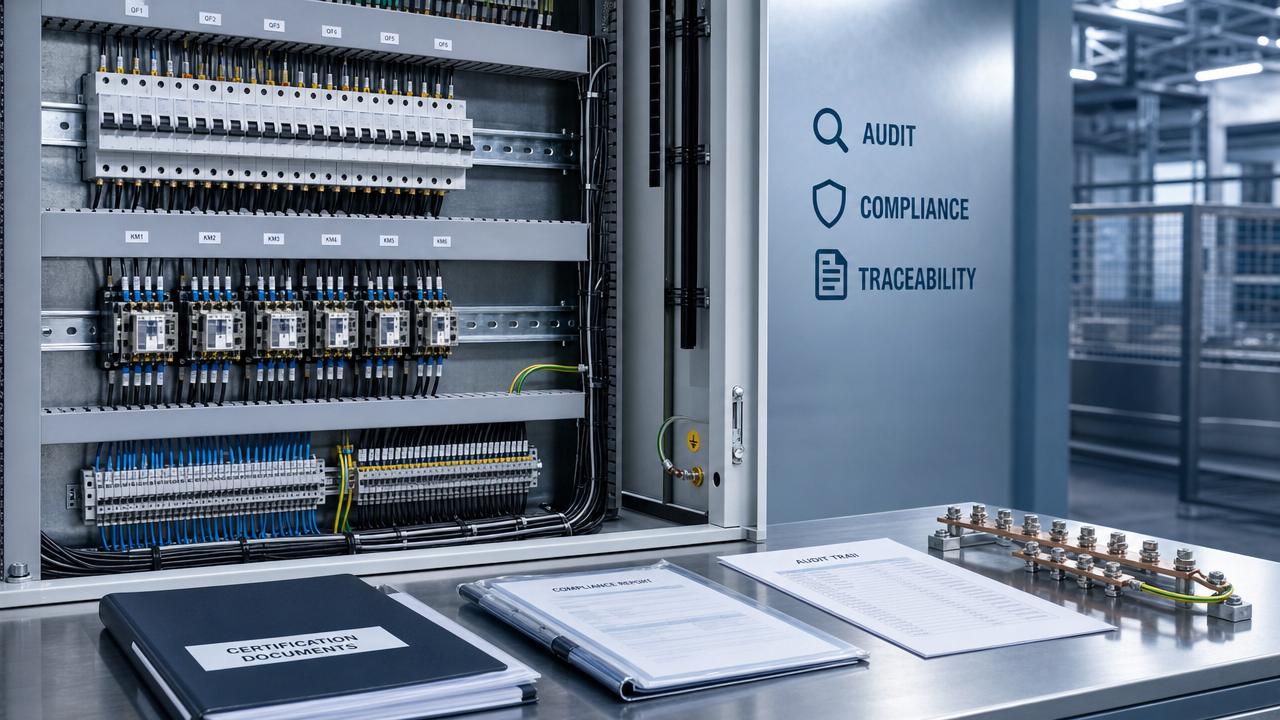
Among all electrical engineering components, a few repeatedly trigger audit failures due to compliance gaps, poor traceability, and overlooked safety details.
In industrial settings, these failures rarely come from exotic systems. They usually involve common parts installed every day across panels, machines, and power distribution assemblies.
Understanding which electrical engineering components fail audits most often helps reduce nonconformities, improve maintenance planning, and protect uptime, safety, and product certification.
What audit failure means for electrical engineering components
An audit failure usually means a component does not meet documented requirements, applicable standards, or site-specific control procedures.
For electrical engineering components, auditors often examine five areas:
- safety certification and marking
- material and performance conformity
- traceability and batch records
- installation quality and rating match
- maintenance history and change control
Most findings arise when a compliant product becomes noncompliant after substitution, relabeling, poor storage, incorrect installation, or undocumented repair.
Why these parts draw attention in current industrial audits
Modern audits focus more sharply on hidden risks inside routine assemblies. Global sourcing, shorter lead times, and frequent line modifications increase exposure.
The table below shows why certain electrical engineering components are repeatedly cited.
Electrical engineering components that fail audits most often
Terminal blocks and wire connectors
Terminal blocks look simple, yet they are among the most frequently challenged electrical engineering components in panel and machine audits.
Common issues include missing torque records, conductor size mismatch, unapproved ferrules, insulation damage, and incomplete terminal identification.
Auditors also check creepage, clearance, short-circuit rating, and whether connector materials fit vibration, heat, or chemical exposure conditions.
Circuit breakers and fuses
Protective devices fail audits when interrupt ratings, trip curves, or fuse classes do not match the system design.
Another problem appears when replacement parts are sourced locally without proof of equivalence or without updated documentation.
Because these electrical engineering components directly affect fault protection, even small rating errors create serious findings.
Relays, contactors, and overload devices
These control components often fail because the selected device does not fit the actual load category, switching frequency, or ambient temperature.
Worn contacts, undocumented lifecycle replacement, and inconsistent coil voltage labeling are also common audit observations.
Cables, harnesses, and insulation systems
Cable systems are high-risk electrical engineering components because they combine material compliance, routing discipline, and mechanical protection.
Frequent failures include absent flame ratings, poor bend radius control, missing shielding continuity, damaged jackets, and inadequate strain relief.
Audit teams also review color coding, segregation of power and signal lines, and resistance to oils, UV, or abrasion.
Power supplies and transformers
Power conversion devices draw findings when input tolerance, output stability, grounding, or thermal clearance are not validated.
Transformers additionally face scrutiny for insulation class, temperature rise, inrush behavior, and protective coordination.
Grounding and bonding hardware
Ground continuity problems remain one of the most important audit issues across industrial equipment and building-level electrical systems.
Loose lugs, coated contact surfaces, missing bonding jumpers, and undocumented resistance tests are common reasons these electrical engineering components fail.
Why repeated failures matter beyond compliance
Audit findings are not only paperwork problems. They often reveal deeper process instability inside sourcing, assembly, maintenance, and engineering change control.
When electrical engineering components repeatedly fail review, the broader consequences can include:
- higher downtime caused by premature failure
- rework costs on panels and field installations
- slower certification for exported equipment
- greater fire, shock, and arc risks
- weaker confidence in supplier quality systems
For a broad industrial ecosystem, component-level discipline supports reliability across machinery, facilities, transport assets, and automation lines.
Typical audit-sensitive categories by application
Practical controls that reduce failures
Reducing audit exposure starts before installation. It begins with a disciplined component governance method across specification, receipt, use, and replacement.
- Create an approved list for critical electrical engineering components.
- Verify certifications, ratings, and environmental limits before purchase.
- Record batch numbers, supplier data, and incoming inspection results.
- Use controlled installation instructions with torque and routing checks.
- Link every substitution to engineering review and drawing revision.
- Schedule periodic testing for grounding, insulation, and thermal performance.
- Review field repairs to prevent undocumented modifications.
These steps improve both compliance readiness and actual operating reliability, especially where multiple suppliers feed the same assembly platform.
Documentation details auditors expect to see
Even reliable electrical engineering components can fail an audit if the supporting records are incomplete or inconsistent.
Useful documentation usually includes:
- datasheets and declarations of conformity
- test reports and inspection checklists
- panel drawings and wiring diagrams
- maintenance and replacement logs
- calibration evidence for test equipment
- nonconformance and corrective action records
Clear records help prove that selected electrical engineering components are not only compliant on paper but controlled in real operation.
Next-step focus for stronger component control
The electrical engineering components that fail audits most often are usually not the most complex. They are the most overlooked.
A focused review of connectors, protection devices, relays, cables, power supplies, and grounding hardware can quickly reveal hidden weaknesses.
Use current drawings, verified standards, and traceable sourcing records to build a more defensible component baseline.
For organizations tracking industrial parts intelligence, structured monitoring of electrical engineering components supports safer systems, fewer audit surprises, and stronger long-term operational control.
Related News