
How to Spot Quality Risks in Electrical Engineering Components

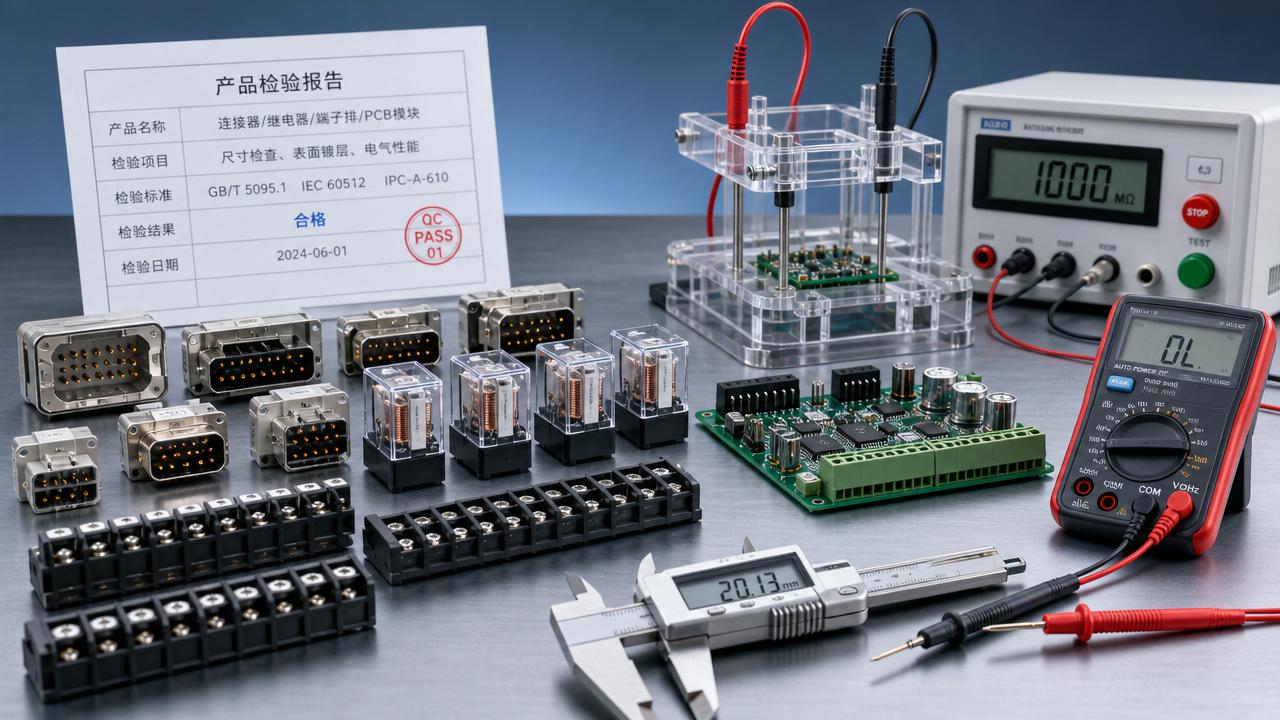
In high-stakes industrial environments, overlooking defects in electrical engineering components can trigger safety incidents, compliance failures, and expensive downtime. Whether the component is a relay, terminal block, connector, PCB assembly, fuse holder, sensor interface, or power distribution module, its quality directly affects system stability and lifecycle cost. This makes early risk identification a critical discipline, not just a final inspection task. A reliable evaluation process helps isolate weak materials, inconsistent workmanship, thermal vulnerabilities, and hidden nonconformities before they spread into field failures.
Across modern industry, electrical engineering components operate inside increasingly compact, automated, and compliance-sensitive systems. As a knowledge platform focused on industrial parts and precision manufacturing logic, GHTN tracks how material science, manufacturing discipline, and international standards shape component performance. In practice, quality risk rarely comes from one visible defect alone. It usually develops through a chain of warning signs: unstable sourcing, poor process control, weak insulation integrity, inconsistent dimensions, insufficient traceability, or mismatch between design claims and real operating conditions.
Definition and Core Risk Logic
The term electrical engineering components covers the individual parts that enable power transmission, signal control, protection, connection, and automation inside industrial and commercial systems. Typical examples include connectors, switchgear subassemblies, wire terminals, capacitors, resistors, contactors, current transformers, circuit protection devices, and enclosure-integrated electrical accessories. Quality risk appears when a component cannot reliably meet its electrical, mechanical, thermal, or environmental requirements throughout its intended service life.
A practical way to understand risk is to divide it into four layers. First is material risk, such as low-grade copper alloys, brittle plastics, or coatings with weak corrosion resistance. Second is process risk, including poor crimping, uneven plating, cold solder joints, or inaccurate molding tolerances. Third is design-to-application risk, where a component is technically compliant but unsuitable for vibration, heat cycling, moisture, or load profile. Fourth is traceability risk, where missing batch data or unclear certification makes root-cause analysis difficult when problems emerge.
Current Industry Focus Areas and Early Warning Signals
The market for electrical engineering components is under pressure from higher energy density, faster product cycles, stricter global compliance, and cost volatility in metals and polymers. These pressures can introduce quality shortcuts if sourcing and validation are not disciplined. Several warning signals repeatedly appear across sectors such as equipment manufacturing, power systems, building infrastructure, transport, and automated production lines.
These warning signs matter because failures in electrical engineering components often begin subtly. A slightly rough contact surface, a hairline crack in molded insulation, or a mislabeled current rating may pass casual visual checks yet still become a serious reliability event under real load, humidity, or vibration.
How to Evaluate Quality Risks Before Installation
A structured evaluation should combine documentation review, visual inspection, dimensional verification, and functional testing. Documentation is the first filter. Check product specifications, RoHS or REACH declarations where relevant, test reports, lot numbers, date codes, and evidence of conformity to standards such as IEC, UL, or CE-related requirements. Missing or inconsistent records do not automatically prove poor quality, but they raise the probability of uncontrolled variation.
Visual inspection remains one of the most efficient ways to detect risk in electrical engineering components. Look for burrs on stamped terminals, cracks in insulation housings, poor label readability, discoloration near conductive points, flux residues on assemblies, and nonuniform screw heads or molded gates. These details can reveal whether the supplier maintains disciplined tooling, clean production conditions, and stable finishing processes.
Dimensional consistency is equally important. Components with tight mating relationships, such as connectors, sockets, DIN-rail modules, and switchgear inserts, should be checked against drawings or approved samples. Even small deviations can create insertion force problems, poor contact pressure, or enclosure misalignment. In precision environments, repeated variation from one batch to another is often a stronger risk signal than one isolated cosmetic issue.
Functional testing should reflect real operating stress. This may include continuity testing, insulation resistance, dielectric withstand, thermal rise checks, insertion and withdrawal cycles, torque retention, vibration exposure, or humidity conditioning. For critical electrical engineering components, a supplier’s nominal rating should not be accepted without context. A connector rated for a certain current in open air may perform differently when installed inside a compact enclosure with poor ventilation.
Business Impact of Better Component Risk Detection
The value of screening electrical engineering components goes far beyond defect avoidance. Better risk detection supports equipment uptime, warranty control, audit readiness, and long-term brand credibility. It also improves the economics of industrial projects. Replacing a weak terminal block or relay before assembly is inexpensive; tracing and correcting the same issue after field deployment is not.
There is also a strategic benefit. High-integrity component selection reduces redesign cycles and supports smoother entry into regulated markets. When documentation, process capability, and product consistency are aligned, engineering teams gain confidence in scaling production without introducing avoidable instability. This is especially relevant in sectors where electrical subsystems interact with mechanical load, pneumatic logic, temperature fluctuation, and environmental exposure.
- Lower downtime caused by hidden contact, insulation, or fitment defects
- Reduced compliance risk during export, certification, or customer audits
- More stable lifecycle cost through fewer replacements and service calls
- Stronger confidence in supplier qualification and batch release decisions
Typical Component Categories and Risk Profiles
Not all electrical engineering components fail in the same way. Understanding category-specific risk helps focus inspection resources where they matter most.
Practical Inspection and Control Recommendations
To reduce risk in electrical engineering components, inspection should be paired with process thinking. A robust approach begins with approved supplier criteria, then extends into incoming inspection, sample-based validation, and controlled change management. If a supplier changes resin grade, plating chemistry, mold cavity, or subcontractor without clear notice, the risk profile can change even when the part number remains the same.
The following practices are especially useful:
- Set critical-to-quality checkpoints for electrical, mechanical, and thermal performance.
- Use batch traceability and retain reference samples for comparison.
- Review both standard compliance and application fit, not one without the other.
- Escalate recurring minor defects, because repeated small deviations often signal process drift.
- Verify performance after transport and storage when moisture, corrosion, or mechanical shock may be involved.
It is also wise to connect component assessment with broader manufacturing intelligence. GHTN’s perspective across hardware, tooling, and electrical systems shows that component quality is deeply linked to mold precision, stamping tool wear, assembly discipline, and material formulation control. In other words, reliable electrical engineering components are usually the result of reliable upstream manufacturing systems.
Next-Step Evaluation Framework
A useful next step is to build a simple internal checklist for high-risk electrical engineering components. Start by ranking parts according to safety relevance, replacement difficulty, operating stress, and compliance sensitivity. Then assign the matching depth of review: document check, dimensional verification, visual grading, sample test, and periodic supplier reassessment. This turns quality control from a reactive task into a repeatable decision system.
When small irregularities appear, treat them as data, not noise. A slightly unstable batch, a minor plating inconsistency, or a thermal anomaly during validation can be the first visible sign of a broader process weakness. By identifying these issues early, teams can protect system reliability, preserve certification confidence, and make better sourcing and engineering decisions. In an industrial landscape shaped by precision and accountability, careful scrutiny of electrical engineering components remains one of the most effective ways to prevent costly downstream failure.
Related News