
Electrical engineering components that fail compliance checks

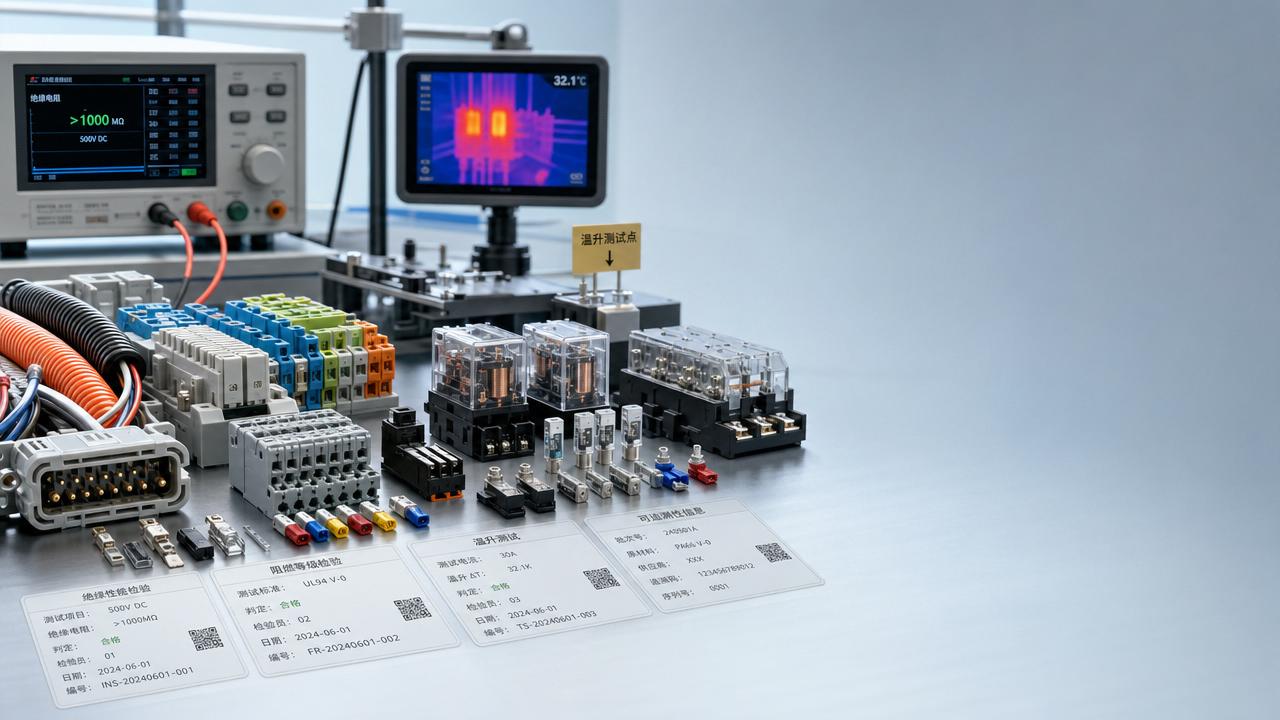
For quality control and safety teams, failed compliance checks often trace back to overlooked electrical engineering components hidden deep in assemblies. From connectors and terminals to insulation systems and control modules, even minor defects can trigger regulatory risks, costly recalls, and operational downtime. Understanding which components fail most often—and why—is essential for strengthening inspection protocols, improving supplier qualification, and ensuring consistent product safety.
Which electrical engineering components fail compliance checks most often?
In cross-industry manufacturing, compliance failures rarely come from a single dramatic defect. More often, they originate in routine electrical engineering components that appear acceptable during incoming inspection but fail when assessed against insulation, temperature rise, flame resistance, creepage distance, marking, or traceability requirements.
For QC managers and safety officers, the challenge is not only technical. It is operational. Components are sourced globally, production schedules are tight, and assembly variations can turn a nominally compliant part into a non-compliant system. This is why inspection plans must focus on high-risk parts rather than treating all items equally.
- Connectors and terminal blocks with insufficient conductor retention, poor plating consistency, or weak housing materials.
- Wires, cable assemblies, and insulation sleeves with incorrect temperature class, wall thickness variation, or missing flame-rating evidence.
- Switches, relays, and control modules that pass functional testing but fail spacing, labeling, or endurance expectations under certification review.
- Power supplies, fuse holders, and circuit protection devices with mismatched ratings or incomplete technical files.
- Grommets, seals, housings, and molded supports that indirectly affect ingress protection, dielectric strength, or mechanical stability.
At GHTN, the value lies in looking beneath the finished assembly. Electrical engineering components are not isolated items; they are part of a manufacturing chain involving material selection, tooling precision, tolerance control, and international compliance interpretation. That granular perspective helps teams identify hidden failure points before audit or shipment.
High-risk failure categories seen in inspection and certification work
The table below highlights common electrical engineering components, the typical reason they fail compliance checks, and what QC teams should verify first during supplier approval and routine inspection.
A useful pattern emerges here: the most common failures combine a physical defect with a documentation gap. In other words, even acceptable electrical engineering components can fail compliance if their ratings, test basis, or material history cannot be clearly verified.
Why do compliant-looking parts still fail regulatory review?
Many nonconformities are created long before the audit. A connector may look identical to the approved sample, yet use a different resin batch. A terminal may meet dimensional tolerance, yet the plating process changed without notice. A power module may function in-house, but the submitted file lacks evidence aligned with the destination market.
The gap between production acceptance and formal compliance
Routine production testing often emphasizes function, continuity, or fit. Compliance evaluation goes further. It examines abnormal conditions, thermal behavior, insulation coordination, flammability, accessibility, and long-term traceability. This difference explains why electrical engineering components that pass line checks may still fail a third-party or customer audit.
- Material substitutions are not controlled tightly enough, especially in molded insulating parts and polymer housings.
- Supplier documents are incomplete, outdated, or not linked to exact lot numbers received on site.
- Assemblies are redesigned for cost or space savings without rechecking creepage, clearance, or heat dissipation effects.
- Imported electrical engineering components are accepted using generic declarations rather than application-specific evidence.
For safety managers, the practical lesson is clear: compliance cannot be inspected into the product at the final stage. It must be built into sourcing controls, tooling approval, incoming verification, and engineering change management.
What should QC teams inspect first in critical electrical engineering components?
Not every parameter deserves equal attention. In high-volume or multi-supplier environments, teams need a layered inspection model that identifies which attributes most often lead to rejection, recall exposure, or safety escalation.
Priority inspection checklist for incoming and in-process control
- Verify part identity against approved technical data, including exact ratings, material grades, and revision status rather than only visual appearance.
- Check mechanical retention features such as terminal pull strength, crimp stability, locking performance, and housing engagement consistency.
- Review thermal suitability, including temperature class, current derating behavior, and whether the installed environment differs from laboratory assumptions.
- Audit insulation-related dimensions and supporting molded parts that influence creepage, clearance, or dielectric barriers.
- Confirm labeling, batch traceability, and linkage between received goods, certificates, test reports, and approved supplier records.
This inspection discipline matters across industries, from panel builders and appliance assemblers to automation equipment manufacturers. GHTN’s cross-sector perspective is useful here because failures in one sector often predict risks in another. A tooling-related tolerance drift in a plastic housing, for example, can directly affect electrical safety spacing.
Recommended evaluation dimensions before supplier release
When selecting electrical engineering components, QC and procurement teams should assess more than price and lead time. The following comparison table can be used during supplier qualification, engineering review, or pre-audit preparation.
The key takeaway is that supplier capability and document discipline are as important as the part itself. For many electrical engineering components, recurring compliance failures are a supply-chain governance issue disguised as a product issue.
How do standards and certification expectations affect component selection?
Electrical compliance is rarely one-size-fits-all. Requirements depend on end use, region, installation environment, enclosure design, and the relationship between individual components and the final product. Teams working across markets need to understand that a component accepted in one project may require additional scrutiny in another.
Practical standards logic for general industry use
While exact certification pathways vary, several assessment themes repeatedly influence the approval of electrical engineering components in industrial and commercial products.
- Electrical safety expectations typically review insulation integrity, spacing, accessibility, abnormal operation behavior, and overcurrent protection coordination.
- Material compliance often extends beyond performance to flammability classification, hazardous substance declarations, and consistency of polymer identification.
- Marking and traceability rules matter because unlabeled or ambiguously labeled components are difficult to defend during an audit, even if technically suitable.
- System integration matters because clearances, heat rise, and ingress resistance may change significantly after the component is installed in a compact assembly.
This is where GHTN’s industrial network becomes practical. Because compliance decisions are affected by tooling, material science, and electrical system behavior together, a component portal with visibility across hardware, electrical hubs, and mold manufacturing can help teams judge risk more accurately than isolated catalog sourcing.
Common mistakes that increase failure rates and hidden costs
A failed compliance check is never just a technical event. It creates retest costs, engineering rework, delayed shipments, supplier disputes, and internal pressure on both quality and safety functions. Many of these costs are avoidable if teams recognize a few recurring mistakes.
Frequent decision errors in procurement and quality control
- Choosing low-cost alternates for electrical engineering components without verifying whether the substitute affects approvals, spacing, temperature rise, or enclosure performance.
- Approving first articles based on dimensions and basic function only, with no review of raw material stability or certification evidence.
- Assuming a supplier declaration alone is enough, even when the destination customer expects test references, lot traceability, and change notification history.
- Treating molded supports, seals, and fastening details as non-critical, even though they can change electrical spacing, strain relief, or protection against environmental exposure.
In practice, the cheapest part can become the most expensive if it causes requalification, line stoppage, or rejected export documentation. For safety-critical projects, a controlled alternative with better documentation is often the more economical choice over the full product lifecycle.
FAQ: what do quality and safety teams ask most about electrical engineering components?
How can we screen electrical engineering components faster without missing compliance risk?
Use a tiered method. First, classify components by safety impact and audit sensitivity. Next, define mandatory evidence for each tier, such as ratings, traceability, and material data. Finally, reserve deeper testing for high-risk parts like connectors, control modules, and protective devices. This reduces workload while maintaining control where failures matter most.
Which components deserve the strictest incoming inspection?
Prioritize items that affect insulation, current carrying capability, fault protection, and heat generation. In many factories, that means terminals, connectors, wire sets, fuse holders, relays, and molded insulating parts. If a component influences spacing, temperature, flame behavior, or traceability, it should not receive only a cosmetic check.
Are generic certificates enough for supplier approval?
Usually not. Certificates must align with the exact component version, application, and controlled source. A generic file may support initial review, but QC teams should also confirm revision status, material consistency, and whether the evidence remains valid after any process or design change.
How should we handle urgent substitutions when lead times are tight?
Do not rely on dimensional similarity alone. Compare ratings, environmental limits, insulation properties, mounting conditions, and documentation quality. If the replacement affects a critical safety function, require formal engineering review and a limited validation plan before release to production.
Why work with GHTN when compliance risk starts at component level?
Quality and safety teams need more than a component list. They need context: how tooling precision affects resin housings, how material shifts affect electrical spacing, how supplier changes alter audit readiness, and how international standards shape sourcing decisions. GHTN is built around that deeper industrial logic.
Because GHTN connects hardware, electrical systems, and mold manufacturing insights, it helps buyers, OEMs, and compliance teams evaluate electrical engineering components from both a product and process viewpoint. That is especially useful when supplier qualification, market entry, and technical risk review must happen in parallel.
What you can discuss with us
- Parameter confirmation for connectors, terminals, insulation parts, control modules, and other electrical engineering components used in demanding assemblies.
- Selection guidance based on environment, temperature class, rating fit, traceability expectations, and likely certification pathway.
- Delivery-cycle discussions, supplier screening logic, and risk points that commonly affect urgent sourcing programs.
- Custom solution reviews where molded parts, hardware interfaces, and electrical safety performance interact closely.
- Support for sample evaluation, documentation readiness, and quotation communication tied to actual inspection and compliance needs.
If your team is dealing with repeated audit findings, uncertain supplier evidence, or difficult part substitutions, this is the right time to compare options before the next shipment or certification milestone. GHTN can help you narrow critical checkpoints, align technical data with real manufacturing conditions, and improve sourcing decisions for electrical engineering components that must pass compliance with fewer surprises.
Related News