
How to compare electrical engineering components by failure risk

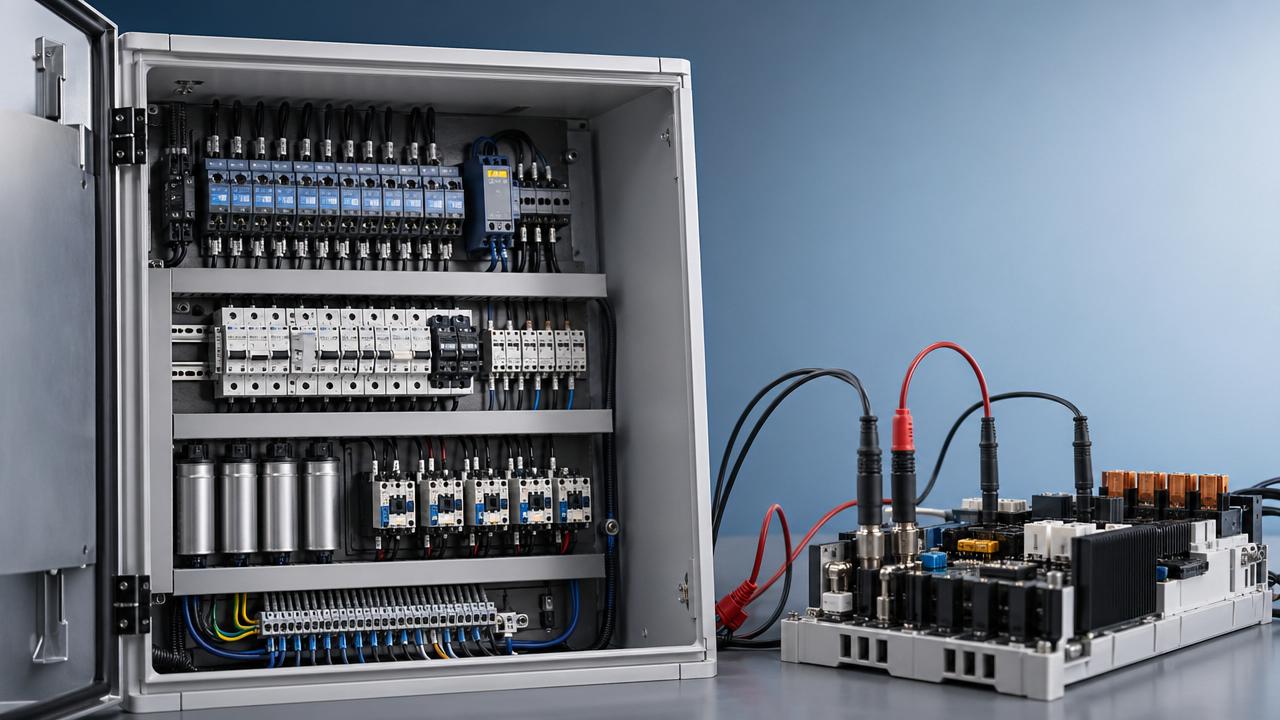
Selecting electrical engineering components by failure risk requires more than checking specifications—it demands a practical view of reliability, operating conditions, and compliance impact. For technical evaluators, comparing components through risk-based criteria helps identify weak points early, reduce lifecycle costs, and improve system stability. This guide outlines how to assess failure modes, performance factors, and sourcing considerations with greater precision.
Understanding risk-based comparison for electrical engineering components
In industrial systems, electrical engineering components are rarely judged by one parameter alone. A relay with the correct current rating, a connector with acceptable insertion force, or a capacitor that meets nominal voltage may still become the weakest point in the field. Failure risk comparison adds a more realistic layer to technical evaluation by asking a different question: which component is most likely to fail under actual operating and compliance conditions, and what is the impact if it does?
For technical evaluators, this approach is especially useful in environments where uptime, safety, and maintenance cost matter more than initial price. It supports better selection across control panels, automated lines, power distribution units, sensing circuits, and precision equipment. It also aligns with how global industrial platforms such as GHTN interpret component value: not as isolated catalog items, but as functional building blocks within larger manufacturing and electrical ecosystems.
A risk-based method does not replace specification review. Instead, it combines electrical data, material behavior, environmental stress, manufacturing consistency, and field history. The result is a comparison framework that helps evaluators prioritize reliability where it matters most.
Why failure risk has become a central industry concern
Across the broader industrial sector, systems are becoming denser, faster, and more interconnected. This raises the consequence of small component failures. A low-cost terminal block can interrupt an automated line. A drifting resistor can distort control logic. An underqualified switch can trigger safety incidents or unplanned downtime. As industrial equipment operates in harsher duty cycles, technical evaluators need comparison methods that reflect real-world stress rather than nominal laboratory conditions.
Another reason for this increased focus is regulatory pressure. International compliance standards for insulation, flammability, creepage distance, EMC behavior, and temperature rise are not only legal checkpoints; they are practical indicators of failure exposure. Components that barely meet the minimum may carry higher long-term risk in export-oriented or multi-region applications. In this context, comparing electrical engineering components by failure risk helps balance reliability, certification confidence, and market access.
Supply chain variability also matters. Two components can look equivalent on a datasheet while differing in plating quality, process control, resin formulation, or traceability. For evaluators serving OEMs, contract manufacturers, or distributors, failure risk assessment becomes a way to filter hidden inconsistency before it appears in the field.
Core dimensions used to compare failure risk
When reviewing electrical engineering components, failure risk should be structured around a few core dimensions. These dimensions help convert broad concern into measurable comparison criteria.
- Electrical stress tolerance: voltage margin, current derating, surge resistance, insulation class, and thermal rise under load.
- Environmental resilience: exposure to humidity, dust, vibration, corrosive agents, UV, altitude, and thermal cycling.
- Mechanical durability: insertion cycles, torque retention, housing robustness, solder joint fatigue, and connector retention strength.
- Material and process stability: conductor purity, contact plating, molding precision, sealing quality, and consistency between production batches.
- Failure consequence: whether failure leads to nuisance shutdown, degraded performance, safety hazard, or complete system stoppage.
- Compliance exposure: dependence on UL, IEC, RoHS, REACH, CE-related documentation, and application-specific certification requirements.
Not every project weights these dimensions equally. A cabinet power module may prioritize thermal and insulation performance, while a signal connector in a robotics cell may be more sensitive to vibration and mating-cycle wear. The key is to compare components according to the failure mechanisms most relevant to the application.
Typical failure modes by component category
Technical evaluators often work across mixed product groups, so a category-based view is helpful. Different electrical engineering components fail in different ways, and this should shape the comparison method from the start.
This category view prevents a common mistake: comparing all components using the same checklist. Effective risk comparison depends on understanding the dominant stress and failure profile of each part type.
How to evaluate severity, likelihood, and detectability
A practical way to compare electrical engineering components is to adapt the logic of FMEA. Even if a full formal FMEA is not required, evaluators can score three dimensions: severity of failure, likelihood of occurrence, and detectability before the failure reaches the customer or production line.
Severity asks how much damage the failure causes. Does it create a minor reading error, a stoppage of one subsystem, or a safety-related hazard? Likelihood examines how probable the failure is under expected duty cycles, including overload, contamination, and thermal variation. Detectability reviews whether incoming inspection, in-process testing, or diagnostic monitoring can catch the issue early.
Components with moderate specifications but low detectability may deserve more caution than parts with slightly higher apparent stress but clear warning behavior. For example, gradual contact resistance increase in a connector may go unnoticed until heat damage occurs, while a protective device with visible trip indication is easier to monitor. This is why failure risk comparison should consider not only whether a part can fail, but also whether the system can see that failure developing.
Application value for technical evaluators and industrial teams
A structured approach to comparing electrical engineering components supports multiple business functions. For design teams, it reduces hidden reliability gaps during product development. For sourcing teams, it creates more objective supplier discussions around consistency and lifecycle cost. For quality teams, it improves incoming inspection priorities and audit focus. For aftermarket service teams, it helps identify which spare parts deserve tighter stocking and traceability control.
In sectors tied to machinery, electrical hubs, tooling systems, and precision manufacturing, the value is even broader. A single poorly chosen component can undermine machine uptime, compliance confidence, and customer trust. By contrast, selecting lower-risk components improves mean time between failure, lowers field returns, and reduces engineering rework. This supports the industrial logic emphasized by GHTN: performance at the small-part level often determines competitiveness at the system level.
Practical comparison factors beyond the datasheet
Datasheets remain essential, but they do not tell the whole story. Technical evaluators should look for supporting evidence that reflects production reality. Useful indicators include accelerated life test results, third-party certification records, process capability data, PPAP-style documentation where relevant, field return trends, and batch traceability depth.
It is also wise to assess derating discipline. Suppliers that recommend realistic derating for voltage, current, temperature, and switching cycles usually present lower hidden risk than vendors promoting only maximum values. Another strong signal is transparency around material selection. In connectors, for example, details on copper alloy grade, spring behavior, and plating thickness can strongly influence fatigue and corrosion risk. In molded electrical parts, resin type and flammability performance can affect long-term dimensional and thermal stability.
Documentation quality itself can be a risk marker. Incomplete revision control, vague compliance claims, or unclear test methods often correlate with broader process inconsistency. When comparing electrical engineering components from multiple sources, a disciplined documentation review can reveal risk before any physical failure appears.
Typical use scenarios and priority criteria
Common mistakes in failure risk comparison
One common mistake is overvaluing nominal rating and undervaluing operating profile. A component may be electrically sufficient on paper but repeatedly stressed near its limit in real use. Another mistake is treating certifications as interchangeable. Standards may cover different test conditions, and a component approved for one market may still create exposure in another.
Evaluators also sometimes compare components at the part number level but ignore the assembly interface. A reliable connector can still fail if mating geometry, cable strain relief, or installation torque are poorly controlled. Finally, organizations often underestimate supplier process variation. Sample performance alone is not enough; consistency across batches, factories, and change notices must also be reviewed.
Practical recommendations for building a repeatable evaluation method
To make comparison more consistent, technical evaluators should create a standard scorecard for electrical engineering components. Start with application conditions, define likely failure modes, assign severity and occurrence weights, then add evidence requirements such as test reports, compliance files, and traceability level. This improves consistency across projects and reduces dependence on subjective judgment alone.
It is also useful to separate critical components from non-critical ones. Components linked to safety, downtime, thermal loading, or customer-visible performance should receive deeper review and stronger supplier qualification. Where possible, combine desk evaluation with sample validation under representative stress conditions. Even a limited thermal, vibration, or load-cycling check can reveal practical differences not visible in a catalog.
For organizations sourcing globally, platforms with strong industrial insight can support this process by connecting technical information with manufacturing context, standard trends, and supplier specialization. That broader view is increasingly important when comparing parts that appear similar but carry different long-term risk profiles.
Conclusion and next-step guidance
Comparing electrical engineering components by failure risk leads to better decisions than relying on specification matching alone. It helps technical evaluators see how materials, process quality, application stress, compliance exposure, and failure consequence interact in real industrial use. The most effective evaluations do not ask only whether a component works, but whether it will keep working reliably in the intended environment over time.
If your team is refining component selection criteria, begin with the highest-impact assemblies: power interfaces, switching devices, connectors, and control-critical modules. Build a repeatable risk framework, request deeper evidence from suppliers, and align your comparison method with actual operating conditions. In modern industry, stronger decisions at the component level create stronger performance across the entire system.
Related News