
International electrical standards gaps seen in exports

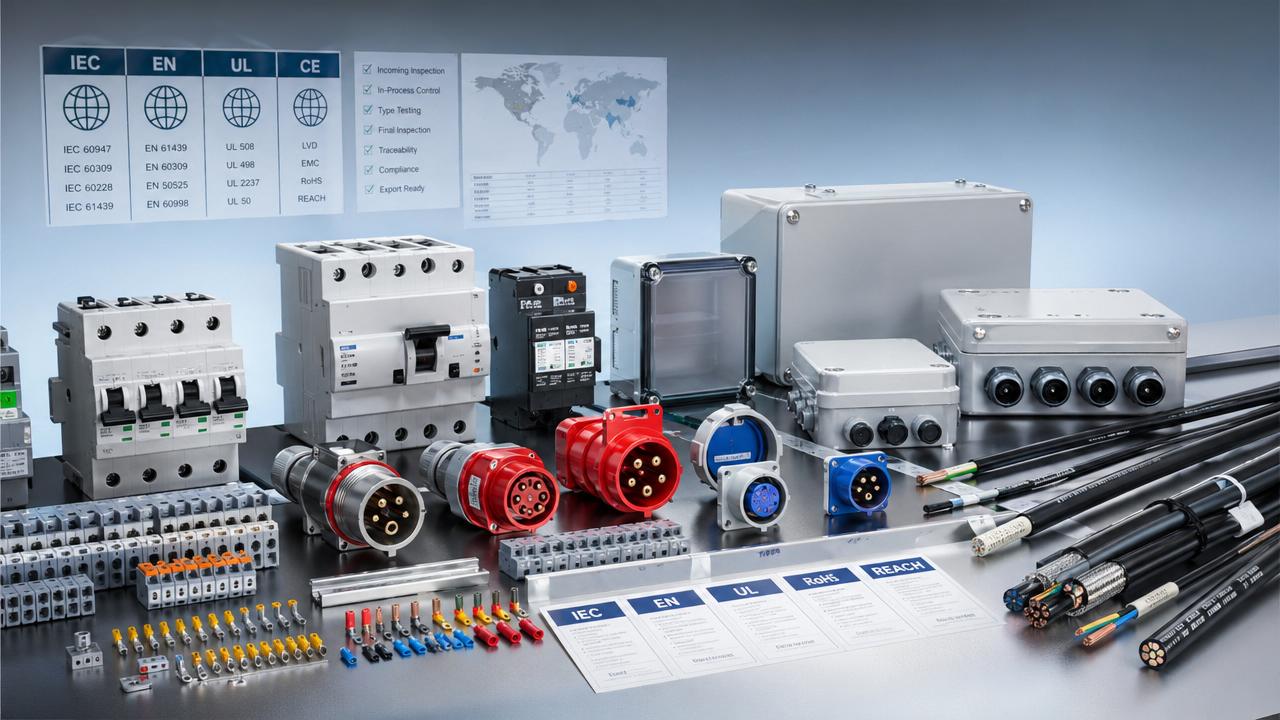
For business evaluators assessing export risks and market readiness, gaps in international electrical standards can quietly erode competitiveness, delay certifications, and increase compliance costs. This article examines how differing technical requirements across regions affect electrical exports, why these gaps matter to suppliers and buyers, and what manufacturers can do to align products, reduce uncertainty, and strengthen global market entry strategies.
In the electrical trade, a product that performs well in one market may still fail commercially in another if its insulation class, plug configuration, marking format, test method, or documentation package does not match local expectations. For business evaluators, this is not a minor technical detail. It is a direct factor in landed cost, time to revenue, distributor confidence, and the likelihood of repeat orders.
For platforms such as GHTN, which track industrial components, electrical hubs, and precision manufacturing supply chains, the issue is especially relevant. International electrical standards influence not only finished assemblies, but also cable systems, connectors, enclosures, switching components, molded housings, fasteners, and the production tooling behind them. Export readiness therefore depends on both product design and upstream manufacturing discipline.
Why international electrical standards gaps create hidden export risk
Different markets test the same product in different ways
One of the biggest challenges in international electrical standards is that broad safety objectives may look similar across regions, while the actual compliance path differs at multiple points. A low-voltage assembly exported to the EU, North America, and parts of the Middle East may face different test sequences, labeling rules, temperature rise limits, or installation assumptions. Those gaps can add 2–8 weeks to a launch schedule if they are discovered late.
Business evaluators should pay attention to whether a supplier designs for a single domestic baseline or for a multi-market architecture. A domestic-first design often creates rework in enclosure dimensions, creepage and clearance spacing, conductor sizing, or material selection. Even a small redesign in a molded electrical housing can trigger new tooling validation, sample approval, and repeated compliance checks.
This is where international electrical standards become a commercial issue rather than just an engineering issue. If a buyer needs three regional variants instead of one harmonized platform, inventory complexity rises, MOQ planning becomes harder, and after-sales support must handle more part-number variations across channels.
Compliance gaps affect total cost, not only certification fees
Many export teams focus on visible costs such as laboratory testing or registration fees. In practice, the larger cost often sits in secondary impacts: engineering revisions, delayed vessel booking, relabeling, packaging changes, warehouse holds, and distributor hesitation. A product delayed by 30–45 days can miss a procurement window, especially in project-based sectors such as building systems, industrial control, or OEM panel integration.
Gaps in international electrical standards also influence warranty exposure. If installation instructions do not reflect local cable practices, overcurrent protection assumptions, or environmental ratings, field failures may be interpreted as supplier quality issues even when the core component is sound. That creates risk for both exporters and buyers conducting vendor assessment.
For evaluators comparing suppliers, the better question is not “Do you have a certificate?” but “How stable is your compliance system across regions, revisions, and product families?” A supplier with a disciplined document control process and change management workflow usually creates lower lifetime risk than one that only reacts when a shipment is already scheduled.
The table below shows how standards gaps typically translate into operational and financial consequences during export preparation.
The main takeaway is that international electrical standards gaps rarely stay confined to the lab. They spread into sourcing, warehousing, market timing, and buyer trust. For business evaluators, these effects should be built into supplier scoring before a purchase order is issued.
Where exporters most often encounter standards misalignment
Component-level differences often start upstream
In many industrial products, the compliance gap begins below the finished assembly level. Cable glands, terminals, relays, molded housings, insulation materials, gaskets, and fastening systems may each carry their own suitability limits. If a manufacturer sources these parts from multiple vendors without a unified compliance matrix, the final electrical product can become difficult to qualify for export.
This is especially important in GHTN’s ecosystem of hardware, tooling, electrical, and mold manufacturing. A change in resin grade for an injection-molded electrical cover, or a plating change in a conductive fastener, may affect flame behavior, corrosion resistance, grounding continuity, or long-term dimensional stability. In practice, tolerances such as ±0.2 mm in molded interfaces can matter when sealing performance or clearance spacing is tightly controlled.
Export evaluators should therefore review not only finished-goods claims, but also the maturity of supplier qualification at the component level. A factory that controls incoming parts through 4–6 key checkpoints usually creates less compliance drift than one that relies only on final inspection.
Documentation gaps are as serious as design gaps
Another common weakness in international electrical standards is incomplete technical documentation. Even when a product is physically capable of meeting market needs, missing wiring diagrams, material declarations, traceability records, or installation manuals can delay approval. In some export channels, document review happens before product testing, which means a strong product can still lose 1–3 weeks due to paperwork issues.
Business evaluators should verify whether the supplier can maintain a repeatable document package for each SKU family. That package typically includes specification sheets, test records, revision history, labels, warnings, user instructions, and component traceability information. If those files are built manually for every order, error rates rise quickly once variant counts exceed 10–20 active models.
The more complex the product mix, the more valuable structured technical data becomes. A standardized digital record helps buyers compare regional variants, track changes, and reduce the risk of shipping a product with outdated markings or unsupported claims.
Common misalignment checkpoints
- Rated voltage, frequency, and ambient temperature assumptions do not match the destination market.
- Plug, connector, cable, or terminal formats are acceptable domestically but unsuitable for regional installation practice.
- Enclosure protection, grounding method, or flame-related material selection is inconsistent across sourced parts.
- Label language, warning symbols, and instruction content are incomplete for customs or downstream distributors.
- Tooling changes are made in production without an updated compliance review or revision release.
The following table highlights where buyers commonly find export-readiness weaknesses when assessing suppliers handling electrical assemblies and supporting industrial components.
These checkpoints matter because international electrical standards are often enforced through the interaction of product design, material consistency, and document discipline. A single weak link can turn an otherwise exportable product into a delayed or restricted shipment.
How business evaluators can assess supplier readiness more accurately
Use a multi-layer review instead of a certificate-only review
When reviewing suppliers operating across hardware, electrical, and mold-based production, evaluators should use a 4-layer model: product suitability, component control, documentation integrity, and change management. This approach gives a clearer picture of how well the supplier can manage international electrical standards over time, not just at the moment of first qualification.
Product suitability focuses on ratings, protection level, materials, and intended use. Component control checks whether sub-suppliers are approved and traceable. Documentation integrity confirms that manuals, labels, and test records are version-controlled. Change management evaluates whether engineering or tooling modifications trigger internal review within 24–72 hours rather than after shipment preparation.
This method is especially useful when comparing two suppliers with similar pricing. A unit cost difference of 3%–5% may be outweighed by a much larger difference in compliance reliability, reduced rework, and faster repeat-order execution.
Key scoring criteria for export evaluation
A practical scoring system helps procurement and technical teams align their decision. Many B2B buyers use a 100-point model with thresholds such as 75 points for approved, 60–74 for conditional approval, and below 60 for development only. The exact score matters less than the consistency of criteria across vendors.
Below is a useful framework for evaluating supplier readiness against international electrical standards in export scenarios.
A structured scoring table helps business evaluators separate superficial compliance claims from true export capability. It also supports better internal communication between sourcing, quality, and market-entry teams.
A simple 5-step review workflow
- Define destination markets and intended applications before RFQ finalization.
- Map international electrical standards requirements to product ratings, materials, and labels.
- Audit BOM control, tooling revision history, and sub-supplier approval records.
- Review pre-production samples and document packs for 3–5 representative SKUs.
- Set shipment release conditions, including final label and packaging verification.
This workflow is practical because it catches most export problems before inventory is committed. It also gives smaller manufacturers a realistic path to improve without overbuilding systems that do not match their scale.
Practical strategies manufacturers can use to close standards gaps
Build products around a regional compliance map
Manufacturers that export successfully tend to start with a compliance map rather than a last-minute certification request. This map lists target regions, applicable installation assumptions, product ratings, required markings, and documentation needs. For SMEs, even a spreadsheet covering 8–12 major export conditions can reduce repetitive mistakes and improve quotation accuracy.
The most effective approach is platform design. Instead of engineering a completely different product for each region, suppliers can create a core architecture with controlled variants for plugs, labels, terminal configurations, or enclosure options. That reduces tooling duplication and shortens adaptation cycles to 1–3 weeks instead of a full redevelopment program.
In precision manufacturing environments, this also aligns with mold and tooling efficiency. If housing geometry and fastening points remain stable, only inserts, legends, or accessory kits may need to change, limiting requalification work and preserving production rhythm.
Strengthen process control from raw materials to final release
International electrical standards are easier to manage when process control is tied to production reality. That means checking incoming materials, monitoring critical dimensions, controlling assembly torque where relevant, and verifying final marking accuracy. For many industrial electrical products, 6 key control points are enough to catch the majority of export-related defects before dispatch.
Suppliers should also formalize engineering change review. If a resin supplier changes formulation, a connector vendor changes plating thickness, or a mold repair alters a fit surface, the effect on compliance must be assessed. A disciplined engineering change notice process completed within 48 hours can prevent weeks of downstream correction.
For distributors and OEM buyers, this level of control improves confidence. It indicates that the supplier does not see international electrical standards as a one-time approval task, but as a repeatable operating capability.
Priority actions for manufacturers
- Create a destination-market checklist covering ratings, labels, instructions, and packaging for each product family.
- Approve substitute components only after technical and compliance review, not only on price or lead time.
- Keep mold, tooling, and assembly revision records linked to the active BOM and drawing release.
- Use pilot lots of 20–50 units for new export variants before scaling to larger shipments.
- Train sales and sourcing teams so they can identify market-specific risks during quotation stage.
These actions do not require a large corporate structure. Many can be implemented by a mid-sized factory with a compact quality team, provided responsibilities are clearly assigned across engineering, purchasing, and export operations.
FAQ for export planning and supplier evaluation
How should a buyer compare two suppliers that both claim compliance?
Ask for evidence across at least 4 areas: target-market requirement mapping, controlled BOM records, revision-managed documentation, and engineering change workflow. If one supplier can provide sample files within 2–3 business days and explain how changes are approved, that usually signals stronger export discipline than a supplier offering only broad claims.
What is a realistic timeline for preparing an electrical product for a new export market?
For a product that already has a stable core design, a typical preparation cycle can range from 3–8 weeks, depending on documentation readiness, variant complexity, and whether retesting is needed. If tooling changes or component substitutions are required, the cycle may extend further. Early gap analysis is therefore one of the highest-value steps in export planning.
Which errors most often cause preventable delays?
The most frequent preventable errors are outdated labels, incomplete instruction manuals, unapproved material substitutions, and shipping a regional variant with the wrong accessory pack. These issues are not always expensive individually, but they can trigger customs questions, distributor holdbacks, or rework that disrupts an entire shipment lot.
Why do component and mold controls matter in electrical exports?
Because many compliance outcomes depend on physical consistency. Mold wear, resin changes, plating differences, or altered fastener specifications can affect fit, sealing, conductivity, and spacing. In export markets governed by international electrical standards, a small upstream change can create a major downstream approval problem if it is not reviewed in time.
Gaps in international electrical standards are not just technical obstacles; they are measurable business risks that influence approval speed, channel confidence, and total export cost. For business evaluators, the most reliable suppliers are those that connect design intent, component control, tooling discipline, and documentation quality into one repeatable system.
GHTN follows these issues at the level where global trade actually succeeds or fails: the industrial component, the molded part, the electrical interface, and the production process behind them. That perspective helps OEMs, distributors, and sourcing teams make sharper decisions when entering new markets or comparing suppliers across regions.
If you are evaluating export readiness, supplier capability, or product alignment with international electrical standards, now is the right time to review your risk framework in detail. Contact GHTN to explore tailored market-entry insights, component-level assessment support, and more practical solutions for global electrical exports.
Related News