
Huayang Group Enters AI Liquid Cooling Supply Chain

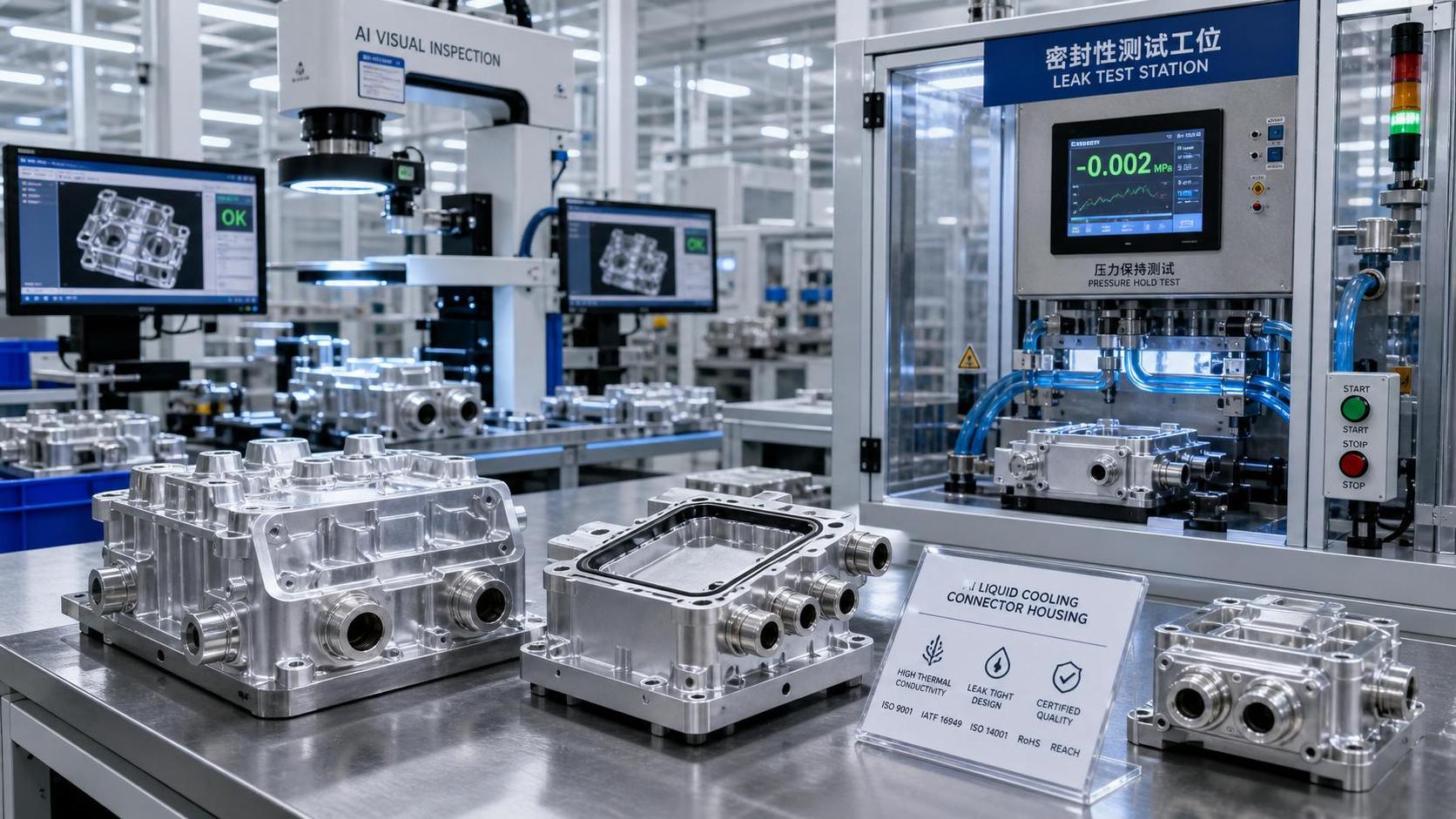
On June 15, 2026, Huayang Group disclosed that its Dongguan die-casting base had obtained NVIDIA OCP liquid-cooling ecosystem certification and had started mass production of high-thermal-conductivity AlSi7Mg-T6 connector housings. The development is noteworthy not simply as a supplier update, but as a signal that procurement rules for precision die-cast parts used in AI infrastructure are moving away from broadly applicable specifications toward customer-specific technical requirements, with likely implications for manufacturing, incoming inspection, distributor acceptance standards, and cross-border supply-chain execution.
What Has Been Confirmed So Far
According to the provided event summary, Huayang Group announced on June 15 that its Dongguan die-casting base had passed NVIDIA OCP liquid-cooling ecosystem certification. The company stated that it is mass producing connector housings made from high-thermal-conductivity AlSi7Mg-T6. The announced technical indicators include IT6 dimensional tolerance at ±0.008 mm and airtightness meeting IP67@3MPa. The same summary states that precision die-cast parts for AI infrastructure are shifting from "general standards" to "customer-specific specifications," and that overseas system integrators and distributors need to upgrade both testing capability and incoming material acceptance standards.
Where the New Thresholds May Be Felt First
Supplier qualification is becoming more specification-driven
From an industry perspective, precision die-casting manufacturers serving AI liquid-cooling applications may feel the change first in supplier qualification and bid participation. When procurement shifts toward customer-specific specifications, the practical impact is often seen in tighter review of process capability, dimensional verification, sealing performance records, and the ability to align production output with designated technical documents rather than broad category standards alone.
Distributors and system integrators face stricter incoming inspection demands
Analysis shows that overseas system integrators and distributors are directly affected because the event summary explicitly points to a need to upgrade testing capability and incoming acceptance criteria. In operational terms, this may influence inspection workflows, acceptance documentation, evidence retention, and technical communication between buyers and upstream suppliers when parts are received, approved, or rejected.
Testing and compliance support functions may carry more weight
What deserves closer attention is the role of inspection, verification, and technical documentation support. If customer-specific requirements increasingly define whether parts are acceptable, then conformity review may depend more heavily on whether measurement methods, tolerance records, sealing test results, and related technical files can be matched clearly to procurement specifications and delivery requirements.
Procurement and delivery coordination may need earlier alignment
Observably, the impact is not limited to manufacturing. Buyers, sourcing teams, and supply-chain service providers may need to pay closer attention to how specifications are written into purchasing documents, how acceptance criteria are translated into delivery conditions, and whether supplier submissions contain the technical materials needed for later traceability or claims handling.
What Companies Should Watch in Practice
Certification language and scope of compliance review
Analysis shows that companies should first examine how certification status is referenced in qualification, tender, and supply approval processes. The key issue is not to assume broader recognition than the disclosed information supports, but to verify how certification, part category, and acceptance expectations are described in actual commercial and technical documents.
Inspection reports and technical records as purchasing documents tighten
What deserves closer attention is whether buyers begin to request more detailed dimensional records, airtightness test evidence, material identification, or specification-matching files during supplier onboarding or shipment acceptance. The provided information does not define a uniform execution rule, so companies should treat this as a practical area for document readiness rather than a settled market standard.
Delivery planning under customer-specific specifications
From an industry perspective, when customer-specific specifications become more central, delivery risk can shift from volume alone to conformity at the time of receipt. Enterprises should therefore watch for changes in acceptance clauses, reinspection requirements, and technical sign-off steps that may affect shipment timing, replacement handling, and responsibility allocation across the supply chain.
Traceability and after-sales response expectations
Analysis shows that customer-specific parts can raise the importance of traceability in post-delivery coordination. Even without additional confirmed rule details, companies involved in export, distribution, and after-sales support should pay attention to whether quality issue handling increasingly depends on retained test records, batch linkage, and the consistency between supplied parts and approved technical specifications.
Why This Looks More Like an Execution Signal
Observably, this development is better understood as an execution signal than as a stand-alone product announcement. The disclosed combination of ecosystem certification, tight dimensional tolerance, and sealing performance points to a market environment in which access to AI liquid-cooling supply chains may depend more on verifiable specification alignment. At the same time, analysis also suggests caution: the provided information does not establish a universal rule across all buyers or all markets, so the pace and breadth of adoption still require ongoing observation through procurement documents, acceptance practice, and market feedback.
How This Development Should Be Read Now
At this stage, it is more appropriate to understand the event as evidence that technical standards are becoming a more explicit purchasing threshold for precision die-cast parts used in AI server liquid-cooling applications. The immediate significance lies in procurement, inspection, and supplier qualification rather than in any confirmed broad regulatory shift. For companies along the chain, the rational takeaway is to prepare for stricter specification matching and acceptance discipline while continuing to monitor how these requirements are implemented in actual transactions.
Basis of This Article and What Still Needs Verification
This article is generated from the user-provided news title, event date, and event summary. For developments of this kind, commonly relevant source types may include company announcements, regulatory releases, trade or customs authority information, industry association updates, standard-setting documents, certification-related materials, and reporting by authoritative industry media. No specific official source link was provided in the input, so the underlying official publication path still requires further verification. It also remains necessary to monitor later clarification on certification application scope, execution standards in tender and procurement files, incoming inspection practices, industry feedback, and how companies implement these requirements in delivery and supply-chain management.