
Vietnam Tightens Connector Import Test Requirement

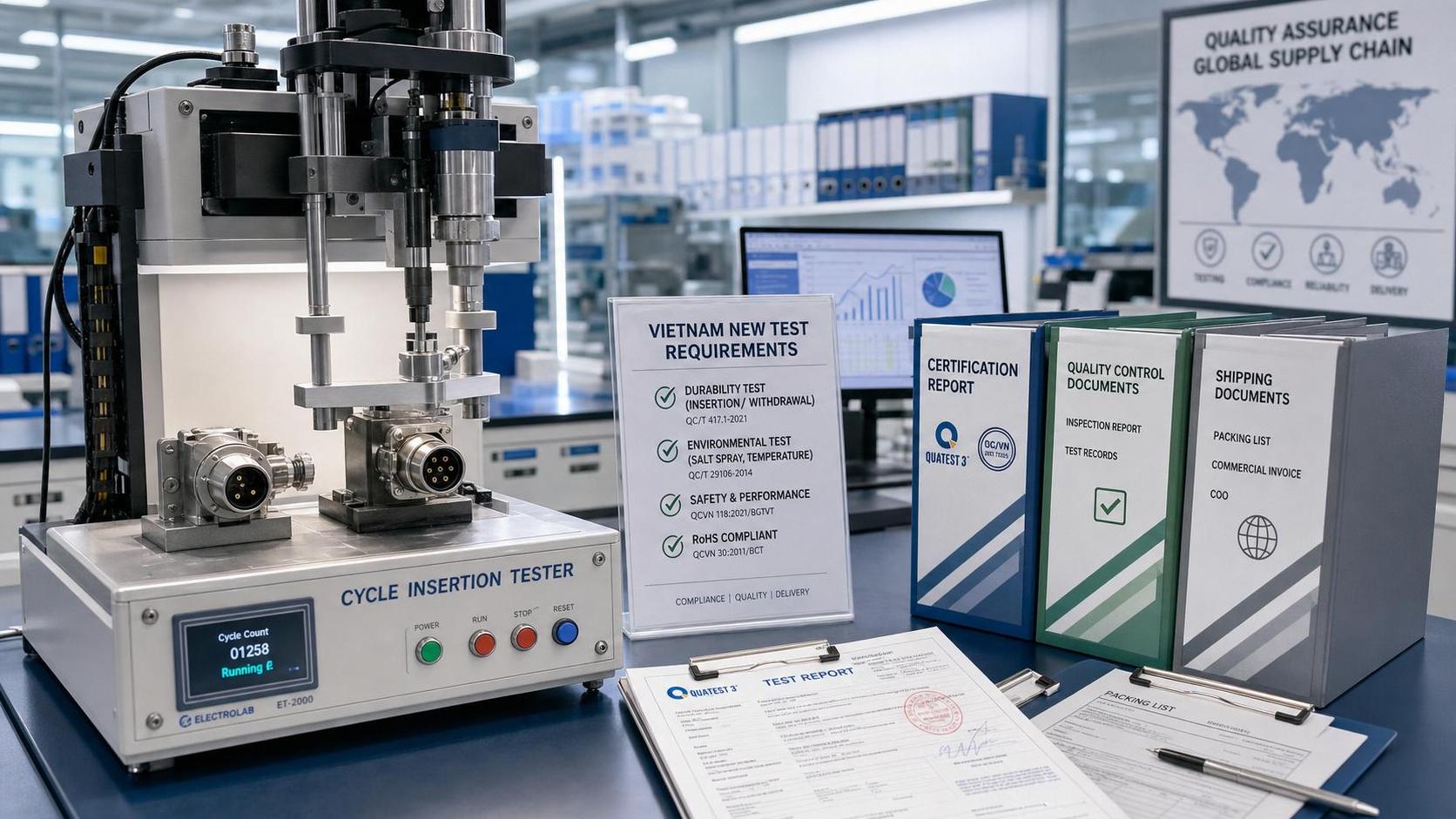
From October 1, 2026, a revised Vietnamese import technical requirement will add a new compliance checkpoint for industrial electrical connectors entering the market. The change centers on an additional 10,000-cycle insertion and withdrawal durability test under IEC 62196-2:2023, together with a test report issued by a laboratory recognized by TCVN. For exporters, buyers, testing-related service providers, and supply chain teams handling shipments to Vietnam, this is worth close attention because it affects qualification timing, documentation readiness, and delivery planning rather than product description alone.
What the revised rule now requires
According to the provided information, Vietnam's Ministry of Industry and Trade (MOIT) issued Circular No. 28/2026/TT-BCT on June 27, 2026. Starting on October 1, 2026, industrial electrical connectors imported into Vietnam must additionally pass the 10,000-cycle insertion and withdrawal life test specified in IEC 62196-2:2023. Importers must also submit a test report issued by a laboratory recognized by the Vietnam standards authority, TCVN. The rule change is described as having a significant effect on type-testing arrangements and delivery schedules for Chinese connector exporters.
Where the commercial impact is likely to appear first
Export qualification and shipment scheduling
From an industry perspective, exporters shipping industrial connectors to Vietnam may be affected first because the new requirement adds a specific testing item and a document recognition condition. The operational impact is likely to fall on type-testing plans, shipment preparation, and delivery commitments. What deserves closer attention is whether existing product files and test schedules are aligned with the added IEC 62196-2:2023 durability requirement before goods are arranged for export.
Procurement and supplier approval workflows
For procurement teams and buyers sourcing connectors for the Vietnamese market, the change may affect supplier screening and order timing. Analysis shows that the new requirement is not only about whether a connector can be supplied, but also whether the supporting report comes from a TCVN-recognized laboratory. That means purchasing decisions may need to pay closer attention to compliance documentation, supplier test status, and the readiness of technical files tied to incoming orders.
Testing and certification-related service coordination
Testing-related service providers and internal compliance teams may also feel the effect through document review and laboratory coordination. Observably, the issue is not limited to the existence of a test result; the recognition status of the issuing laboratory is part of the requirement described in the input. This can influence how companies sequence testing, document collection, and submission preparation for imports into Vietnam.
Practical points companies should review now
Check whether current test plans cover the added durability item
Analysis shows that companies with products already prepared for export to Vietnam should review whether their current type-testing arrangements include the 10,000-cycle insertion and withdrawal life test under IEC 62196-2:2023. If not, the gap is likely to affect product release timing and customer delivery discussions.
Verify the acceptability of laboratory-issued reports
What deserves closer attention is the report issuer requirement. The provided information states that the report must come from a laboratory recognized by TCVN. Companies involved in exports, sourcing, or compliance should therefore pay attention to whether their planned or existing testing route matches this recognition condition, especially when preparing import documentation.
Reassess lead times in contracts and order planning
Observably, the rule change should be reviewed together with contract lead times, booking plans, and customer delivery expectations. Because the input specifically notes an effect on testing arrangements and delivery timing, businesses may need to recheck order promises, internal milestones, and procurement schedules connected to Vietnam-bound products.
Watch for execution details beyond the headline requirement
The input does not provide further implementation detail beyond the new test item, the effective date, and the laboratory recognition condition. It is therefore more appropriate to treat questions around practical interpretation, submission handling, and market-side execution as matters that still require monitoring rather than settled outcomes.
Why this looks like an execution signal, not just a policy headline
Analysis shows that this update is more than a general policy statement because it ties market access to a named technical standard requirement and to a specified form of laboratory recognition. At the same time, it would be premature to treat every downstream effect as fixed, since the provided information does not include fuller operational guidance. It is more appropriate to understand this as a rule change that has already reached the implementation stage in principle, while the exact execution rhythm and market response still deserve continued observation.
How this development is best understood at this stage
At this stage, the Vietnamese revision should be read as a concrete compliance change for industrial connector imports, with immediate relevance for testing preparation, documentation control, and shipment timing. From an industry perspective, the most rational reading is neither to overstate the impact nor to treat it as a routine wording update. It is better understood as a practical import requirement change that can influence trade execution and delivery planning, especially for exporters already serving Vietnam.
Basis of this article and what still needs verification
This article is generated from the user-provided news title, event date, and event summary. For developments of this kind, commonly relevant source categories include official government notices, releases from regulatory authorities, customs or trade administration information, industry association updates, standard organization documents, and reporting by established trade media. A specific official source link was not provided in the input, so that point still requires follow-up verification. Further observation should focus on implementation details, certification interpretation, document acceptance practice, changes in tender or technical file requirements, market feedback, and how affected companies execute the new requirement in practice.