Why niche industrial fields favor custom connectors

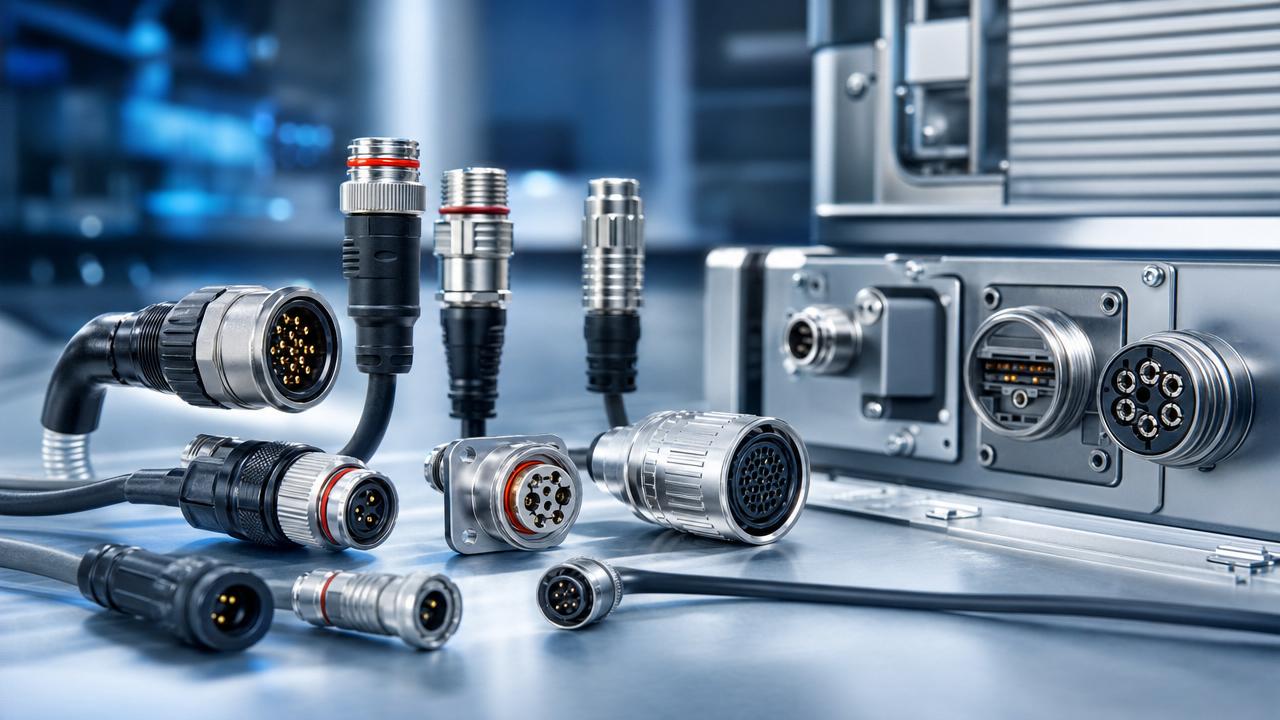
In niche industrial fields, standard connectors often miss critical requirements. They may not survive vibration, corrosive media, tight installation spaces, or strict signal integrity demands.
That is why custom connectors have become a preferred solution across niche industrial fields. They improve fit, reliability, compliance, and lifetime value in specialized systems.
For industrial decision-making, this shift is not only technical. It also affects maintenance planning, qualification speed, export readiness, and total system stability.
Why do niche industrial fields rely more on custom connectors than standard options?
Niche industrial fields operate outside average design assumptions. Many applications face rare combinations of temperature, moisture, dust, shock, pressure, and electromagnetic interference.
Standard connectors are built for broad compatibility. That works well in general equipment, but niche industrial fields often need exact geometry and tailored electrical performance.
Custom connectors solve these gaps by aligning every detail with the host system. Pin count, sealing level, shell material, locking method, and cable interface can be optimized together.
This matters in sectors where one weak interface can stop an expensive line. In niche industrial fields, a connector is often a risk control component, not a commodity part.
- Non-standard dimensions inside compact equipment
- Exposure to oils, salt, solvents, or metal particles
- Mixed power, signal, and data transmission needs
- Mandatory sealing, shielding, or flame resistance targets
- Frequent mating cycles or tool-free field servicing
What makes custom connectors more suitable for harsh and specialized environments?
The main advantage is controlled adaptation. Custom connectors are designed around the actual stress profile instead of forcing the application to fit catalog limitations.
In niche industrial fields, environmental resistance can define product success. Small material changes may greatly improve durability and reduce unexpected downtime.
Material and sealing choices
Shells may use stainless steel, engineered polymers, brass, or aluminum alloys. Contact plating may shift from standard tin to gold or silver for stronger conductivity and corrosion resistance.
Seals can also be tuned. Gasket compounds, overmolding, and ingress protection levels are chosen according to washdown exposure, chemical contact, or outdoor service conditions.
Mechanical retention and vibration control
Many niche industrial fields involve heavy vibration. Screw locks, bayonet couplings, push-pull designs, and anti-rotation features prevent intermittent disconnection and signal loss.
Cable strain relief is equally important. A custom connector can spread bending stress better, protecting conductors and extending the life of moving assemblies.
Electrical and signal performance
Niche industrial fields increasingly combine sensors, controls, and power circuits. Custom connectors can separate channels, improve shielding, and support specific impedance or current ratings.
That reduces noise, overheating, and communication errors. The result is more predictable performance in automation, tooling, energy systems, and compact industrial devices.
Which niche industrial fields benefit most from custom connectors?
The strongest need appears where failure costs are high and operating conditions are unusual. These factors are common across many niche industrial fields.
Precision manufacturing and tooling
Mold systems, CNC accessories, and inspection fixtures often have limited space. They may also face coolant exposure, repetitive motion, and strict positioning requirements.
Custom connectors help integrate signals and power into compact layouts. They also support repeatable connection quality in production environments with frequent equipment changeovers.
Industrial electrical and automation systems
Control cabinets, pneumatic lines, robotic modules, and sensing units often demand mixed interfaces. A standard part may create unnecessary adapters, bulk, and assembly complexity.
In niche industrial fields, custom connectors can reduce wiring errors, simplify routing, and improve maintenance accessibility. This supports cleaner system architecture.
Outdoor, transport, and energy-related equipment
Applications exposed to rain, UV, dust, and thermal cycling require more than basic sealing. Connector failure in such environments can quickly damage upstream and downstream components.
Custom connectors allow better material pairing and housing protection. That makes them highly relevant in demanding niche industrial fields with long field-service expectations.
How should custom connectors be evaluated before selection?
A sound evaluation starts with the application, not the catalog. In niche industrial fields, the wrong first assumption often leads to redesign, extra validation, or premature failure.
Focus on performance boundaries, integration constraints, and lifecycle realities. Connector selection should be tied directly to the equipment’s full operating context.
It is also wise to review assembly methods. Crimping, soldering, overmolding, and field termination all affect quality consistency and service practicality.
Are custom connectors more expensive, or do they lower total cost?
Unit price is usually higher. However, niche industrial fields rarely benefit from price-only decisions because connector costs are small compared with failure consequences.
A custom solution can lower total cost by reducing adapters, installation labor, warranty issues, and emergency replacement frequency. It can also shorten maintenance interventions.
When a standard connector requires extra housings, cable modifications, or protective parts, its apparent savings often disappear. Hidden integration costs can exceed the initial price gap.
Cost areas worth comparing
- Prototype and validation expense
- Assembly time and error reduction
- Maintenance frequency
- Downtime risk and lost output
- Certification or export compliance support
For niche industrial fields, the better question is not “Is it cheaper today?” but “Does it protect performance over the product lifecycle?”
What common mistakes should be avoided when specifying custom connectors?
One mistake is copying a standard interface into a specialized application without testing real operating stress. Another is overlooking cable movement, cleaning chemicals, or panel thickness variation.
Some projects focus on mechanical fit only. In niche industrial fields, electrical noise, grounding, shielding, and heat rise can be equally decisive.
It is also risky to ignore long-term sourcing stability. A custom connector should balance uniqueness with manufacturability and supply continuity.
A disciplined specification process reduces these issues. Clear drawings, test criteria, and compliance targets help custom connectors deliver dependable results.
How can industrial teams move from interest to implementation?
Begin with failure history and application mapping. Document where current interfaces create leaks, signal issues, loose fits, assembly delays, or repeated service calls.
Next, rank requirements into essential and optional items. In niche industrial fields, targeted customization often outperforms excessive complexity.
Then request samples or prototypes for validation. Test thermal cycling, vibration, ingress resistance, and mating durability before broad deployment.
Finally, align the connector plan with broader system goals. GHTN’s industrial perspective shows that precision components create value when they support manufacturability, compliance, and long-term competitiveness together.
Why do niche industrial fields favor custom connectors? Because specialized operations need specialized interfaces. The right connector protects uptime, simplifies integration, and strengthens the full industrial chain.
For the next step, evaluate your most failure-prone interfaces first. In niche industrial fields, small connection improvements often produce outsized operational gains.