
Brazil Switch Rule Shifts to NBR IEC 62301:2023

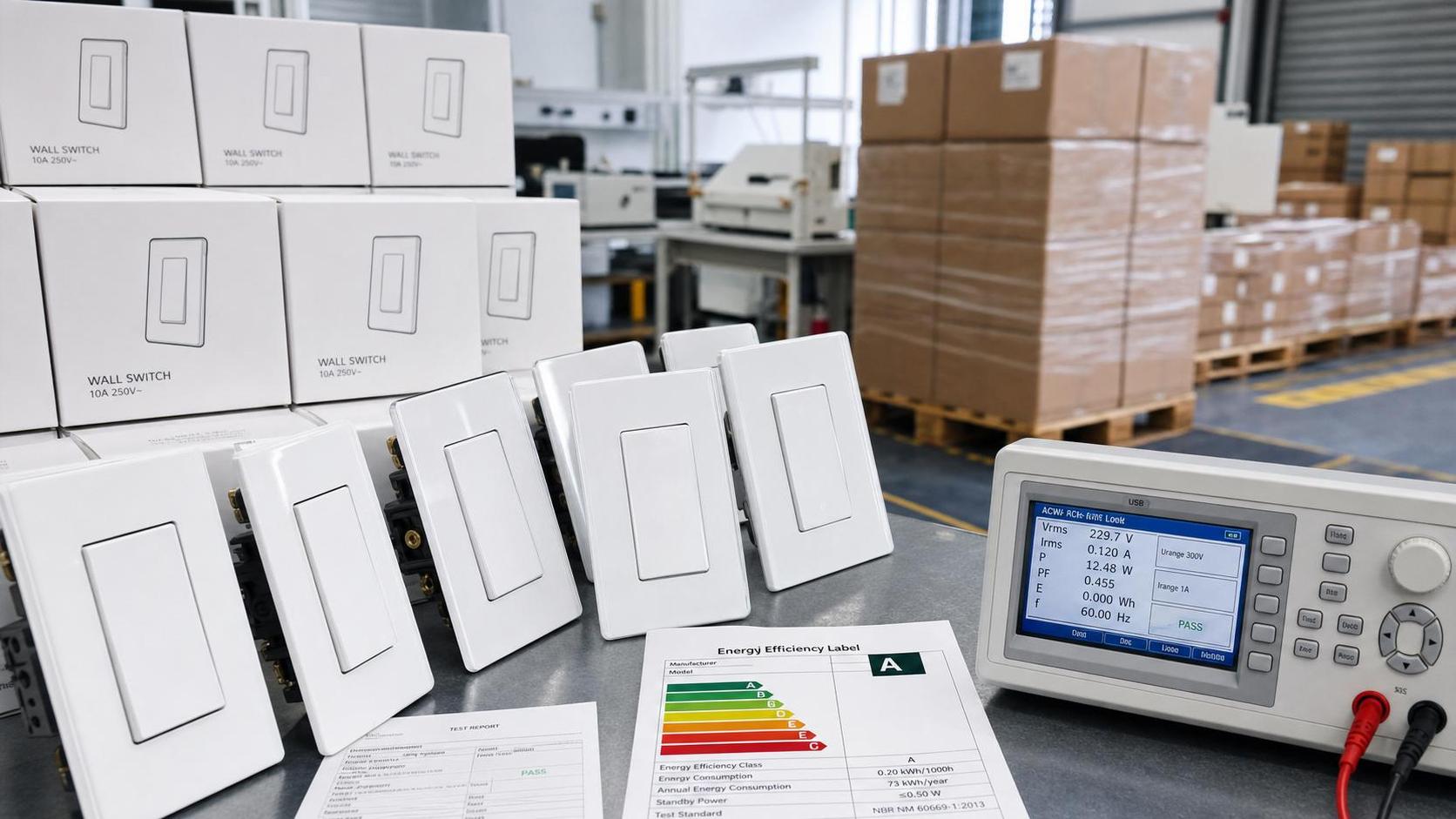
As of August 1, 2026, Brazil’s compliance requirements for imported switches move onto a new track: products entering the market must be tested under NBR IEC 62301:2023 and carry a bilingual Portuguese-English energy efficiency label. The change follows INMETRO’s Portaria No. 142/2026, issued on June 26, 2026, and it matters not only to exporters and importers, but also to manufacturers, certification planning teams, supply chain coordinators, and buyers managing shipment timing and product documentation. With the older NBR NM 62301:2013 certification set to lose validity 90 days later, the issue is less about headline policy language and more about how quickly affected businesses can align ongoing trade and delivery arrangements.
What the New INMETRO Rule Requires
According to the information provided, Brazil’s National Institute of Metrology, Standardization and Industrial Quality (INMETRO) issued Portaria No. 142/2026 on June 26, 2026.
Under that measure, all imported switches must, from August 1, 2026, comply with the updated energy efficiency test standard NBR IEC 62301:2023 and carry a bilingual energy efficiency label in Portuguese and English.
The previous certification basis, NBR NM 62301:2013, will become invalid after 90 days. The adjustment affects about US$210 million in annual Chinese switch exports to Brazil.
Where the Pressure Is Likely to Appear First
Export-facing manufacturers and trading companies
From an industry perspective, these companies are closest to the compliance change because they are directly exposed to Brazilian import requirements. The immediate impact is likely to center on product testing status, certification transition timing, and whether goods prepared for shipment still match the valid standard and labeling rules. What deserves closer attention is the overlap period between the August 1 implementation date and the later expiry of the older certification basis, because that can affect planning, documentation, and shipment sequencing.
Importers, distributors, and channel operators in Brazil
Observably, companies handling market entry and downstream circulation may face pressure around product acceptance, labeling conformity, and inventory decisions. Their concern is not only whether a switch has been tested, but whether the test basis and label presentation match the new rule at the time of import and sale. This makes document review and supplier coordination more important in the near term.
Supply chain and logistics service providers
Analysis shows that service providers involved in customs support, shipment scheduling, and trade documentation may also be affected indirectly. When a rule change is tied to a specific start date and an older certification loses validity on a fixed timeline, the practical issue often sits in handover timing: which goods are in production, which are in transit, and which supporting documents are attached to each shipment. Even without broader market changes, this type of transition can tighten the operational margin for cross-border delivery.
Procurement teams and end-use buyers
For procurement teams sourcing switches for Brazilian projects or resale, the main issue is supply continuity under the new compliance condition. They may need to verify whether suppliers have already moved to NBR IEC 62301:2023 and whether bilingual labeling has been prepared correctly. The business effect is less about the policy text itself and more about purchase timing, supplier readiness, and the risk of non-compliant deliveries.
What Companies Should Watch Now
Track the transition between the new and old certification bases
The key practical point is that the new requirement starts on August 1, 2026, while the older NBR NM 62301:2013 certification remains valid only for 90 days after that policy change. Companies involved in shipments to Brazil should therefore distinguish between policy publication, implementation timing, and the sunset of the prior certification basis, rather than treating them as a single date.
Check whether product files and labels match the updated requirement
The rule is not limited to testing alone. The requirement for a bilingual Portuguese-English energy efficiency label means businesses should review not only technical compliance status but also packaging, labeling, and supporting product materials tied to market entry. In operational terms, this is where compliance gaps can become visible late in the shipment process.
Review affected SKUs and shipment pipelines
For companies serving Brazil, a focused review of switch models already in production, awaiting shipment, or under negotiation is likely to be more useful than a broad policy response. Analysis shows that the most exposed products are those moving through the trade pipeline during the transition window, particularly where legacy certification or older label formats are still in use.
Align customer and supplier communication early
What deserves closer attention is communication across the chain. Exporters, importers, certification contacts, and buyers may each be working from different assumptions about when the new standard applies and when the old certification can still be used. Early clarification on test basis, label status, and document readiness can reduce avoidable disputes over delivery timing and acceptance conditions.
Why This Looks Like More Than a Routine Paper Update
As an editorial observation, this development is best read as an operational compliance shift with immediate trade relevance rather than as a distant policy signal. The confirmed facts already establish a clear requirement change, a defined implementation date, a labeling condition, and a sunset period for the previous certification basis.
At the same time, it is more appropriate to understand this as a transition that still requires close monitoring, not a fully settled end state for every market participant. The reason is practical: implementation risk often depends on timing, documents, and product-specific readiness, and those details shape how strongly the rule affects different companies.
How the Market Is Most Likely to Read This
The industry significance of this update lies in its direct effect on market access for imported switches entering Brazil. Based on the information provided, the change has clear relevance for a trade flow worth about US$210 million annually from China to Brazil, which gives the rule weight beyond a narrow technical revision.
Still, the most balanced reading is that this is an immediate compliance change with broader signaling value. In the short term, it requires attention to testing, labeling, and shipment execution. Over a longer horizon, it may also be watched as a sign of how technical compliance expectations are being tightened in actual import practice. For now, it is more appropriate to treat the update as a concrete business requirement combined with a continuing need for verification during the transition period.
Basis of This Article and What Still Needs Verification
This article is based on the user-provided news title, event date, and event summary concerning INMETRO’s Portaria No. 142/2026, the August 1, 2026 implementation date, the NBR IEC 62301:2023 testing requirement, the bilingual Portuguese-English labeling requirement, the 90-day expiry of NBR NM 62301:2013 certification validity, and the stated impact on about US$210 million in annual Chinese switch exports to Brazil.
For this type of industry update, relevant source categories typically include official regulatory notices, company compliance notices, industry association updates, authoritative media reports, and standard-related documents. No specific official source link was provided in the input, so the exact source document path still needs ongoing verification. Continued attention should focus on any further official wording, implementation clarification, and practical guidance affecting certification timing and labeling execution.