
How to read international electrical standards correctly

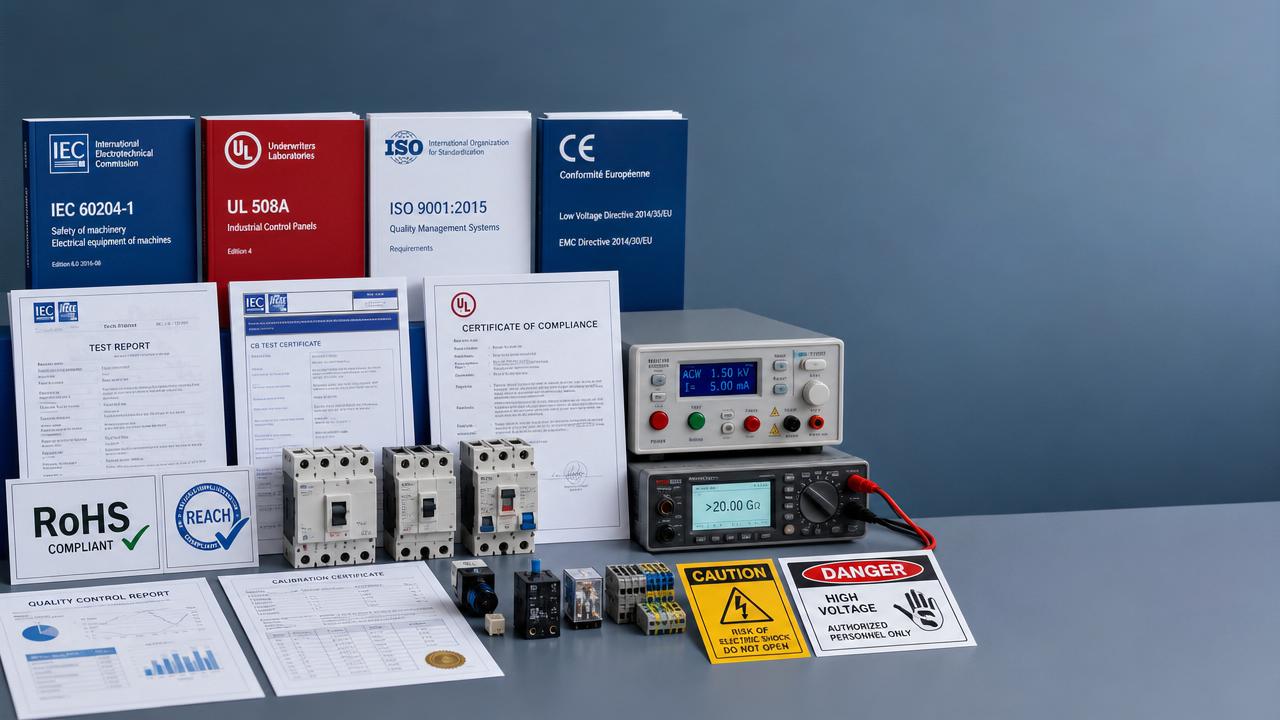
For quality control and safety managers, knowing how to read international electrical standards correctly is essential to reducing compliance risks, improving inspection accuracy, and protecting end users. This guide explains the logic behind international electrical standards, helping you interpret technical clauses, compare requirements across markets, and make more confident decisions in sourcing, production, and regulatory review.
When professionals search for guidance on reading international electrical standards, they usually do not want theory alone. They want a practical way to understand what a standard really requires, what applies to their product, and where compliance risks usually hide.
For quality control and safety teams, the biggest challenge is not finding a standard number. It is interpreting scope, normative references, test conditions, definitions, and exceptions correctly enough to support sourcing, inspection, certification, and market access decisions.
The most useful approach is to read standards as structured risk-control documents rather than as isolated technical texts. Once you understand that logic, international electrical standards become easier to compare, audit, and apply in real manufacturing environments.
Why reading international electrical standards correctly matters in daily quality and safety work
Misreading a clause can lead to the wrong test method, the wrong material choice, or the wrong labeling format. In electrical products, those errors often remain invisible until a pre-shipment inspection, certification review, customs check, or field failure.
That is why quality control and safety managers should treat standards interpretation as an operational discipline. Correct reading improves incoming inspection, supplier communication, internal validation, corrective action planning, and cross-border compliance management.
It also reduces a common business risk: assuming that passing one local requirement means global acceptance. Many international electrical standards overlap, but they are not automatically interchangeable across regions, certification schemes, or product categories.
In practice, accurate interpretation supports three outcomes. It helps teams decide which requirements are mandatory, which are conditional, and which are market-specific. That distinction is central to efficient compliance planning.
Start with the first question: which standard actually applies to your product?
The first mistake many teams make is reading a standard before confirming applicability. A standard may look relevant because of a similar product name, but scope is defined by function, operating conditions, installation environment, rated values, and intended users.
Begin with the scope clause. Read it slowly and compare every condition with your product: voltage range, power source, indoor or outdoor use, fixed or portable installation, household or industrial context, and whether the product includes control electronics.
Then check the exclusions. Standards often state what they do not cover, and these exclusions are just as important as the main scope. An excluded feature may move your product into another standard family entirely.
For example, a component used inside industrial equipment may not be assessed the same way as a standalone consumer device. The same hardware can face different requirements depending on its final application and installation context.
Quality managers should create a short applicability checklist before deeper reading. This should include product description, electrical ratings, use environment, end market, and whether the standard is for components, end products, or installation systems.
Understand the structure of a standard before interpreting individual clauses
Most international electrical standards follow a recognizable architecture. If you know how the document is built, you can locate critical compliance information faster and avoid reading isolated requirements out of context.
Typical sections include scope, normative references, terms and definitions, classification, markings and instructions, construction requirements, test methods, acceptance criteria, annexes, and sometimes national deviations or informative guidance.
Do not jump straight to a test table. First read the definitions. In electrical standards, a single defined term can change how an enclosure, accessible part, protective device, or insulation system should be evaluated during inspection or certification.
Next, check whether the annexes are normative or informative. A normative annex is part of the mandatory requirement structure. An informative annex may explain background or examples, but it does not always impose direct obligations.
This distinction matters because many teams overreact to explanatory notes while underestimating binding annexes. Good standards reading means identifying where enforceable requirements actually sit within the document hierarchy.
Learn the language signals that reveal obligation, condition, and recommendation
International electrical standards are written in controlled technical language. Words such as “shall,” “should,” “may,” and “can” are not stylistic choices. They signal different levels of obligation and must be read precisely.
“Shall” indicates a mandatory requirement. If your product or process does not meet a clause written with “shall,” you do not comply. This is the most important word for quality and safety teams to monitor.
“Should” generally expresses a recommendation rather than a strict compliance condition. It may still reflect best practice, but it does not always create a certification failure unless another clause or market rule makes it binding.
“May” usually indicates permission, while “can” often describes possibility or capability. Misreading these words can lead to over-testing, unnecessary design changes, or false assumptions about pass-fail criteria.
Also watch conditional phrases such as “if applicable,” “where provided,” “when intended,” or “under normal use.” These qualifiers narrow the requirement. They help you determine whether a clause applies to every unit or only specific configurations.
How to read normative references without getting lost
Normative references are one of the main reasons standards feel difficult. A product standard may depend on multiple related documents, and a key requirement may only make full sense when read alongside those referenced standards.
Start by separating essential references from background references. If a document is listed as normative, its relevant content is effectively part of the compliance requirement, even if the detailed rule appears elsewhere.
Then identify what role each referenced document plays. One may define test methods, another material properties, another environmental conditions, and another terminology. Knowing the function of each reference saves time and reduces confusion.
Do not assume that you must read every page of every referenced document immediately. Instead, map which clauses in your main standard trigger the need to consult a referenced standard. Read by compliance pathway, not by document volume.
For inspection planning, it helps to maintain a reference matrix listing standard number, edition, linked clauses, relevant product features, test implications, and responsible internal owners. This turns a complex standards set into a workable control tool.
Focus on the clauses that drive the highest compliance risk
Not every clause carries equal practical risk. Quality control and safety managers should prioritize the sections most likely to cause product rejection, safety incidents, recalls, or certification delays.
Usually, the highest-risk areas include electric shock protection, insulation coordination, temperature rise, abnormal operation, creepage and clearance distances, flammability, protective earthing, mechanical strength, and marking requirements.
Markings and instructions are often underestimated. A technically sound product can still fail market entry because warning language, rating labels, wiring symbols, language requirements, or installation instructions do not match the standard.
Test conditions are another frequent trap. A product may pass internal validation but fail formal assessment because the sample configuration, ambient temperature, mounting method, load condition, or sequence of tests was interpreted incorrectly.
If you must triage effort, read construction requirements together with corresponding test methods and acceptance criteria. Those three elements must be connected. A design feature only matters in compliance terms if the standard explains how it is verified.
How to compare international electrical standards across markets
Many companies sell one electrical product into several markets and assume one report can support all regions. Sometimes that is true, but often only partly. Correct comparison requires more than matching standard titles.
Begin with the edition and publication date. Standards evolve, and different markets may adopt different editions at different times. A product aligned with an older edition may not satisfy new clauses introduced for emerging hazards or technologies.
Next, check whether the local market uses an identical adoption, a modified adoption, or a national deviation. IEC-based standards, for example, may be adopted regionally with additions that affect testing, documentation, or installation assumptions.
Then compare critical categories: scope, definitions, ratings, environmental assumptions, test severity, labeling rules, and documentation obligations. Even small wording changes can alter factory controls or required evidence.
For safety managers, the key question is not “Are these standards similar?” but “Where do differences change design, test burden, or release decisions?” A structured gap analysis is more useful than a general comparison summary.
Practical reading method for QC and safety teams
A good reading process is systematic. First, confirm product applicability. Second, identify mandatory clauses. Third, mark all conditional requirements. Fourth, connect each requirement to evidence, test method, or inspection checkpoint.
Create a clause-by-clause review sheet. Include the clause number, plain-language interpretation, product impact, proof required, department owner, current status, and open questions. This converts a dense document into an action-based compliance file.
When a clause is unclear, do not let one person interpret it alone. Review it with engineering, regulatory, testing, and sourcing colleagues. International electrical standards often sit at the intersection of design intent and production reality.
For supplier control, extract the clauses that influence purchased materials or components. Then translate them into measurable purchase requirements, drawings, incoming inspection items, and supplier declaration formats.
For factory audits, focus on whether the production process still preserves the conditions under which the product was assessed. A compliant design can become non-compliant if materials, routings, spacings, fasteners, or labels change without review.
Common interpretation mistakes that create avoidable compliance failures
One common mistake is reading only summaries, training slides, or secondary articles instead of the actual standard text. Helpful guidance has value, but final decisions must always return to the formal requirement language.
Another mistake is ignoring definitions and notes. Notes may not always be mandatory, but they often clarify the technical meaning of a requirement. Definitions are even more important because they shape what the clause governs.
Teams also often confuse product standards with installation codes or component standards. A certified component does not automatically make the final product compliant, and a compliant product may still face separate installation obligations.
Edition control is another recurring issue. If purchasing, engineering, and testing departments use different versions of the same international electrical standards, discrepancies will appear in drawings, reports, and release criteria.
Finally, some organizations treat standards reading as a one-time event. In reality, interpretation must be updated when product configuration changes, suppliers change, target markets expand, or certification bodies issue new guidance.
How to turn standards reading into a stronger compliance system
Reading standards correctly should not depend on individual memory. The best-performing organizations build internal systems that capture interpretation logic and make it repeatable across product lines and teams.
Maintain a controlled standards library with edition status, market relevance, and ownership. Add internal reading notes, approved interpretations, and links to test reports, risk assessments, and design rules.
Train inspectors and safety personnel to recognize the difference between a clause, a test method, and an acceptance criterion. This strengthens communication with laboratories, certification bodies, and overseas customers.
Use standards interpretation during new product introduction, supplier qualification, process change review, and corrective action analysis. The earlier the requirement is understood, the lower the cost of compliance.
For global manufacturers and distributors, this is not just a technical exercise. It is a business capability that improves speed to market, reduces rework, and protects brand trust in regulated electrical sectors.
Conclusion: read international electrical standards as decision tools, not just technical documents
To read international electrical standards correctly, start with scope, verify applicability, understand document structure, respect mandatory language, follow normative references carefully, and connect every clause to real product evidence.
For quality control and safety managers, the goal is not simply to decode technical wording. It is to make better decisions about sourcing, design verification, inspections, labeling, certification, and market access with fewer surprises.
When international electrical standards are read systematically, they become practical tools for risk reduction and operational control. That is how teams improve inspection accuracy, reduce compliance gaps, and protect end users more effectively.
In a global industrial environment, correct interpretation is a competitive advantage. It helps organizations move from reactive compliance to confident, evidence-based quality and safety management.
Related News