
How to read international electrical standards without costly gaps

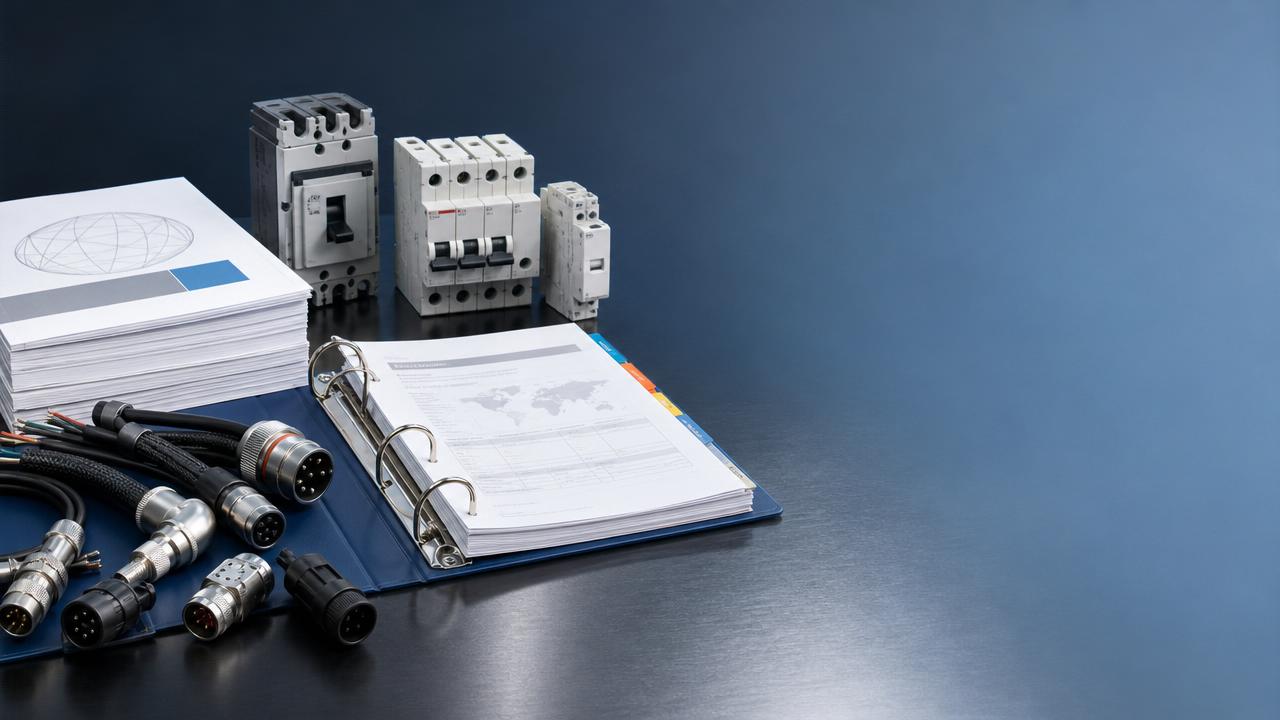
For technical evaluators, learning how to read international electrical standards is essential to avoiding compliance blind spots, costly redesigns, and cross-border approval delays. This guide breaks down the logic behind international electrical standards, helping you interpret scope, testing criteria, and certification language with greater confidence so you can make faster, more accurate decisions in complex industrial sourcing and product assessment.
Why reading standards has become a strategic skill, not just a technical task
The biggest change in recent years is that international electrical standards are no longer treated as static reference documents used at the end of product development. For technical evaluators in industrial sourcing, they now shape product selection, supplier qualification, risk screening, and market access decisions much earlier. As supply chains become more international and electrical products move across multiple jurisdictions, even a small misunderstanding of a clause can trigger redesign, retesting, delayed customs clearance, or failed approval in a target market.
This matters across the broader industrial ecosystem. A cable assembly, control panel, connector, switchgear component, power tool accessory, or molded insulating part may each sit inside a larger system. If one part is assessed against the wrong edition, wrong test method, or wrong application scope, the downstream effect can spread to OEM timelines, distributor inventory, and field reliability. That is why the ability to read international electrical standards accurately has shifted from a niche compliance function to a core evaluation capability.
For organizations such as GHTN, which track electrical compliance trends alongside tooling and industrial component performance, this shift reflects a broader market reality: buyers increasingly want components that are not only functional and cost-competitive, but also document-ready, audit-ready, and market-ready.
The main trend signals technical evaluators should not ignore
Several signals explain why international electrical standards are becoming harder to read casually and more important to interpret rigorously. First, standards are increasingly linked to system-level safety, not just standalone product performance. Second, the same product may face different acceptance expectations depending on whether it enters the EU, North America, the Middle East, or Southeast Asia. Third, digital product documentation and traceable testing records are becoming more visible in procurement reviews.
Another notable trend is the growing gap between certificate possession and actual compliance understanding. Many firms can show a test report or mark, but fewer can explain what exact configuration was tested, which clauses were covered, what exclusions apply, or whether the certified sample matches the commercial version. For technical evaluators, this is where reading international electrical standards carefully creates real value.
Trend change snapshot
What drives these changes in international electrical standards
The first driver is product complexity. Electrical components are increasingly integrated with automation, connectivity, tighter thermal limits, and more compact designs. This means standards must address not only basic insulation and mechanical integrity, but also fault behavior, environmental endurance, and interaction with adjacent systems. A standard that once seemed straightforward may now include references to installation conditions, abnormal operation, or specific material performance categories.
The second driver is global sourcing. Buyers often compare multiple factories across countries while expecting equivalent compliance reliability. That expands the importance of harmonized standards, but it also exposes interpretation gaps. Two suppliers may both say they meet IEC or another recognized framework, yet one may rely on self-declaration while the other has a third-party report based on a newer edition.
The third driver is regulatory enforcement pressure. Authorities, notified bodies, and large OEMs are increasingly sensitive to product traceability, risk documentation, and technical file completeness. This does not always mean more rules, but it does mean less tolerance for vague claims. In practice, technical evaluators must read international electrical standards with a stronger eye for scope statements, normative references, test conditions, and limits of applicability.
How to read international electrical standards without costly gaps
A useful reading method is to stop treating standards as linear documents and start reading them as decision maps. The goal is not to memorize every clause, but to identify which parts change the evaluation outcome. In most cases, technical evaluators should begin with five checkpoints before reviewing detailed test requirements.
1. Start with scope before anything else
The scope tells you what the standard covers, what it excludes, and sometimes under which conditions it applies. Many compliance mistakes begin when a product appears similar to a covered category but differs in installation, voltage range, user environment, or intended application. If the scope does not fit, the rest of the standard may be irrelevant or incomplete for your use case.
2. Check the edition and transition status
A standard citation without an edition year is a warning sign. International electrical standards evolve, and the valid edition in one approval pathway may differ from another. Technical evaluators should ask whether the supplier evidence matches the latest required edition, whether there is a grandfathering period, and whether major clause changes affect construction or testing.
3. Identify normative references early
One of the most overlooked areas in international electrical standards is the chain of referenced documents. A product may appear compliant with a main standard, yet fail in materials, wires, enclosure protection, flammability, or component-level requirements referenced elsewhere. Normative references are not background reading; they are often mandatory parts of the compliance logic.
4. Separate design requirements from test requirements
Some evaluators focus only on whether a test report exists. That is not enough. Standards usually combine construction rules, markings, creepage and clearance expectations, temperature limits, dielectric tests, abnormal tests, and documentation obligations. A passed test cannot automatically compensate for a design feature that the standard explicitly prohibits.
5. Read the certification language carefully
Terms such as recognized, listed, approved, verified, compliant, or tested are not interchangeable. The credibility of a claim depends on who issued it, for what configuration, and under which scheme. Technical evaluators should confirm the exact model family, rating, limitations, installation conditions, and whether deviations were accepted during evaluation.
Where technical evaluators most often misread standards
The most common gap is assuming that standard names alone guarantee equivalence. For example, a supplier may reference IEC alignment, but your target customer may require country-specific deviations, national adoption details, or additional performance conditions. Another common mistake is overlooking end-use assumptions. A component tested in a laboratory setup may not be suitable for the actual enclosure temperature, pollution degree, duty cycle, or vibration profile in your intended system.
A third blind spot is reading only the certificate summary instead of the supporting report logic. Summary pages rarely explain sample conditioning, pass criteria, exceptions, or test sequence. When timelines are tight, this shortcut is tempting, but it is exactly how costly compliance gaps are missed.
High-risk interpretation points
Who feels the impact most across the industrial chain
The impact of poorly read international electrical standards is not limited to compliance teams. Technical evaluators sit at the intersection of engineering, sourcing, quality, and market entry, which means their interpretation affects multiple business functions.
For OEMs, the risk is delayed launch and redesign cost. For distributors, the risk is stocking products that cannot be sold into key markets. For component manufacturers, the risk is losing bids because documentation does not align with buyer expectations. For mold and tooling partners, the consequence may be late-stage design changes in insulating housings, connector geometry, or spacing features once electrical requirements are properly understood.
This is why a portal with cross-sector visibility, such as GHTN, becomes useful: electrical compliance trends do not exist in isolation. They influence tooling decisions, material selection, production tolerances, and aftermarket service strategy.
What to watch next as standards and market expectations keep shifting
Going forward, technical evaluators should watch for three developments. First, expect continued emphasis on application-specific interpretation. General conformity claims will carry less weight than evidence tied to real operating conditions. Second, expect stronger linkage between electrical safety documentation and broader product data packages, including traceability of materials and controlled design revisions. Third, expect buyers to ask earlier and more detailed questions, especially in projects involving industrial automation, energy infrastructure, and export-oriented equipment.
Another important signal is the rise of evaluation at the interface level. Instead of checking a part alone, buyers increasingly ask how a connector, enclosure, cable, fuse, or switching device behaves within a complete assembly. That means reading international electrical standards in combination with use-case assumptions, installation manuals, and system diagrams will become even more important.
Practical decision framework for technical evaluators
To reduce costly gaps, technical evaluators can adopt a simple review framework whenever assessing electrical products or suppliers. Use it during quotation review, supplier onboarding, design freeze, and pre-shipment approval.
- Confirm product function, target market, and installation environment before reviewing any claimed standard.
- Request the exact standard edition, not just the standard number.
- Check whether the evidence is a full report, certificate, declaration, or marketing statement.
- Review exclusions, limitations, and conditions of acceptability.
- Compare tested configuration with the actual commercial part, including materials and ratings.
- Escalate any mismatch between component compliance and end-use application assumptions.
FAQ: key questions about international electrical standards
Is a certificate enough to prove compliance?
Not always. A certificate may confirm evaluation under certain conditions, but technical evaluators still need to verify scope, model coverage, edition, and suitability for the intended market and application.
Why do two suppliers citing the same standard present different evidence?
Because international electrical standards can be applied under different schemes, editions, and report depths. One supplier may have robust third-party evidence, while another may rely on partial testing or internal assessment.
What is the fastest way to spot a risky compliance claim?
Look for missing edition dates, vague wording, absent model references, or no explanation of test conditions. Those are strong indicators that the claim needs deeper validation.
Final takeaway for stronger evaluation decisions
The core shift is clear: international electrical standards are becoming more central to early-stage decision-making, more sensitive to application context, and more visible in global sourcing risk. For technical evaluators, the winning approach is not reading more pages blindly, but reading the right sections with better judgment. Focus on scope, edition, references, test logic, and certification language. That is where costly gaps usually begin, and where better decisions can be made faster.
If your business needs to judge how these changes affect product selection, supplier qualification, or industrial market entry, start by confirming five questions: Which market is the product entering, which edition applies, what exact configuration was tested, what limitations remain, and does the evidence match the end-use reality? Those answers will do more to reduce risk than any generic compliance claim.
Related News