
International Electrical Standards That Commonly Delay Exports

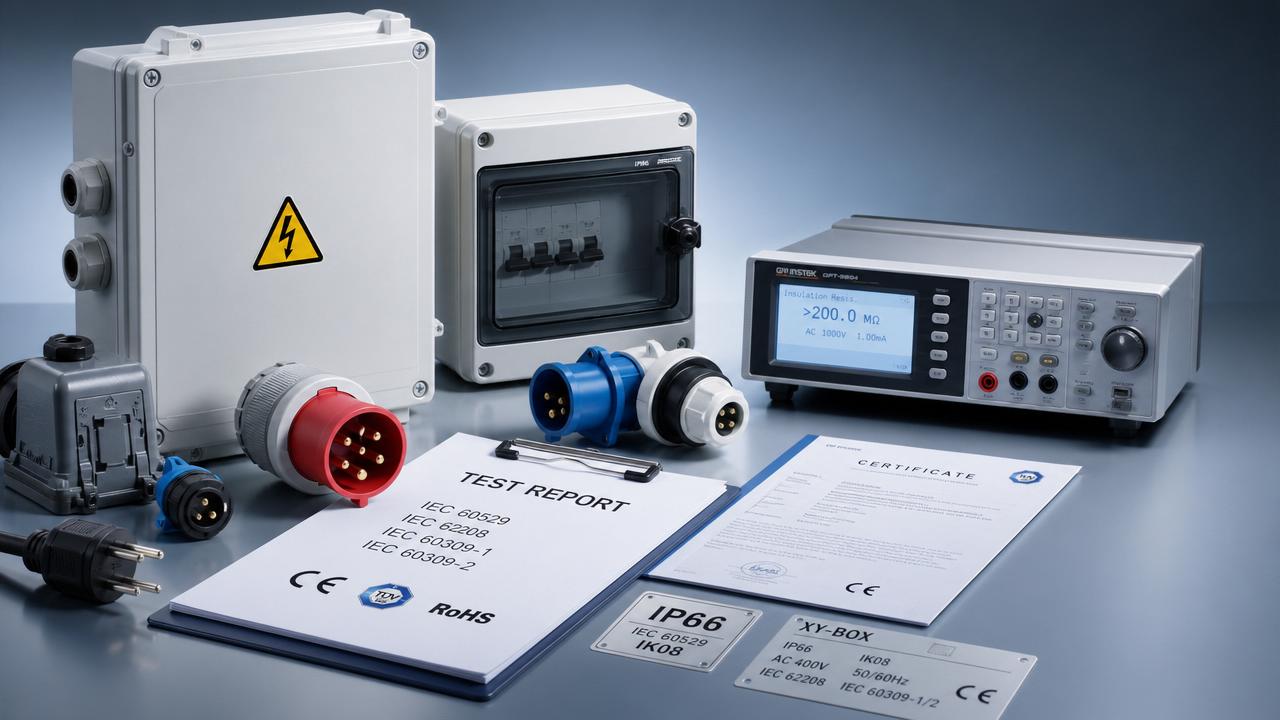
For business evaluation teams, international electrical standards are often the hidden factor behind export delays, added compliance costs, and lost market opportunities. From certification mismatches to shifting regional requirements, understanding these standards is essential for accurate risk assessment and faster market entry. This article outlines the most common electrical compliance barriers and explains how industrial suppliers can reduce delays through better planning and technical alignment.
What international electrical standards mean in export assessment
In practical export work, international electrical standards are not a single universal rulebook. They are a layered system of safety, electromagnetic compatibility, performance, energy efficiency, materials, marking, and documentation requirements that vary by country, product type, and application environment. For business evaluation personnel, this matters because a product that performs well mechanically may still be blocked from shipment if its electrical design, labeling, test evidence, or certification pathway does not match the target market.
This issue is especially important in the broader industrial components sector served by GHTN, where electrical hubs, tooling systems, automation accessories, molded enclosures, and integrated assemblies often cross multiple regulatory categories. A control box, connector system, molded electrical housing, or powered tool may involve not only component quality but also creepage distance, insulation class, ingress protection, short-circuit resistance, EMC behavior, and traceable conformity records. Export delays usually begin when one of these hidden requirements is discovered too late.
Why these standards receive so much attention across industrial trade
International buyers, importers, insurers, and customs authorities treat electrical compliance as a basic market-entry filter. Unlike aesthetic or commercial preferences, electrical failures can create fire hazards, shock risks, interference with nearby equipment, and legal exposure for distributors. That is why many regions require either mandatory approval or strong evidence that a product aligns with recognized international electrical standards before it can be sold, installed, or connected to public networks.
For evaluation teams, the concern is not only technical. Standards directly affect lead time, landed cost, warranty reserves, channel acceptance, and project bidding eligibility. A missing test report can delay customs release. A wrong plug configuration can trigger redesign. A supplier using outdated editions of standards can fail during buyer audits. In sectors tied to automation, construction, energy systems, and OEM manufacturing, these gaps can push a launch back by weeks or even months.
The electrical standards most likely to delay exports
Although every product category has its own compliance map, several families of international electrical standards repeatedly create export bottlenecks. The problem is not always that suppliers ignore them. More often, they underestimate how early these standards influence design choices, component sourcing, and documentation structure.
Safety standards and product-specific certification
Electrical safety standards are the first major source of delay. These include requirements tied to insulation, temperature rise, grounding, enclosure strength, wiring methods, and abnormal operation tests. A product may comply with an IEC standard in theory, yet still require local certification routes such as CE-related conformity in Europe, UL or NRTL expectations in North America, or country-specific approvals in the Middle East, Latin America, or Asia. Delays occur when companies assume one test report is globally transferable.
EMC and electromagnetic interference control
EMC requirements often surprise exporters of controls, drives, power tools, switching devices, LED products, and automated equipment. A product that is electrically safe may still fail because it emits too much interference or lacks immunity under real industrial conditions. Re-testing for EMC can be expensive because shielding, grounding layout, cable design, and filtering may all need redesign.
Voltage, frequency, and plug or connection differences
Many export delays come from market-specific operating conditions rather than core product defects. Differences in nominal voltage, grid frequency, plug types, socket systems, and wiring conventions can force technical adjustments. This is common for powered hand tools, chargers, industrial control units, and compact machinery. If a product is designed around one market’s assumptions, even a small mismatch can trigger revalidation work.
Ingress protection, environmental resistance, and application ratings
Industrial exports frequently operate in dust, moisture, heat, vibration, or corrosive conditions. Buyers may require IP ratings, temperature class verification, or material durability evidence before accepting electrical assemblies. Precision molded parts and housings are particularly affected because sealing geometry, resin choice, and assembly tolerances influence compliance outcomes. What appears to be a mold or tooling issue can become an electrical approval delay.
Hazardous substances, material traceability, and labeling
International electrical standards are often discussed alongside environmental compliance such as RoHS, REACH, and similar material restrictions. These are not always electrical performance standards, but they strongly affect electrical exports because cables, connectors, coatings, plastics, and solder materials must be traceable. Missing declarations, inconsistent supplier statements, or noncompliant labels can stop a shipment even when the electrical function is acceptable.
A practical overview of common export delay points
For cross-functional evaluation, it helps to separate the main delay drivers into a few decision-oriented categories.
Where industrial suppliers face the greatest exposure
The exposure level is not the same for every exporter. Business evaluation teams should pay closer attention when a product combines electrical function with mechanical integration, molded parts, or aftermarket customization. In these cases, compliance cannot be assessed from a datasheet alone.
Why certification mismatch is more common than total noncompliance
A useful distinction for evaluators is the gap between technical compliance and market-recognized compliance. Many manufacturers can meet the engineering intent of international electrical standards, but still encounter delays because the supporting proof is incomplete, outdated, or not accepted by the importing market. A lab report may reference the wrong model variant. A component certificate may not cover final assembly use. A declaration of conformity may omit the latest directive or standard edition. These are documentation failures, but they create commercial consequences identical to technical failure.
This is where specialist intelligence matters. Organizations such as GHTN add value by connecting design logic, component behavior, and regional trade insight. In sectors built on precision tooling, electrical hubs, and mold-enabled production, the standards problem is rarely isolated. It is tied to how products are engineered, sourced, assembled, and presented to international buyers.
How business evaluation teams can assess risk earlier
Early-stage assessment should begin before quotation approval or distributor commitment. Waiting until pre-shipment inspection is too late for most electrical products. A practical review model includes five questions.
First, which target markets are confirmed, and are their electrical compliance routes equivalent or different? Second, does the supplier know the exact standards and edition numbers that apply to the final product rather than only to core components? Third, are test reports, certificates, declarations, labels, and user instructions aligned with the product actually being exported? Fourth, do materials, molded parts, and purchased subassemblies have traceable compliance records? Fifth, what product changes would force retesting or recertification?
If any of these questions remain unclear, the export timeline should include a risk buffer. This is not overly conservative; it reflects how international electrical standards operate in real trade environments.
Practical steps to reduce export delays
Companies can improve speed and predictability without turning compliance into a purely legal exercise. The most effective approach is technical alignment from the start. Standard requirements should be translated into design inputs, approved component lists, mold decisions, validation plans, and document control rules. This is particularly relevant for SMEs seeking higher-value global contracts, because last-minute fixes tend to erode margin.
It also helps to build a market-priority matrix. Instead of claiming universal readiness, suppliers should identify the first export regions, then map the international electrical standards and local conformity expectations for those destinations. This reduces wasted certification spending and makes commercial planning more realistic. In parallel, quality teams should maintain revision control over labels, manuals, test reports, and declarations so that commercial samples, audited samples, and shipped goods remain consistent.
Another strong practice is to review the compliance status of electrically relevant non-electrical parts. Enclosures, seals, molded carriers, fastening structures, and thermal interfaces can influence insulation spacing, flammability, ingress protection, and safe operation. In other words, international electrical standards often depend on mechanical and material details that sit outside the electrical schematic.
A strategic view for industrial exporters
For business evaluation professionals, international electrical standards should be treated as a market-access discipline rather than a final approval checkbox. They affect bid confidence, supplier scoring, inventory planning, customer onboarding, and long-term brand trust. The companies that manage them well do not simply react to failures; they integrate standards knowledge into product development, sourcing, and export planning.
In global industrial trade, precision matters at every level. A robust fastener, a well-designed mold, or a reliable electrical hub only creates full commercial value when its compliance pathway is equally precise. For organizations assessing partners, products, or expansion opportunities, a disciplined review of international electrical standards can prevent avoidable delays and reveal which suppliers are truly ready for cross-border growth. With stronger technical alignment and earlier verification, exporters can shorten approval cycles, protect margin, and enter new markets with greater confidence.
Related News