
What Affects Switches Price? Material, Rating, Certification, and Order Volume

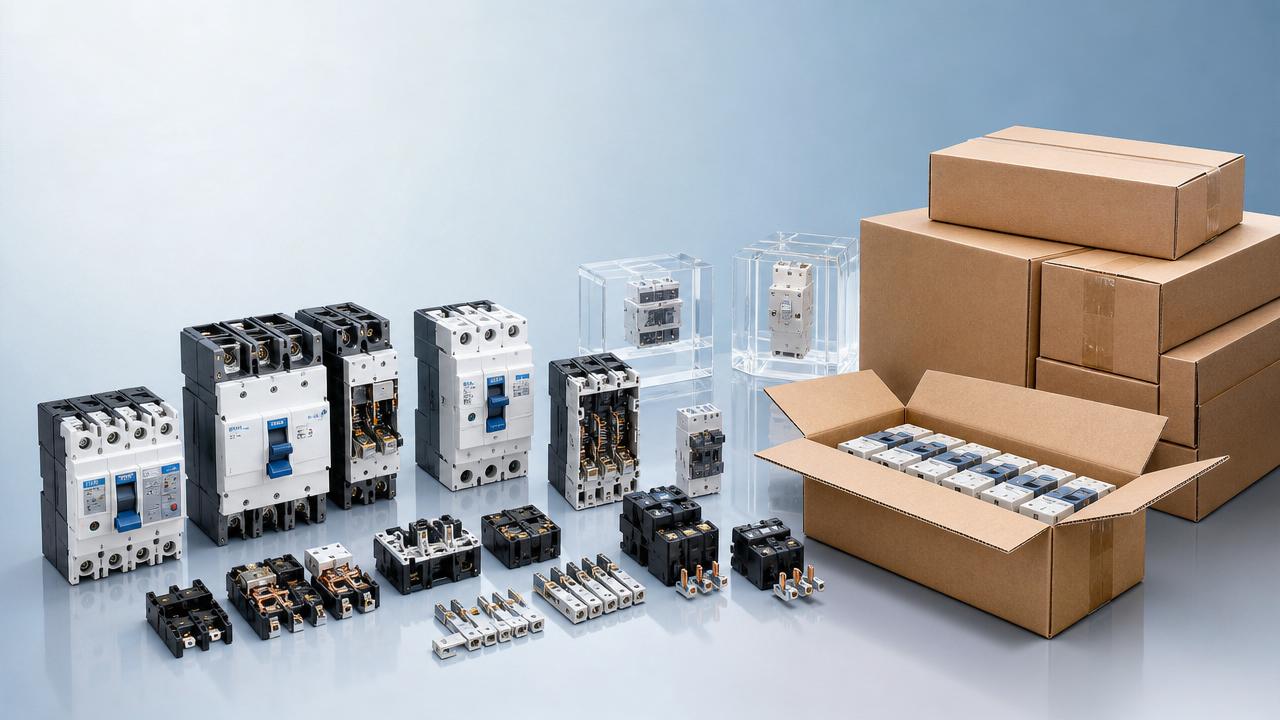
Why does switches price vary so much in industrial sourcing?
At first glance, one switch can look very similar to another.
Yet switches price often changes sharply once material, rating, certification, and order quantity are reviewed together.
That difference is not random.
It usually reflects safety margins, electrical performance, production complexity, and compliance cost.
In practical buying decisions, the cheapest unit can become the most expensive option later.
A low initial switches price may lead to failures, rejected shipments, or replacement work inside equipment systems.
That is why cost review should start with application reality, not only catalog numbers.
Across industrial information platforms such as GHTN, switch comparisons are often connected with broader electrical component decisions.
The same sourcing logic appears in connectors, circuit breakers, pneumatic controls, and tooling parts.
Understanding price drivers early makes budgeting more accurate and technical review far easier.
Is material choice really a major reason behind switches price?
Yes, and often more than expected.
Housing material affects durability, heat resistance, flame performance, and long-term stability.
Contact material matters even more because it directly influences conductivity, wear, and switching life.
Silver alloy contacts usually cost more than simpler alternatives.
However, they may reduce contact resistance and improve reliability under repeated load.
Brass terminals, copper components, stainless hardware, and engineering plastics all shift the final switches price.
In humid or harsh environments, better materials are rarely optional.
They protect against corrosion, mechanical fatigue, and thermal deformation.
A common mistake is comparing two switches by appearance only.
More useful questions include these:
- What contact alloy is used, and what is the tested life cycle?
- Does the housing meet flame-retardant or heat-resistance requirements?
- Are the terminals suitable for vibration, moisture, or outdoor exposure?
- Will the selected material increase maintenance intervals or replacement risk?
When these details are specified clearly, switches price becomes easier to explain and compare fairly.
How do current rating and electrical performance change the cost?
This is where many quotations start to separate.
A switch designed for light signal control is not priced like a switch handling motor loads or repeated inrush current.
Higher current ratings usually require stronger internal construction.
That can include thicker contacts, improved spring mechanisms, arc control design, and better insulation spacing.
As a result, switches price rises with performance demands, not only with physical size.
Voltage class also matters.
AC and DC applications can create very different design requirements, especially where arc interruption is critical.
In actual equipment systems, the nameplate rating should never be treated as a generic number.
It should match the real load type, switching frequency, ambient temperature, and installation method.
A quick comparison table helps show why two similar parts may not share the same switches price.
If a quotation looks unusually low, rating mismatch is often worth checking first.
Do certifications and compliance marks really add that much to switches price?
In many cases, yes.
Certification is not just a logo printed on the product body.
It involves testing fees, documentation control, factory audits, traceability systems, and design consistency.
That work raises switches price, but it also reduces project risk.
UL, CE, TUV, VDE, RoHS, and similar requirements can change sourcing options significantly.
Some projects need only baseline compliance.
Others require market-specific approvals before installation or shipment.
More important, certified and non-certified versions may look nearly identical.
The cost gap comes from validated performance and legal acceptance, not visual difference.
A useful way to evaluate this issue is to separate required compliance from optional preference.
- Check destination market rules before comparing switches price.
- Confirm whether the certification applies to the exact model, not a similar series.
- Review test reports, rating conditions, and certificate validity dates.
- Consider the cost of delay if compliance fails during inspection.
For global industrial categories tracked by GHTN, this same pattern appears across many regulated components.
Verified documentation often matters as much as the hardware itself.
Can order volume lower switches price without changing the specification?
Usually, yes, but the effect depends on how the supplier builds cost.
Switches price is influenced by tooling allocation, setup time, testing batches, packaging, and logistics efficiency.
A small run may carry a noticeably higher unit cost.
That is common with customized markings, special terminal forms, or non-standard color options.
Larger orders spread these fixed costs more effectively.
Still, volume discounts are not always linear.
The biggest price drop often happens between sample quantity and the first production bracket.
Beyond that, savings may slow unless materials are purchased in larger lots.
When comparing offers, it helps to ask for a structured quote.
This is why a lower switches price at high volume should be read together with lead time and inventory risk.
What mistakes cause buyers to misread switches price?
The most common problem is comparing unlike-for-like products.
One quotation may include certified materials, endurance testing, and sealed construction.
Another may cover only a basic version with fewer documented controls.
On paper, both may still be called the same switch type.
Another mistake is ignoring total installed cost.
A modestly higher switches price may save money if it reduces rework, warranty claims, or field replacement.
Lead time is also part of cost.
Urgent air shipment, production delays, and resubmission for certification can erase any apparent savings.
A more reliable judgment usually includes these checkpoints:
- Match the switch to actual load, not assumed load.
- Check materials and contact design, not only external dimensions.
- Verify all certifications against the final market requirement.
- Review lifecycle cost, replacement rate, and delivery reliability.
In industrial sourcing, the best price is usually the one that remains acceptable after technical review, compliance review, and delivery review.
So how should switches price be evaluated before making a final decision?
A clear method works better than chasing the lowest number.
Start by defining the real application conditions.
That includes load type, current, voltage, environment, duty cycle, mounting style, and market compliance needs.
Then compare quotations on an aligned basis.
If one offer shows a much lower switches price, ask what has been removed or simplified.
In many cases, the answer is hidden in material grade, test scope, or certification status.
It also helps to monitor broader component information.
Platforms like GHTN are useful because switch pricing rarely moves in isolation.
Material costs, compliance trends, export expectations, and supplier capability often affect several product categories together.
If the next step is still unclear, build a short evaluation sheet.
- List mandatory technical parameters.
- Separate required certifications from optional preferences.
- Compare volume tiers, lead time, and one-time charges.
- Review the total risk of failure, delay, and replacement.
That approach makes switches price easier to judge, easier to explain, and much easier to defend later.