
CBP Extends Tool Traceability Rule to Mexico and Canada

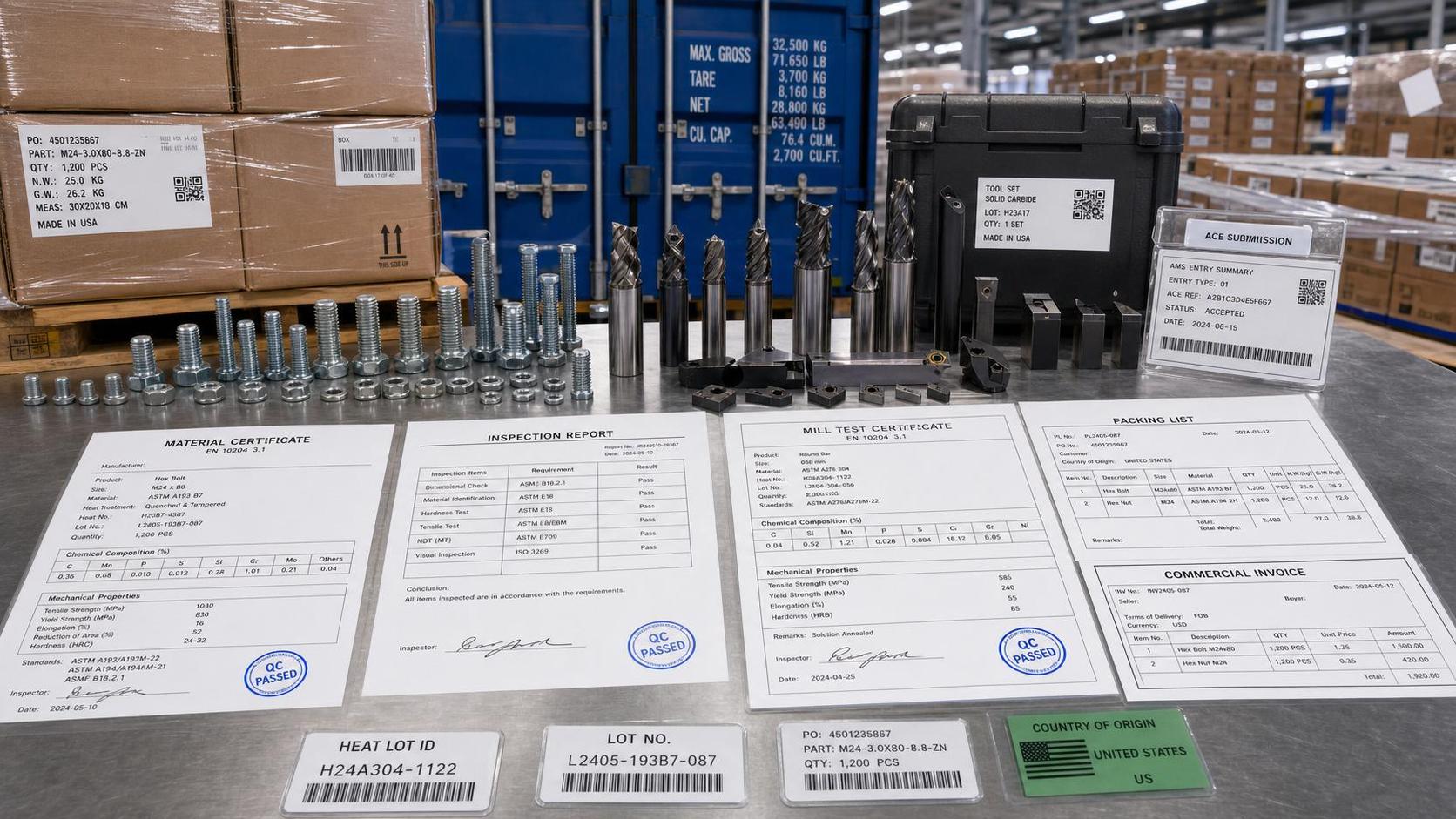
On July 3, 2026, U.S. Customs and Border Protection expanded its Tool & Fastener Security Initiative to include Mexico and Canada, adding a new traceability requirement for covered goods entering the U.S. from NAFTA+ jurisdictions. For importers of hand tools, cutting tools, and bolts & screws, the practical issue is not only that the scope has widened, but that batch-level material certification now has to be submitted in real time through the ACE portal. That makes this development relevant for import compliance teams, exporters, manufacturers, procurement functions, and any supplier chain handling material records tied to ASTM/ISO grade and heat lot identification.
What the July 3 announcement confirms
According to the information provided, CBP announced on July 3 that Mexico and Canada are now participating partners in the Tool & Fastener Security Initiative, effective immediately. The same information states that importers must submit real-time batch-level material certification through the ACE portal for hand tools, cutting tools, and bolts & screws entering the United States from NAFTA+ jurisdictions. The required material information includes ASTM/ISO grade and heat lot ID. The pilot phase is scheduled to begin on August 1, 2026.
Where the rule change may start to affect operations
Import filing and customs-side document readiness
From an industry perspective, importers are the first group likely to feel the change because the requirement is tied directly to ACE portal submission. The operational effect may show up in customs filing workflows, document collection timing, and internal checks on whether batch-level material records are available before shipment or entry processing. What deserves closer attention is whether existing import documentation practices are already structured around real-time submission of ASTM/ISO grade data together with heat lot identification.
Suppliers shipping covered tool and fastener categories
Manufacturers and exporters dealing in hand tools, cutting tools, and bolts & screws may be affected because their customers in the U.S. will need usable batch-level material certification. Analysis shows that the pressure point is likely to sit in upstream traceability: if production records, mill-related material information, or batch documentation are incomplete or inconsistent, downstream importers may face compliance friction. In practical terms, suppliers should pay attention to whether their certificates and supporting documents can be matched clearly to shipment batches and heat lot IDs.
Procurement and sourcing coordination across North American trade flows
For procurement teams and sourcing managers, the change may matter less as a headline and more as a purchasing control issue. Observably, when a rule moves from general product acceptance toward batch-level traceability, supplier qualification and order planning can become more documentation-sensitive. Buyers handling covered categories may need to look more closely at whether vendors can provide material certification in a form that supports ACE submission without delaying release or delivery.
Testing, certification, and compliance support functions
Compliance service providers, laboratories, and document review teams may also need to monitor this development because the required submission refers specifically to ASTM/ISO grade and heat lot ID. This does not automatically confirm any new testing mandate beyond the provided information, but it does indicate that record integrity and certificate alignment may become more important in transactions involving the covered goods and jurisdictions.
What companies should review before the pilot starts
Check whether batch-level material records are shipment-ready
Analysis shows that companies involved in covered products should review whether their current documentation can identify batches clearly and connect each batch to the relevant ASTM/ISO grade and heat lot ID. The key issue is not broad product conformity in general terms, but whether records are organized in a way that supports real-time submission.
Review ACE-facing internal processes
Because the requirement is described as an ACE portal submission obligation for importers, companies should pay attention to the internal handoff between suppliers, brokers, compliance teams, and import operations. What deserves closer attention is whether documentation arrives early enough, in a consistent format, and with sufficient accuracy to avoid last-minute corrections once the pilot phase begins on August 1, 2026.
Revisit supplier qualification for covered categories
For sourcing teams, this is a practical moment to recheck supplier capability on traceability rather than relying only on standard commercial documents. Observably, covered shipments may become more exposed to compliance risk where supplier records are incomplete, delayed, or not easily tied to a specific production lot.
Watch for later clarification in execution language
The provided information confirms the rule direction and pilot timing, but it does not set out fuller execution detail. For that reason, companies should continue monitoring how official language, filing practice, and transaction-level expectations are expressed as the pilot phase approaches and begins.
Why this looks like an execution signal, not just a policy headline
From an industry perspective, this update is more significant as an execution signal than as a broad policy statement. The reason is that it links product scope, jurisdiction scope, and a named submission channel with specific batch-level material fields. Analysis shows that the market should not read this only as a political or administrative expansion to Mexico and Canada; it also points to a more operational compliance model in which traceability data becomes part of entry readiness. At the same time, it is still necessary to observe how consistently the requirement is applied during the pilot phase and what practical issues arise in documentation matching, submission timing, and supply chain coordination.
How the market should read this stage
At this stage, it is more appropriate to understand the announcement as a live compliance development with immediate scope expansion and a clearly dated pilot phase, rather than as a distant policy concept. The confirmed facts already matter for importers and suppliers handling covered tools and fasteners, especially where material traceability records are fragmented. Even so, the full operational impact should still be assessed cautiously, because execution detail, market feedback, and filing practice will determine how demanding the requirement becomes in day-to-day trade.
Basis of this article and what still needs verification
This article is based on the user-provided news title, event date, and event summary. For developments of this kind, relevant source categories typically include official announcements, customs or trade authority releases, regulatory updates, industry association notices, standard-setting documents, and reporting by established trade media. A specific official source link was not provided in the input, so the original release and any later clarification should still be verified on an ongoing basis. What remains worth monitoring includes later implementation detail, certification interpretation, ACE filing practice, tender or procurement document changes, industry feedback, and how companies execute traceability requirements during the pilot period.
Related News
- Greening components or lower cost materials: which wins long termTime : Apr 29, 2026
- China-UAE Open Direct Sea Route, Cutting Export Lead Times for Industrial Fasteners and Pneumatic Parts by 7-10 DaysTime : Aug 16, 2026
- What Defines Precision Fastener Technology in High-Tolerance Industrial Assembly?Time : Aug 11, 2026