
Ningbo Fastener Pilot Adds Real-Time Steel Origin Checks

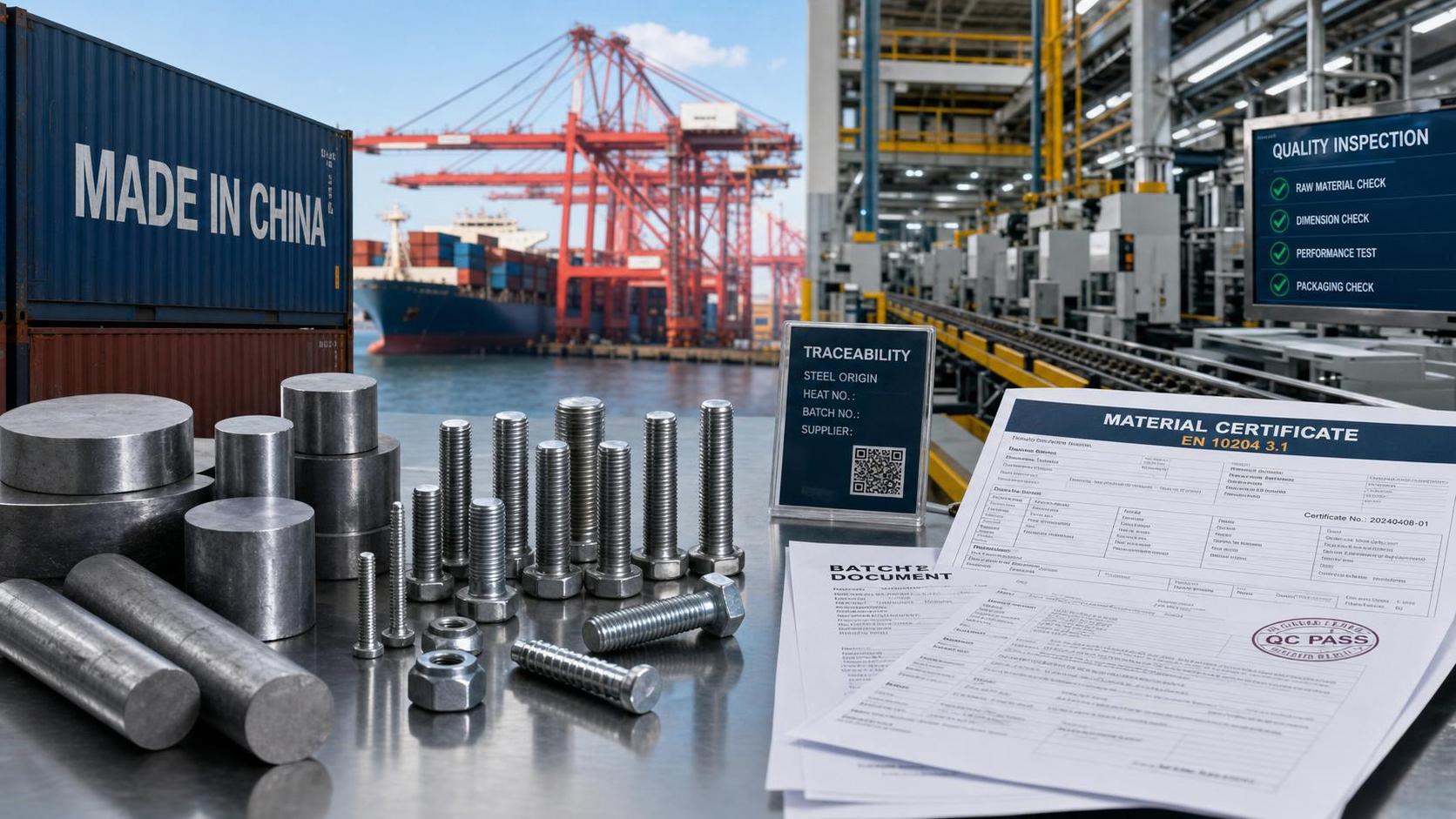
On July 1, 2026, a new customs compliance requirement took effect in Ningbo for exporters of bolts and screws shipping to the EU and the U.S. The change centers on real-time submission of steel billet origin documentation through the Single Window system, adding a traceability layer to export declarations and extending declaration lead times by 48 to 72 hours. For fastener exporters, upstream material suppliers, compliance teams, and overseas buyers managing shipment schedules, this is worth close attention because it shifts origin traceability from a supporting document issue into a timing-sensitive export filing requirement.
What the Ningbo pilot requires
According to the information provided, Ningbo Customs launched a mandatory pilot effective July 1, 2026 for exporters of bolts and screws. Under this pilot, exporters must submit real-time steel billet origin certificates through the Single Window system.
The required origin information includes mill ID, heat number, and EN 10025 certification. The pilot applies to shipments bound for the EU and the U.S.
The stated purpose is to address circumvention allegations in ongoing anti-dumping reviews. The information provided also indicates that export declaration lead times have been extended by 48 to 72 hours.
Where the pressure is likely to appear first
Export filing and shipment planning
From an industry perspective, exporters are likely to feel the immediate effect in declaration timing rather than only in paperwork volume. Because the pilot requires real-time submission through the Single Window system, the practical pressure point may be the coordination between document readiness and booking or dispatch schedules. What deserves closer attention is whether exporters can keep origin records complete early enough to absorb the additional 48 to 72 hours now associated with declarations.
Upstream steel sourcing and traceability handover
Analysis shows that procurement and sourcing teams may be affected where billet origin documentation is not consistently handed over in a format that can support customs filing. The requirement to provide mill ID, heat number, and EN 10025 certification means the relevance of upstream traceability has moved closer to the export clearance stage. Companies involved in material purchasing should therefore watch the consistency, availability, and retrieval speed of these records.
Manufacturing and lot control within fastener production
Observably, manufacturers of bolts and screws may need to pay closer attention to how material batches are linked to finished export lots. The pilot is described as an origin-traceability measure, so the business impact is likely to appear where production records, raw material certificates, and shipment files are not aligned tightly enough for real-time submission. This does not by itself confirm a broader rules expansion, but it does raise the operational importance of internal traceability discipline.
Buyers and supply chain service providers
For overseas buyers, freight coordinators, and other supply chain service providers, the main issue is likely to be delivery predictability. The confirmed extension of declaration lead times means planning assumptions for EU- and U.S.-bound shipments may need adjustment. From a trade execution angle, the immediate concern is less about market demand and more about whether documentation dependencies are reflected in order confirmation, shipment windows, and handover timing.
What companies should watch now
Whether origin documents are filing-ready
Analysis shows that companies should first check whether billet origin certificates can be assembled in a filing-ready form before export declaration begins. The key concern is not merely having documents on file, but having the required items, including mill ID, heat number, and EN 10025 certification, available for real-time submission through the stated system.
How the added 48 to 72 hours affects commitments
What deserves closer attention is the effect of the additional declaration time on shipment promises, procurement cycles, and internal release schedules. The provided information confirms a timing extension, but does not specify how companies will handle exceptions or operational bottlenecks. For that reason, firms should treat scheduling assumptions cautiously rather than assume existing export rhythms remain unchanged.
How far compliance expectations extend across suppliers
Observably, the pilot may require closer review of supplier document quality, especially where steel source records are collected across multiple handoffs. Companies should pay attention to whether procurement terms, supplier qualification checks, and shipment documentation routines adequately support the traceability fields now named in the pilot. This is an area to monitor rather than a confirmed final enforcement standard beyond the information provided.
Whether execution language becomes more detailed
It is more appropriate to understand this stage as an active compliance signal with implementation details still worth monitoring. The information provided confirms the pilot, its scope, its purpose, and its timing impact, but does not set out fuller execution language. Businesses should therefore continue watching for any clearer official wording, filing interpretations, or downstream document expectations that may shape day-to-day handling.
Why this matters beyond a routine filing update
From an industry perspective, this development is not just an administrative change in customs submission. It indicates that, for the covered shipments, material origin traceability is being tied more directly to export clearance in the context of anti-dumping review pressure. Analysis shows that the practical significance lies in how origin evidence, standards documentation, and shipment timing now intersect more tightly than before within the export process described.
At the same time, it would be premature to treat this single pilot as proof of a wider regulatory outcome beyond the facts provided. The more reasonable reading is that this is a concrete implementation step with immediate operational consequences for affected exporters, while broader execution patterns still need observation.
How the market is likely to read it for now
Based on the confirmed facts, this update is best understood as an already effective rule change within a defined pilot setting rather than a distant policy discussion. Its immediate significance is operational: exporters of bolts and screws to the EU and the U.S. now face a traceability-linked filing requirement and longer declaration preparation time in Ningbo.
Observably, the larger industry meaning is less about a finished market conclusion and more about a stronger compliance signal around origin documentation in sensitive trade flows. For now, a rational reading is that affected companies should treat it as a live execution requirement while continuing to watch how filing practice, documentation interpretation, and market feedback develop.
Basis of this article and points still to verify
This article is based on the user-provided news title, event date, and event summary. The content has been written from that provided information only and does not add unverified policy numbers, company names, links, or market data.
For this type of development, relevant source categories would typically include official notices, customs or trade authority releases, regulatory communications, industry association updates, standards-related documentation, and reporting from authoritative trade media. No specific official source link was provided in the input, so the exact official publication path remains to be verified.
What still requires continued checking includes any further implementation detail, the precise enforcement wording used in practice, any changes in documentation interpretation, procurement or tender-document adjustments, industry feedback from affected exporters, and how companies adapt their shipment planning under the extended declaration timeline.
Related News
- Greening components or lower cost materials: which wins long termTime : Apr 29, 2026
- China-UAE Open Direct Sea Route, Cutting Export Lead Times for Industrial Fasteners and Pneumatic Parts by 7-10 DaysTime : Aug 16, 2026
- What Defines Precision Fastener Technology in High-Tolerance Industrial Assembly?Time : Aug 11, 2026