
CBP Starts Fastener Traceability Pilot

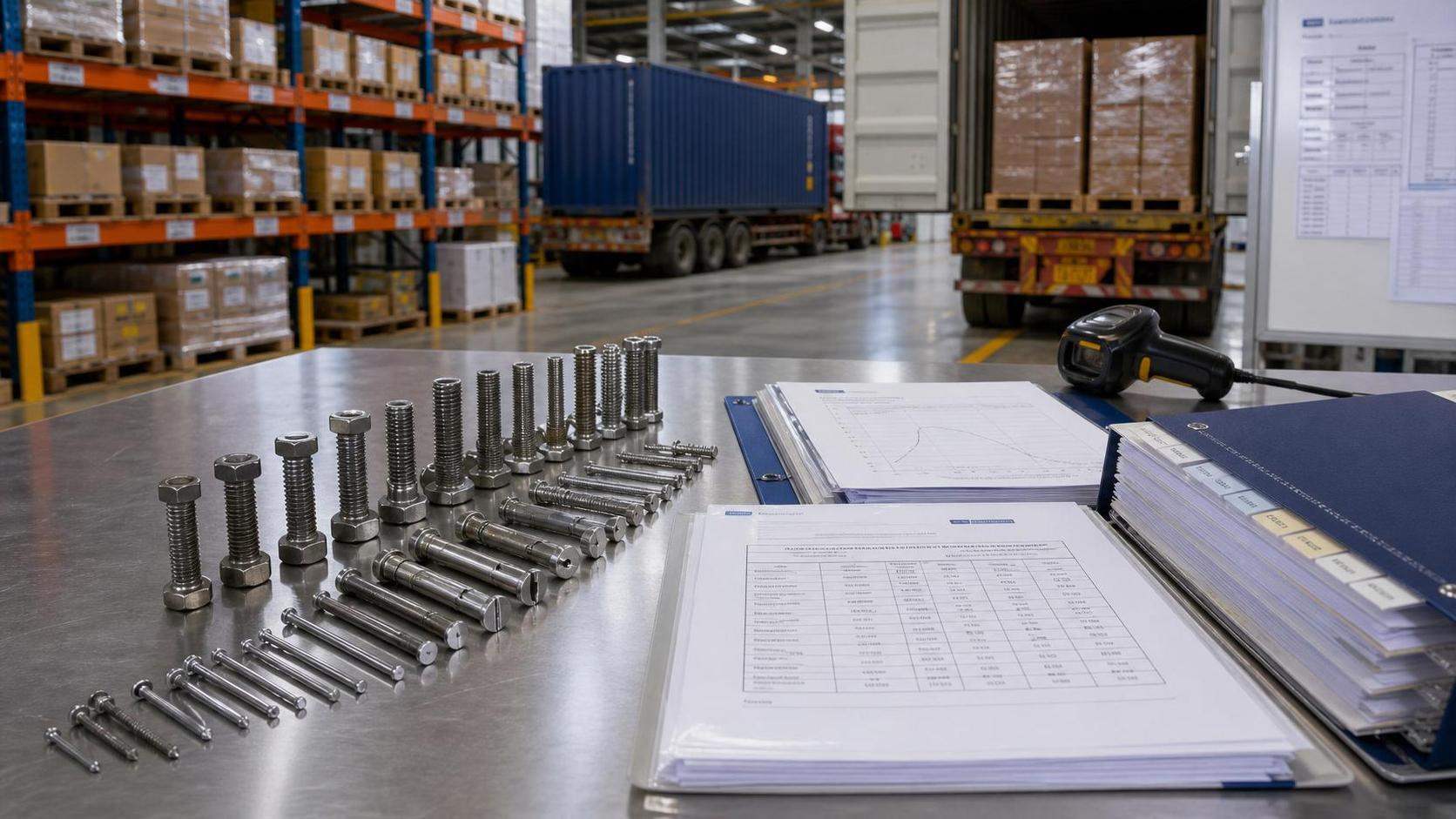
On July 1, 2026, U.S. Customs and Border Protection (CBP) launched a Fastener Traceability Pilot that brings new documentation requirements to imported bolts and screws, anchors, and rivets. For companies shipping into the U.S., especially exporters, importers, customs-facing logistics teams, and certification document managers, this is worth close attention because the change moves batch-level material records and heat-treatment evidence into the clearance workflow and may affect release timing and inspection exposure during the pilot period.
What the pilot requires
According to the information provided, CBP began the pilot on July 1, 2026. The program requires import shipments in the categories of bolts and screws, anchors, and rivets to upload batch-level ASTM A193, ASTM A320, and ASTM A449 material certificates, together with heat-treatment curve charts, through the AMS system.
The pilot covers the ports of Los Angeles, New York, and Seattle. The stated pilot period is six months, and full rollout is expected in Q4 2026.
The provided information also notes that Chinese exporters that do not prepare digital certificate management processes in advance may face customs clearance delays and a higher inspection rate.
Where the pressure is likely to appear first
Documentation control at the exporter level
From an industry perspective, direct trading companies and manufacturers shipping covered fastener products to the U.S. may be affected first because the requirement is tied to batch-level certificates and heat-treatment records. The main pressure point is not only whether documents exist, but whether they can be organized and submitted in a form that supports shipment-by-shipment customs processing.
Importer and customs-facing coordination
Importers and customs handling teams may feel the operational impact through pre-entry preparation, document matching, and clearance timing. What deserves closer attention is whether supporting records can be aligned with each batch before filing in AMS, since the requirement sits close to the customs submission stage rather than only in internal quality archives.
Supply chain service providers in affected ports
Logistics providers, customs brokers, and other supply chain service participants connected to Los Angeles, New York, and Seattle may need to track whether shipments in the covered categories are pilot-relevant. Analysis shows that even when the manufacturing side has the required records, handoff gaps between exporter, importer, and service provider can still create processing friction.
Procurement and downstream users
Buyers and downstream industrial users sourcing imported fasteners may not be the filing party, but they could still be affected through delivery schedules and supplier communication. Observably, any increase in clearance delays or inspection frequency can translate into longer lead-time uncertainty for orders tied to the covered product groups.
What companies should watch now
Check whether shipments fall within the covered product groups
Companies with U.S.-bound fastener business should first identify whether their shipments include bolts and screws, anchors, or rivets that are part of the pilot. That matters because the document requirement is product-specific and applies within the pilot framework already in place from July 1, 2026.
Review batch-level certificate readiness
What deserves closer attention is whether ASTM A193, A320, and A449 material certificates and heat-treatment curve charts are already maintained at batch level and can be retrieved quickly. The practical issue is less about broad quality claims and more about record accessibility, consistency, and filing readiness.
Align internal records with AMS submission workflow
Analysis shows that a document requirement becomes an operational issue when internal records and customs submission steps are not connected. Exporters, importers, and service providers should pay attention to who holds the certificates, who checks completeness, and when the data is prepared for AMS-related filing activity during the pilot period.
Separate the pilot signal from full-market implementation
Companies should also distinguish between the current pilot scope and the expected wider rollout. The confirmed fact is that the pilot runs for six months in three ports, with full implementation expected in Q4 2026. The broader business question is how quickly firms should standardize digital certificate management across all U.S.-bound fastener shipments rather than treating the pilot as a temporary local issue.
Why this matters beyond a single filing step
Analysis shows that this development is not just about one additional upload task. It suggests that traceability evidence for covered fasteners is moving closer to the point of customs review, which raises the operational importance of batch documentation, document digitization, and cross-party coordination.
It is more appropriate to understand this as both a short-term procedural change in selected ports and a longer-term signal that documentation quality may become more directly tied to border processing for relevant products. At the same time, it still remains a pilot with a defined scope and timeline, so the industry should continue to watch how the requirement is implemented in practice.
How to read the signal at this stage
At this stage, the most balanced reading is that CBP has introduced a targeted traceability requirement with immediate operational relevance for covered fastener imports and a likely broader policy direction for later in 2026. The impact should not be overstated beyond the confirmed pilot scope, but it also should not be treated as a minor paperwork issue, especially for companies exposed to U.S.-bound shipments through the three named ports.
For the industry, the key significance lies in preparation: the closer a company is to product certification, batch records, customs filing, or delivery commitments, the more directly this pilot may affect day-to-day execution.
Basis of this article
This article is based on the user-provided news title, event date, and event summary. The confirmed information used here consists of the July 1, 2026 launch of the CBP Fastener Traceability Pilot, the covered product categories, the requirement to upload batch-level ASTM A193/A320/A449 material certificates and heat-treatment curve charts in AMS, the three pilot ports, the six-month pilot period, the expected Q4 2026 full rollout, and the stated risk of customs delays and increased inspection exposure for Chinese exporters that are not prepared with digital certificate management processes.
For this type of development, source categories that are usually relevant include official notices, company announcements, industry association updates, authoritative media coverage, and standard-related documents. No specific official source link was provided in the input, so the exact official reference still needs ongoing verification. What deserves continued attention is whether CBP issues further clarification on implementation details during the pilot period and whether the expected Q4 2026 expansion proceeds as indicated.
Related News
- Greening components or lower cost materials: which wins long termTime : Apr 29, 2026
- China-UAE Open Direct Sea Route, Cutting Export Lead Times for Industrial Fasteners and Pneumatic Parts by 7-10 DaysTime : Aug 16, 2026
- What Defines Precision Fastener Technology in High-Tolerance Industrial Assembly?Time : Aug 11, 2026