
Carbon Steel Wire Rod Spike Pressures Bolt Costs

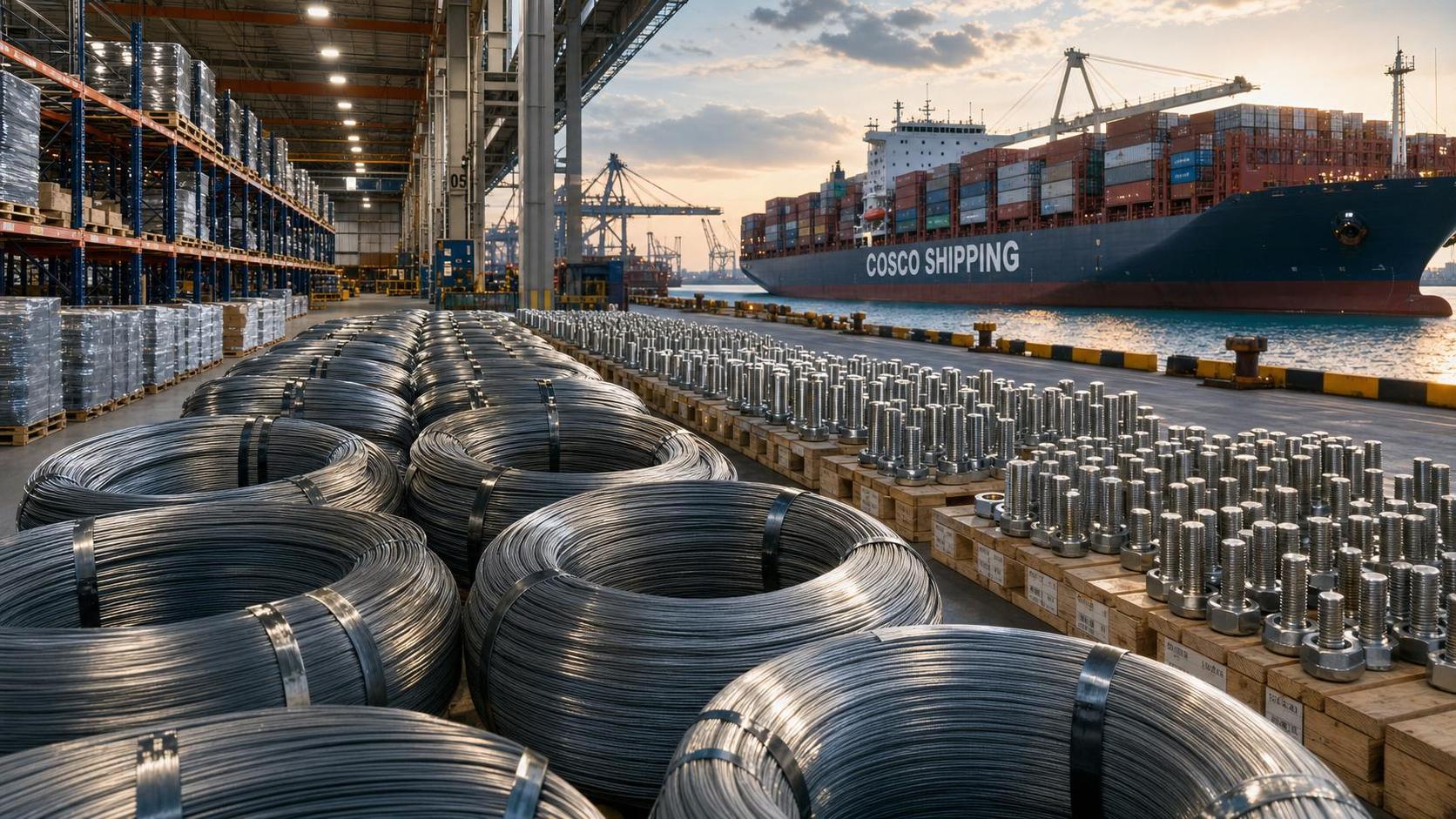
The timing of the underlying market disruption is not clearly stated in the available information, but the latest weekly data released by IISI on July 1, 2026 points to a sharp change in the cost environment surrounding carbon steel wire rod used in Stainless Bolts & Screws production. Because the move is tied to tighter export quota conditions for iron ore and a 37% rise in Red Sea shipping insurance rates, the development deserves attention not only as a price event, but as a trade-rule and logistics-risk signal that may affect sourcing, quoting, order execution, and delivery arrangements across the fastener supply chain.
What the confirmed data shows
According to the weekly monitoring data released by the International Iron and Steel Institute (IISI) on July 1, 2026, the FOB price of China-led export SWRM12/ML15 grade carbon steel wire rod reached $842/MT. The reported level is the highest since 2023.
The summary attributes the increase to two stated factors: tighter iron ore export quota conditions in India and a 37% increase in Red Sea shipping insurance rates.
The same summary states that the price movement will directly pass through to gross margins on Bolts & Screws production lines. It also notes an expected 8-10% increase in quoted prices for Q3 delivery orders, while some small and mid-sized producers have already started contingency plans to raise minimum order quantity (MOQ) requirements.
Where the pressure is likely to surface first
Export quotations and contract negotiation
From an industry perspective, exporters and direct trading companies are likely to feel the impact first in quotation validity, contract pricing, and delivery commitments. When raw material costs and shipping-related risk charges rise at the same time, the practical issue is not only the headline steel price, but whether existing quote structures still match procurement reality. What deserves closer attention is whether buyers and sellers begin adjusting quotation periods, MOQ clauses, and delivery condition wording to reflect higher input volatility.
Fastener manufacturing margins and order screening
For processing and manufacturing companies producing Bolts & Screws, the pressure appears most directly in gross margin management. The summary already indicates that the increase is expected to pass through to production-line margins and that some smaller producers are preparing MOQ adjustments. Observably, this can affect order acceptance, product mix decisions, and the handling of lower-volume or longer-lead-time business. Companies in this position should pay attention to whether technical documents, order confirmations, and internal costing approvals remain aligned with the new raw material base.
Procurement planning and supplier coordination
Raw material buyers and supply chain service providers may need to watch purchasing cycles more closely. Analysis shows that when quota tightening and marine insurance costs both influence pricing, procurement risk is no longer limited to mill offers alone. The more immediate operational concern is coordination between material booking, supplier validity windows, and downstream delivery schedules. This matters especially where supply commitments were built around earlier cost assumptions.
Downstream buyers and delivery-side controls
Procurement teams, distributors, and downstream buyers are also exposed, particularly where orders depend on fixed budget windows or previously agreed batch sizes. If MOQ thresholds move upward, smaller-lot purchasing may become harder to execute under prior terms. In practice, the relevant issues may extend beyond price to include order consolidation, shipment timing, and whether supporting trade documents and technical specifications still match revised commercial offers.
Operational points companies should now review
Check whether quotation and tender documents still fit current cost conditions
Analysis shows that companies with open quotations or pending Q3 delivery discussions should review whether their commercial documents leave room for raw material and freight-related repricing. This is not yet a confirmed rule change in every transaction, but it is a practical area to monitor because the reported 8-10% increase in Q3 quotations suggests that prior offer assumptions may no longer hold.
Reassess MOQ, batch planning, and delivery commitments
What deserves closer attention is the reported preparation by some small and mid-sized factories to raise MOQ requirements. Companies should treat this as a market execution signal rather than a universal condition. Buyers and sellers may need to recheck batch economics, shipment frequency, and delivery planning to see whether existing order structures remain workable.
Keep technical and traceability records aligned with supply changes
Where supplier changes, batch changes, or procurement timing changes become necessary, firms should pay attention to the consistency of technical files, inspection records, and product traceability materials. The available information does not state a new certification requirement, so this should not be treated as a confirmed compliance mandate. Still, from an execution standpoint, documentation alignment becomes more important when sourcing conditions tighten and order structures shift.
Monitor trade-risk wording and logistics cost pass-through mechanisms
Observably, the 37% increase in Red Sea shipping insurance rates makes logistics terms a practical point of review. Companies should pay attention to how risk-related costs are described in offers, confirmations, and delivery arrangements. The available information does not provide a formal regulatory text for contract treatment, so this remains an area for close monitoring rather than a settled rule outcome.
Why this reads as a market signal, not just a price spike
Analysis shows that this development is better understood as a combined trade and supply-chain signal than as an isolated commodity move. The reported drivers are not limited to production economics; they involve export quota tightening and maritime insurance cost escalation, both of which can alter how companies price risk, structure orders, and manage delivery obligations. It is more appropriate to understand this as an execution-level warning for the fastener chain, while the detailed downstream response still requires observation.
Observably, the most important unanswered question is not whether costs have risen, because that is already reflected in the reported weekly data, but how consistently the market will translate that pressure into MOQ revisions, quote adjustments, and buyer acceptance across Q3 transactions.
How the sector should read the current development
At this stage, the information points to a real and immediate cost transmission issue for carbon steel wire rod users in Bolts & Screws production, with likely implications for procurement, quotation discipline, and delivery planning. It does not yet support a broader conclusion about a fully settled industry rule or a uniform market response. The more reasonable reading is that this is an active implementation signal: cost pressure is already visible, while the full extent of contract, MOQ, and delivery-side adjustments still needs to be tracked in actual market execution.
Basis of this article and what still needs verification
This article is based on the user-provided news title, event time, and event summary. The specific official source link was not provided in the input, so further verification remains necessary. For this type of development, relevant source categories typically include official announcements, regulator releases, customs or trade authority information, industry association updates, standards body documents, and reporting from established professional media.
Further observation is still needed on any later official wording, execution interpretation, changes in tender or procurement documents, market feedback from buyers and suppliers, and how companies actually implement quotation revisions, MOQ adjustments, and delivery planning changes.
Related News
- Greening components or lower cost materials: which wins long termTime : Apr 29, 2026
- China-UAE Open Direct Sea Route, Cutting Export Lead Times for Industrial Fasteners and Pneumatic Parts by 7-10 DaysTime : Aug 16, 2026
- What Defines Precision Fastener Technology in High-Tolerance Industrial Assembly?Time : Aug 11, 2026