
Colombia’s Provisional Duty Reshapes Galvanized Wire Rod Costs

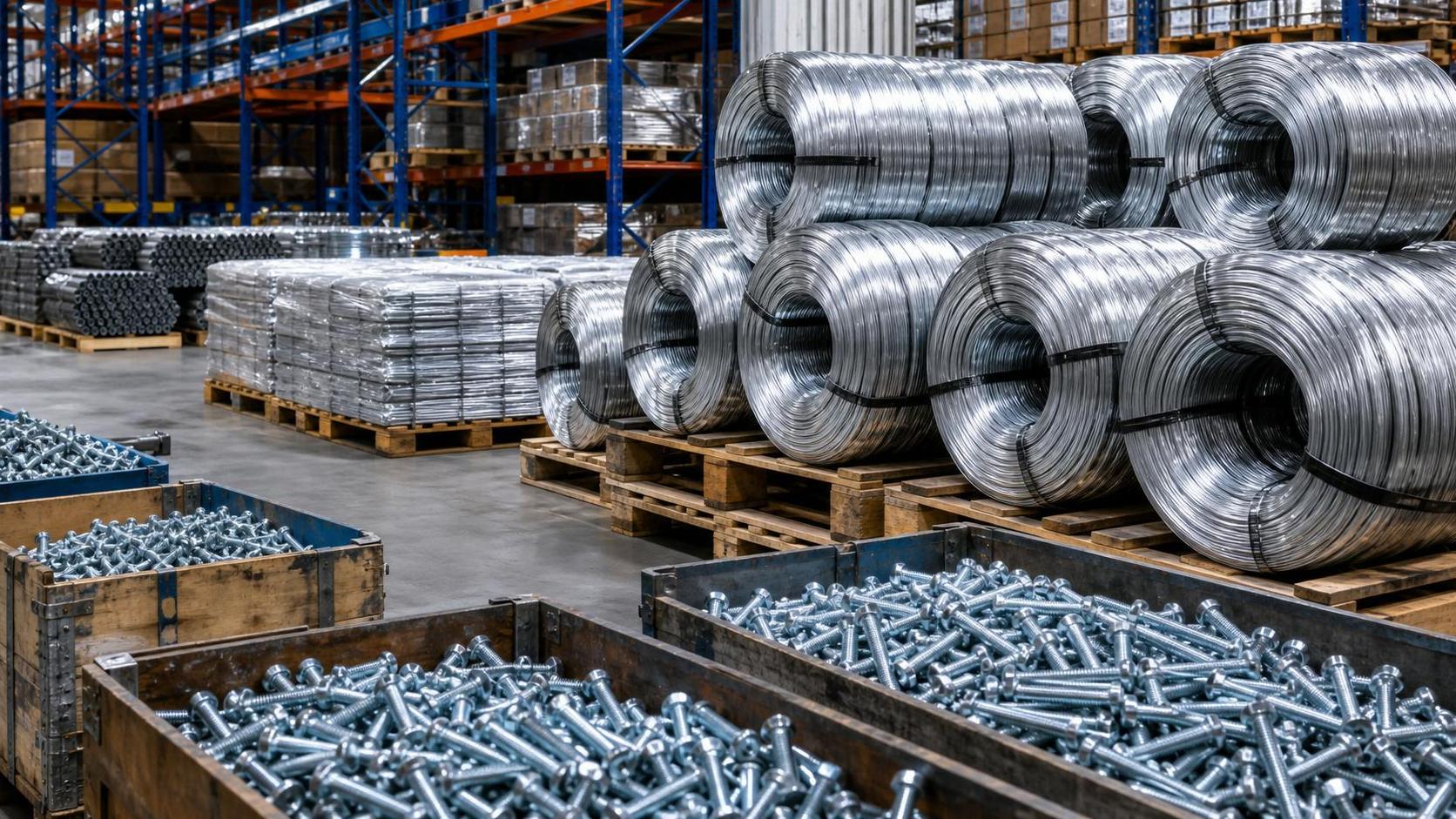
On May 27, 2026, Colombia introduced a provisional anti-dumping measure on galvanized wire rod from China, adding a new trade and cost variable to a material that sits at the center of cold-heading production for bolts and screws. Because this input is especially relevant to high-strength and corrosion-resistant fasteners, the move deserves attention not only from importers, but also from manufacturers, project contractors, procurement teams, and supply-chain operators that depend on stable pricing and delivery in the Latin American market.
What the provisional ruling changes
The confirmed facts are limited but commercially significant. Colombia’s Ministry of Commerce, Industry and Tourism issued a preliminary ruling on May 27, 2026, imposing a 98.04% provisional anti-dumping duty on galvanized wire rod originating in China, including product under tariff code 7217.20.00.00 and related classifications. The affected material is a core raw input for the cold-heading production of bolts and screws, particularly for high-strength and corrosion-resistant fasteners.
Where the pressure is likely to appear first
Raw material sourcing now carries a different cost assumption
From an industry perspective, companies that buy wire rod for downstream fastener production may need to reassess whether previously workable sourcing terms remain viable under the provisional duty. The main impact is likely to fall on landed cost calculations, supplier comparisons, and short-term purchasing decisions tied to galvanized wire rod used in critical fastener categories.
Fastener manufacturing may face margin and scheduling strain
Manufacturers of bolts and screws that rely on this wire rod as a cold-heading input may be affected through input cost transmission and production planning. What deserves closer attention is whether existing quotations, production batches, and delivery commitments can absorb higher raw material pressure without creating timing gaps or contract friction, especially where high-strength and corrosion-resistant specifications are involved.
Importers and distributors may need tighter inventory discipline
For importers and channel operators in Latin America, the issue is not only price. Analysis shows that supplier cost elasticity and localized inventory strategy become more important when a provisional trade measure affects a core upstream material. Businesses in these roles may need to watch procurement timing, stock allocation, and document consistency more closely if supply arrangements were built around Chinese sourcing.
Project buyers and contractors should watch delivery exposure
Engineering contractors and procurement-side buyers may feel the impact through fulfillment risk rather than through raw material purchasing directly. Observably, if upstream fastener suppliers face cost or sourcing disruption, the downstream concern shifts to delivery reliability, replenishment timing, and the resilience of inventory positioned closer to project execution.
Practical points that deserve closer monitoring
Check product scope and trade documentation carefully
Analysis shows that companies involved in procurement or shipment planning should review whether their products or inputs fall within the tariff classifications referenced in the provisional ruling. Even without further execution details in the input, businesses should pay closer attention to product descriptions, customs-related documentation, and internal classification consistency.
Revisit supplier quotations and cost pass-through assumptions
For buyers of Chinese-origin fasteners or of the affected wire rod itself, it is more appropriate to treat this development as a trigger for renewed quotation review rather than as a routine price fluctuation. The key practical issue is whether supplier pricing can still absorb the changed trade cost environment, and under what delivery or inventory conditions.
Prepare for adjustments in inventory and lead-time planning
What deserves closer attention is the connection between this provisional duty and local stock strategy. The input specifically notes that Latin American importers and engineering contractors need to reassess localized inventory arrangements and remain alert to delivery delays. That means procurement calendars, replenishment buffers, and handover timing should be reviewed with caution, even where final execution details are still evolving.
Track later official wording and market implementation
Because the measure described is a preliminary ruling, companies should continue to monitor subsequent official expressions, implementation practice, and any related changes in tender, procurement, or supplier qualification language. The current input does not provide those later details, so they should not be treated as settled outcomes at this stage.
Why this matters beyond the headline
Analysis shows that this development is best understood as a concrete execution signal in trade regulation, but not yet as a fully closed market outcome. The immediate significance lies in how a provisional anti-dumping duty on an upstream material can alter the economics of downstream fasteners without directly changing technical specifications or product certification requirements. For that reason, continued attention is warranted around procurement practice, delivery management, and market feedback, especially where project schedules depend on stable fastener supply.
How to read the current signal
At this stage, the event is more appropriate to understand as a landed rule change with near-term commercial implications rather than as a complete conclusion on long-term supply restructuring. The confirmed information already points to pressure on cost assumptions and delivery planning for parts of the fastener supply chain, but the full market response still requires observation. A rational reading is that businesses exposed to Chinese-origin galvanized wire rod or related fastener sourcing should treat this as an active compliance and supply-chain watchpoint.
Basis of this article and what still needs verification
This article is generated from the user-provided news title, event date, and event summary. For developments of this kind, commonly relevant source types include official government notices, trade or customs authority releases, regulatory publications, industry association communications, standards-related documents, and reporting by authoritative business media. A specific official source link was not provided in the input, so the exact original publication should continue to be verified. Follow-up attention should remain on later policy detail, implementation language, tender document changes, market feedback, and how affected companies actually adjust sourcing, inventory, and delivery arrangements.
Related News