
Shanghai Fastener Show Opens June 24 With Upgraded B2B Matching

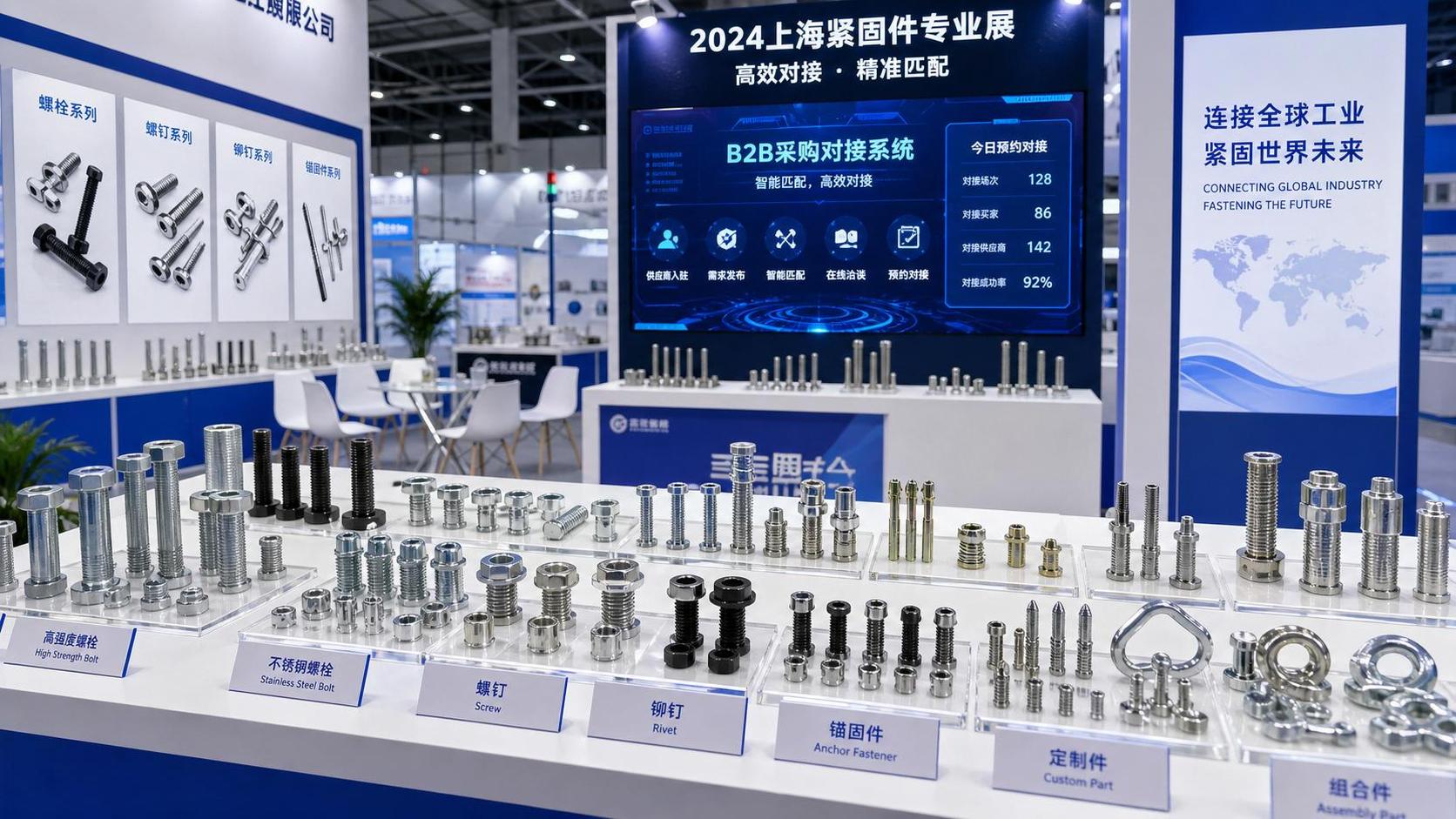
On June 24, 2026, the 16th Shanghai Fastener Professional Exhibition is set to open in Shanghai, with one of the most closely watched developments being the digital upgrade of its concurrent B2B international buyer matching program. For fastener manufacturers, exporters, distributors, sourcing teams, and supply chain service providers, the update deserves attention because it signals a more structured approach to connecting demand from 12 overseas markets with suppliers in categories such as bolts and screws, anchors, rivets, and customized fastening solutions.
What has been confirmed for the 2026 event
The 16th Shanghai Fastener Professional Exhibition will be held from June 24 to June 26, 2026 at the National Exhibition and Convention Center (Shanghai).
Alongside the exhibition, the B2B international buyer matching program has been fully upgraded in digital form. According to the provided event summary, specific procurement requirements have already been collected in advance from buyers across 12 countries, including Malaysia, Russia, Turkey, the UAE, Indonesia, South Korea, and Brazil.
The demand areas identified in the pre-collected requirements include bolts and screws, anchors, rivets, and customized fastening solutions. Overseas importers and distributors can make appointments in advance for more precise business matching, with the stated aim of shortening product selection and factory audit cycles.
Why the upgrade matters across the fastener trade chain
For exporters and direct trade suppliers
From an industry perspective, exporters may be affected first because the matching process is being organized around identified buyer needs rather than only general exhibition traffic. This can shift attention toward how clearly suppliers present product scope, customization capability, and responsiveness before face-to-face meetings begin.
What deserves closer attention is the earlier filtering of demand by country and product type. That may influence which inquiries are prioritized and how sales teams prepare for conversations with overseas importers and distributors.
For manufacturers and processing companies
For manufacturing businesses, the likely impact is concentrated in pre-sales technical communication and factory qualification readiness. If buyer matching is arranged in advance and linked to concrete product requirements, manufacturers may need to prepare more targeted production and capability information for bolts and screws, anchors, rivets, or customized solutions.
Analysis shows that the practical effect is less about exhibition visibility alone and more about whether a producer can respond efficiently to category-specific requests within a shorter evaluation window.
For distributors and channel operators
Distributors may see this development as a signal that buyer discovery is becoming more appointment-driven and data-led. Where importers and downstream channels use pre-booked matching to narrow supplier options, the value of distributor participation may increasingly depend on product fit, sourcing speed, and coordination efficiency rather than broad, unscreened networking.
Observably, this matters most in the stages of supplier comparison, product selection, and follow-up communication after the initial meeting.
For service providers supporting cross-border transactions
Supply chain and trade service providers may also need to pay attention because a shorter selection and factory audit cycle can compress the time available for document preparation, coordination, and transaction support. While the event summary does not specify service formats, the workflow around matching, qualification review, and follow-up execution may become more time-sensitive.
What companies should watch before and during the exhibition
Prepare around named demand categories
Companies participating in the event should focus first on the product areas explicitly mentioned in the event summary: bolts and screws, anchors, rivets, and customized fastening solutions. That matters because buyer matching has been described as demand-led, which raises the importance of category-specific preparation instead of generic exhibition messaging.
Align materials for faster qualification discussions
Because the event highlights shorter product selection and factory audit cycles, businesses should pay attention to whether their technical materials, qualification documents, and communication materials are ready for earlier-stage review. This is especially relevant for suppliers expecting conversations with overseas importers and distributors through pre-booked matching.
Track how appointment-based matching is implemented
Analysis shows that the key operational issue is not only the existence of a digital upgrade, but how precisely matching rules and appointment flows are carried out in practice. Companies should therefore watch for any further official wording on scheduling, meeting arrangement, and the handling of buyer requirements during the event period.
Differentiate standard products from customized solutions
Another practical point is the inclusion of customized fastening solutions alongside standard categories. Businesses should be ready to communicate clearly whether they are responding to standard procurement demand or to customized requests, because those two paths can involve different timelines, evaluation steps, and follow-up expectations.
How this development is best understood at this stage
Observably, this update should not be read simply as a routine exhibition service adjustment. The more meaningful point is that buyer matching is being positioned around pre-collected international demand and digital coordination before on-site meetings take place.
At the same time, it is more appropriate to understand this as an operational signal rather than a confirmed market outcome. The available information shows that the matching mechanism has been upgraded and that procurement demand from 12 countries has been collected in advance, but it does not by itself confirm transaction volume, order conversion, or lasting changes in trade patterns.
From an industry perspective, the event is worth continued attention because it may indicate how trade exhibitions are trying to improve efficiency in supplier screening, product selection, and factory evaluation for cross-border buyers.
A short-term workflow change with longer-term relevance
In summary, the June 24 opening of the 2026 Shanghai fastener exhibition matters not only because of the exhibition itself, but because the upgraded B2B buyer matching program points to a more structured way of linking overseas demand with suppliers. For companies across manufacturing, exporting, distribution, and supporting services, the practical issue is how to respond to more targeted, earlier-stage buyer engagement.
It is more appropriate to understand this development as a near-term change in business matching workflow and a longer-term signal that efficiency in international sourcing communication is becoming more important. Whether that signal develops into broader industry practice still requires continued observation.
Basis of this article and what still needs verification
This article is based on the user-provided news title, event date, and event summary. The factual elements used here are limited to the announced exhibition schedule, venue, the digital upgrade of the B2B international buyer matching program, the mention of procurement demand from 12 countries, the listed product categories, and the note that overseas importers and distributors may book precise matching in advance.
For this type of industry update, relevant source types would usually include official event announcements, company notices, industry association information, authoritative media reporting, and standard-setting or trade-related documents where applicable. However, a specific official source link was not provided in the input, so further verification remains necessary.
What should continue to be monitored includes any later official clarification on matching rules, appointment procedures, and how the pre-collected procurement requirements are translated into actual on-site and post-event business connections.
Related News