
EU Opens AD Probe Into Welded Steel Mesh

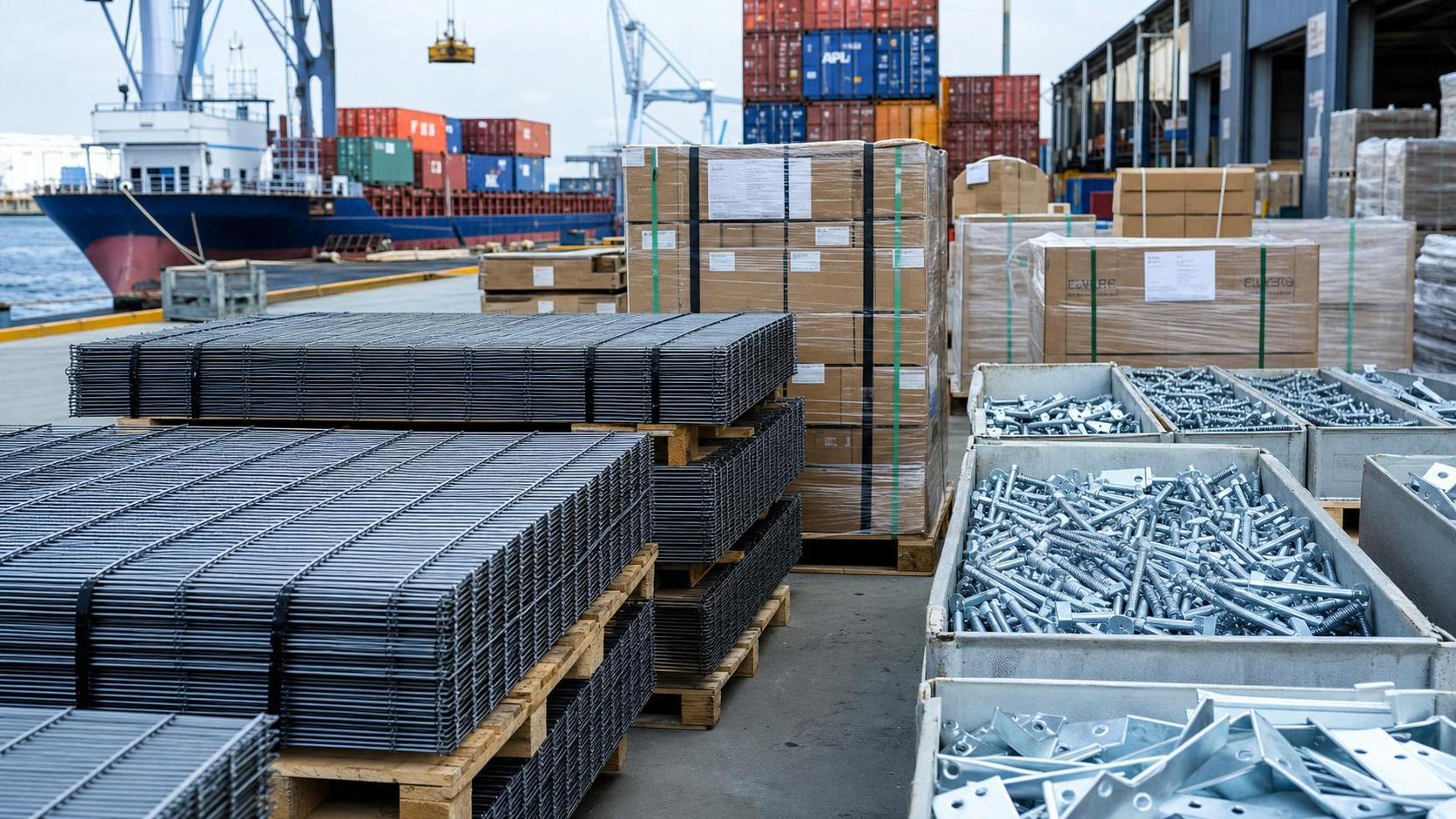
On June 3, 2026, the European Commission opened an anti-dumping investigation into welded steel mesh originating in China and Turkey, following an application from an industry association. While the case is aimed at welded steel mesh under CN codes 7314 20 90, 7314 31 00, and 7314 39 00, the development deserves attention well beyond that product line because of its close connection to supporting structures for fasteners, building anchoring systems, and stamped components. For exporters in Bolts & Screws, Anchors, and Stamping, as well as overseas distributors and engineering buyers, the immediate issue is not only product scope but also supply-chain compliance, origin documentation, cost allocation, and eligibility in downstream project bidding.
What has been confirmed so far
The confirmed facts are limited but commercially significant. The European Commission initiated the anti-dumping investigation on June 3, 2026, after receiving an application from an industry association. The products named in the case are welded steel mesh originating in China and Turkey, and the summary provided identifies CN codes 7314 20 90, 7314 31 00, and 7314 39 00. The same summary notes that the product has a high degree of linkage with structural parts used alongside fasteners, building anchoring systems, and stamped forming components.
The information also indicates that the case may affect exporters in Bolts & Screws, Anchors, and Stamping through origin certification, cost-sharing methods, and compliance in downstream end-project bidding. In addition, overseas distributors and engineering procurement parties are described as needing to reassess whether current suppliers can maintain access to the EU market.
Why the impact may extend beyond the investigated product
Compliance pressure may move upstream into export documentation
From an industry perspective, direct trading companies and export manufacturers may be affected first through documentation and product mapping. Where welded steel mesh is supplied together with related structural elements or embedded in a broader assembly context, the practical question becomes whether product descriptions, origin evidence, and supporting files are clear enough for EU-facing transactions. What deserves closer attention is that the issue is not limited to customs coding alone; it may also influence how exporters explain product composition and commercial arrangements to customers.
Cost allocation may become more sensitive for component suppliers
For processors and manufacturers serving Bolts & Screws, Anchors, or stamped component programs, the summary points specifically to cost allocation as a risk area. Analysis shows that when a investigated material or related structural part sits inside a wider product or project package, internal costing logic may face greater scrutiny from customers or channel partners. That does not establish any regulatory outcome by itself, but it does mean suppliers may need to distinguish more clearly between the investigated product and the value of adjacent components or services.
Distributors and project buyers may reassess supplier access to the EU market
For distributors, engineering procurement teams, and downstream project participants, the commercial concern is continuity of market access. The input information explicitly indicates that overseas distributors and engineering buyers should revisit the EU market-entry capability of suppliers. In practical terms, this may affect supplier screening, tender participation checks, and contract-stage communication, especially where origin, compliance readiness, or delivery feasibility could influence project acceptance.
What companies should watch now
Track official wording and scope interpretation
Analysis shows that one of the most important near-term tasks is to monitor how the investigated product scope is described in official communications and how it is interpreted in actual transactions. Companies tied to related fastener, anchoring, or stamping applications should pay attention to whether customers begin asking for more detailed product breakdowns or supporting origin records.
Review origin files and supporting records
What deserves closer attention is the quality and consistency of origin documentation. Exporters whose products are commercially linked to welded steel mesh should review whether certificates, declarations, specifications, and transaction records align with how goods are marketed and delivered. This is particularly relevant where the same supplier serves multiple related categories across structural parts and component systems.
Separate policy signal from immediate business consequence
Observably, the launch of an investigation is a policy and compliance signal, but it is not the same as a final trade remedy outcome. Companies should avoid treating the event as a concluded market result, while also avoiding the opposite mistake of assuming it has no present effect. The practical business impact may begin earlier through customer due diligence, internal procurement reviews, or tender-stage compliance checks.
Prepare customer communication and delivery contingencies
For sales teams, supply-chain managers, and account handlers, the current priority is readiness rather than speculation. That includes preparing clear explanations of product scope, supplier qualification status, document availability, and delivery arrangements for EU-related orders. Where projects involve downstream engineering or bidding processes, communication discipline may become as important as pricing and lead time.
How this development is best understood at this stage
Analysis shows that this news is better understood as an active compliance and market-access signal than as a finalized trade outcome. The confirmed fact is the opening of the investigation; the broader industry meaning lies in the way related categories such as fastener-supporting structures, anchoring systems, and stamped components may now face closer review from customers and intermediaries connected to the EU market.
It is more appropriate to understand this as a development that requires continued observation. The reason is straightforward: the summary already points to possible consequences in origin proof, cost allocation, and downstream bidding compliance, but it does not confirm final duties, final scope conclusions, or a settled commercial result. For that reason, the case matters immediately as a risk-management issue even though its ultimate trade outcome is not stated in the provided information.
A measured takeaway for the supply chain
For the industry, the significance of the June 3 development is not limited to one mesh product category. Its relevance comes from the cross-linkage between the investigated goods and adjacent export segments such as Bolts & Screws, Anchors, and Stamping, where documentation, costing logic, and project compliance can quickly become commercial pressure points. A neutral reading is that the case should currently be treated neither as a routine headline nor as a settled market shift, but as a development that warrants closer supplier review and disciplined compliance preparation.
About the basis of this article
This article is based on the user-provided news title, event date, and event summary. The summary states that the European Commission opened an anti-dumping investigation on June 3, 2026 into welded steel mesh originating in China and Turkey, identifies the relevant CN codes, and notes potential implications for Bolts & Screws, Anchors, Stamping, distributors, and engineering buyers. No specific official source link was provided in the input, so the underlying official text, any later procedural updates, and any scope-related clarifications still require ongoing verification. For this type of development, the most relevant source categories to continue monitoring typically include official notices, company disclosures, industry association information, authoritative media reporting, and related standards or compliance documents.
Related News