
Fasteners failing early? Check these common causes first

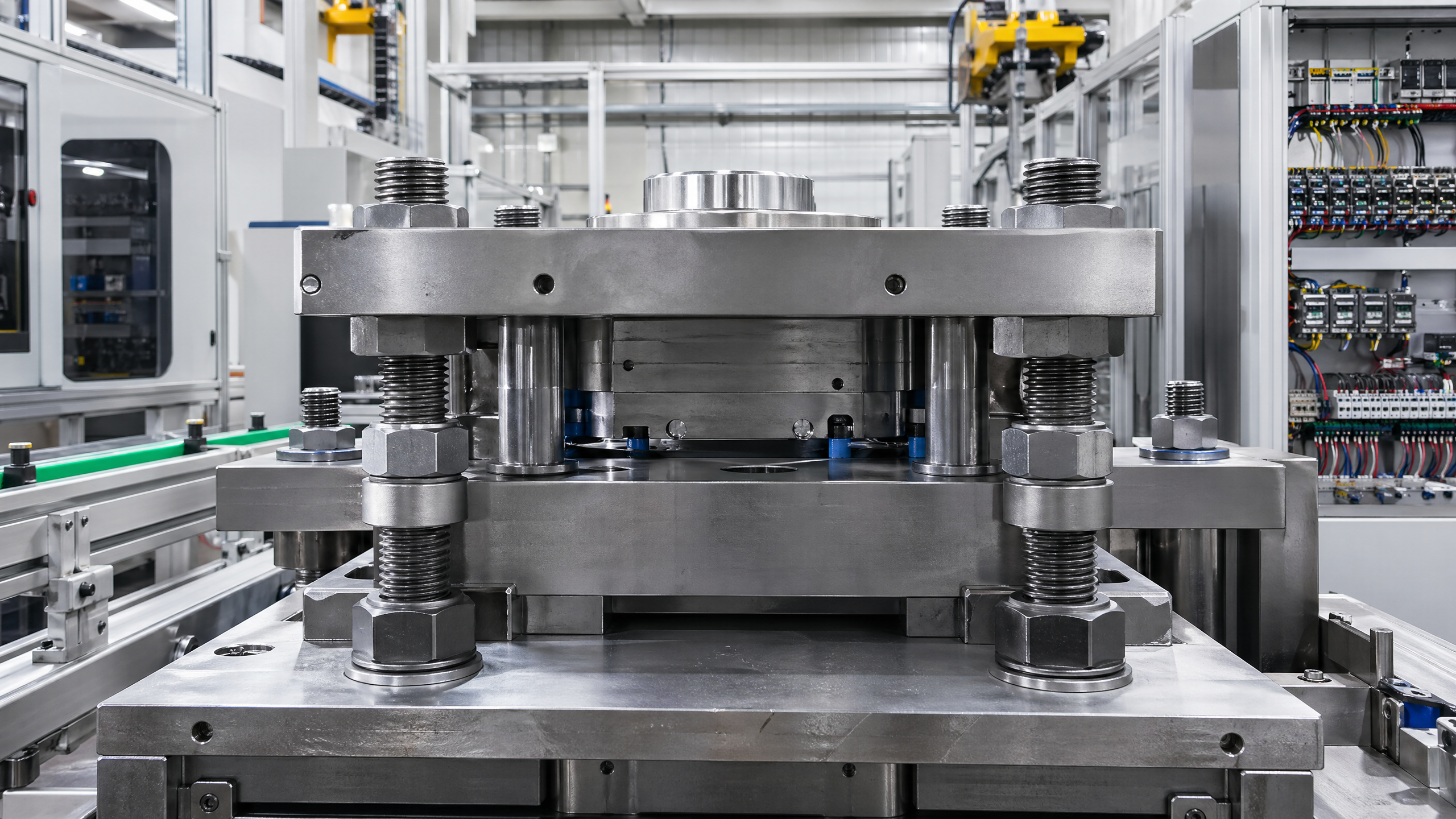
When fasteners fail early, the root cause is rarely random. From injection molding and die casting environments to industrial automation lines, small design, material, or installation issues can trigger costly breakdowns. This technical analysis explores how mold design, precision engineering, mechanical tools, and even nearby electrical components can influence fasteners performance—helping buyers, engineers, and quality teams identify risks before they escalate.
Why early fastener failure looks different from one application to another
A fastener that performs well in a dry machine enclosure may fail much earlier on a high-vibration conveyor, near a heated mold base, or inside a washdown electrical cabinet. That is why early fastener failure should be evaluated by application scenario, not by part number alone. In most industrial settings, the same bolt, screw, rivet, or stud can face very different combinations of preload loss, thermal cycling, chemical attack, galvanic interaction, and installation error within 3 to 18 months of service.
For operators, the first sign is often simple: loosening, cracking, corrosion staining, stripped threads, or repeated retightening. For technical evaluators and quality teams, the real question is deeper: was the failure caused by design mismatch, process variation, material grade, tightening method, or environmental exposure? For procurement and commercial teams, this distinction matters because replacing a low-cost fastener with a higher-grade option does not always solve the problem if the surrounding assembly conditions remain unchanged.
Across tooling, hardware, electrical, and mold-related industries, a practical review usually starts with five checkpoints: load type, joint design, material compatibility, installation control, and service environment. If even one of these variables is overlooked, the expected service life can fall sharply. In many production lines, a torque deviation of 10% to 20%, a coating mismatch, or a clamp length error of just a few millimeters is enough to turn a stable joint into a recurring maintenance issue.
Common business scenarios where fastener issues appear early
Different stakeholders notice fastener failure at different moments. Maintenance teams see downtime. Buyers see repeated reorders. Project managers see delayed commissioning. Safety managers see joint integrity risk. The table below compares typical industrial scenarios where early fastener failure appears and what each team should verify first before changing suppliers or redesigning the assembly.
This comparison shows why a one-size-fits-all response rarely works. A fastener issue on a mold platen is not managed the same way as one on a stainless enclosure door or a robot cell frame. The failure symptom may look similar, but the root cause chain is different. That is why application-specific diagnosis is often faster and less expensive than repeated replacement.
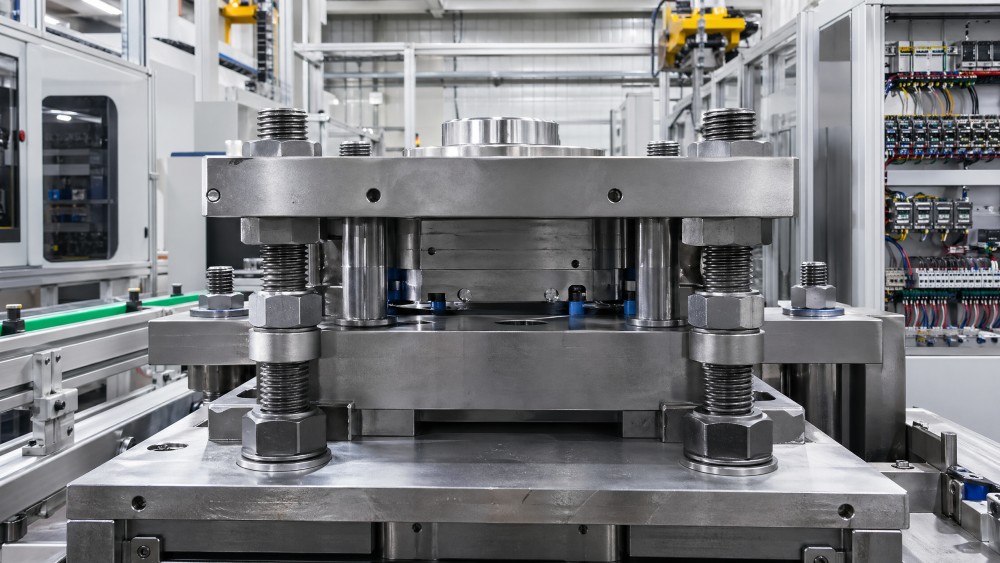
Scenario 1: Heated molds, injection tooling, and die-casting assemblies
Where thermal cycling changes fastener behavior
In mold and die environments, fasteners often work near temperature swings that can repeat dozens or hundreds of times per week. Even when peak operating temperatures stay within common industrial ranges such as 80°C to 250°C, repeated heating and cooling can alter preload. If the fastener, insert, clamped plate, and surrounding mold material expand at different rates, the joint may lose clamp force during one phase of the cycle and become overstressed during another.
This is especially relevant in precision tooling, where alignment matters. A locating plate or cavity insert that shifts by a very small amount can raise local stress around the fastener hole. Over time, the result may be thread damage, fretting, or fatigue cracking. In die-casting fixtures, impact loading can add another layer of stress, so a fastener that appears mechanically adequate on paper may still fail early in real service.
Another overlooked factor is lubrication and surface treatment. Some coatings improve corrosion resistance but may change friction coefficient during tightening. If torque values are copied from a dry assembly process and then applied to a coated fastener, preload can drift outside the intended range. In thermal applications, anti-seize compounds also need review because they influence torque-tension behavior and can affect disassembly after extended exposure.
What engineers and buyers should verify first
Before changing to a stronger fastener grade, confirm the joint geometry. Short engagement length, uneven bearing surface, poor washer selection, and misaligned holes can accelerate failure more than raw tensile strength limitations. In many mold-related assemblies, thread engagement below roughly 1 to 1.5 times nominal diameter should trigger a closer engineering review, especially in softer base materials.
- Check whether operating temperature peaks and dwell time are stable or fluctuate across shifts.
- Review whether the clamped materials have significantly different thermal expansion behavior.
- Confirm if installation torque was set for the actual coating, lubrication, and thread condition.
- Inspect for embedment, surface indentation, and loss of flatness around the joint face.
For procurement teams, the key lesson is that “high strength” alone is not a complete purchase criterion. In heated tooling applications, buyers should ask for material grade, heat-treatment consistency, coating type, hardness range, and application limits. A lead time of 2 to 6 weeks may be acceptable for standard industrial fasteners, but if custom geometry or traceability is required for tooling maintenance programs, planning should start earlier to avoid emergency substitutions.
Scenario 2: Automation lines, pneumatic stations, and vibration-prone equipment frames
Why joints loosen even when torque records look correct
On automated production lines, early fastener failure often appears as loosening rather than breakage. Conveyor supports, guarding frames, pneumatic manifolds, motor brackets, and sensor mounts experience repeated vibration pulses. In these cases, a fastener can pass initial torque inspection and still lose preload after 2 to 12 weeks if the joint was not designed to resist transverse movement. This is common where sheet metal brackets settle, painted surfaces compress, or washers are omitted.
Pneumatic components add another challenge. Repeated pressure cycling can transmit micro-shocks into compact assemblies, especially where valve islands, cylinders, and manifolds are mounted on lightweight frames. If the support stiffness is low, the fastener absorbs more relative movement. Operators may only notice the issue after misalignment causes air leaks, sensor faults, or inconsistent actuator travel.
Electrical components mounted nearby can indirectly affect the joint as well. Heat from drives, transformers, or power supplies can age polymer washers, soften thread-locking materials, or change the stiffness of surrounding parts. In enclosed cabinets or mixed electro-mechanical modules, temperatures rising from 30°C to 55°C over long operating periods may not seem extreme, yet they can still alter long-term clamp stability when combined with vibration.
Practical checks by role
Different teams should evaluate the same fastener issue from different angles. The table below helps map responsibilities so that root cause analysis does not stop at simple retightening.
The main insight here is that vibration-related fastener failure is usually a system problem, not just a component problem. If a line keeps loosening the same joint every month, the solution may involve better locking methods, improved support rigidity, tighter assembly control, or a different interface material, rather than only selecting a larger diameter fastener.
Scenario 3: Electrical enclosures, outdoor hardware, and mixed-material installations
Where corrosion and material pairing become the hidden cause
In electrical housings, junction boxes, outdoor brackets, and mixed-metal assemblies, early fastener failure often starts with corrosion or galvanic interaction rather than overload. Stainless steel fasteners paired with carbon steel brackets, aluminum panels, or zinc-coated inserts can behave differently depending on moisture, contaminants, and grounding requirements. A joint may remain visually acceptable for months, then suddenly become difficult to remove, lose conductivity, or show red rust at the contact zone.
This matters in sectors ranging from factory electrification to infrastructure support systems. When the assembly sees condensation, washdown, salt-laden air, or chemical splash, coating choice and interface isolation become important. In moderate indoor conditions, a basic plated finish may perform adequately. In outdoor or frequently cleaned environments, the risk profile changes quickly, and a poor material match can shorten useful life within one seasonal cycle.
Another common issue is thread galling, particularly with stainless-to-stainless combinations. Teams may misread galling as overtightening or poor workmanship when the real cause is friction behavior under speed, pressure, and insufficient lubrication control. For distributors and purchasers, this is a reminder that material grade, thread condition, and application method should be discussed together, not purchased as isolated attributes.
A simple scenario-based material review
The matrix below is not a substitute for full engineering validation, but it helps identify where fastener failure risk tends to increase in mixed-material and exposure-sensitive applications.
For quality and project teams, the key is to define acceptable exposure conditions early. If a supplier quote specifies the fastener but not the service environment, performance assumptions can drift. A technically sound sourcing process should match the fastener not only to size and strength, but also to humidity range, maintenance practice, expected service interval, and any electrical continuity constraints.
Common misjudgments that lead to repeated fastener failure
What teams often overlook in cross-functional projects
One common misjudgment is assuming the failed fastener is always the weakest point. In reality, the fastener may simply be revealing a joint design problem, misalignment from upstream machining, or unstable assembly practice. This is especially common when new tooling, automation retrofits, and electrical integration projects are launched under compressed schedules of 4 to 10 weeks.
Another mistake is mixing standards, finishes, and tightening methods without revalidation. For example, a switch from one coating system to another may change installation friction enough to affect preload. A similar issue appears when manual tightening, pneumatic tools, and torque-controlled electric tools are used interchangeably across shifts. Even if the nominal torque setting is the same, the actual joint condition may not be.
A third oversight is failing to define the real duty cycle. A fastener on a machine guard opened once per quarter faces a very different service pattern from one removed every shift for cleaning or tool change. Repeated assembly and disassembly can damage threads, increase variability, and create false signals that look like material defects.
A concise diagnostic checklist
- Identify the failure mode first: loosening, fracture, stripping, corrosion, galling, or leakage-related movement.
- Map the application scenario: thermal, vibration, corrosive, mixed-material, high-cycle maintenance, or impact-loaded.
- Check installation controls: tool type, torque range, lubrication condition, sequence, and operator variation.
- Review joint design details: clamp length, bearing surface, thread engagement, hole quality, and part flatness.
- Confirm sourcing consistency: grade, finish, lot traceability, packaging damage, and replacement compatibility.
Using this sequence helps teams avoid two expensive habits: replacing fasteners too quickly without root cause analysis, or overengineering the joint with unnecessarily costly materials. The most reliable industrial decisions usually come from matching the fastener to the application scenario and service conditions with enough detail to control repeatability.
How to choose the right response for your specific scenario
Scenario-based selection and sourcing guidance
If your fasteners are failing early, the best response is not always immediate substitution. Start by defining whether the application is heat-dominant, vibration-dominant, corrosion-dominant, or maintenance-cycle-dominant. That single classification often removes much of the uncertainty. From there, the right action may be a revised tightening procedure, a coating change, a washer or locking upgrade, a geometry correction, or a different material pair.
For buyers and sourcing managers, it is useful to request more than price and availability. Ask suppliers to confirm recommended application range, typical delivery window, available finishes, packaging controls, and whether the part is better suited to static joints or dynamic assemblies. In many industrial programs, sample evaluation over 2 to 4 weeks can reveal installation and compatibility issues before larger volume orders are placed.
For engineering, quality, and project leadership teams, cross-functional review is critical. Fastener failure often sits at the boundary between tooling design, maintenance reality, production pressure, and purchasing logic. A structured review at the prototype stage, pilot stage, and early production stage can prevent repeated field corrections and reduce unplanned downtime.
Why work with GHTN
GHTN connects industrial decision-makers with deeper insight into the hidden variables behind component performance. Our focus on hardware, precision tooling, mold manufacturing, and electrical system context helps teams evaluate fastener failure as part of the full industrial assembly, not as an isolated purchasing issue. This is especially valuable when your project spans OEM design, line operation, distributor supply, and quality control at the same time.
If you are comparing options for tooling fasteners, automation assemblies, mixed-material hardware, or environment-sensitive installations, we can help you narrow the decision path. You can contact us to discuss parameter confirmation, product selection logic, delivery cycle planning, custom solution direction, application risk review, sample support, and quotation communication for your target market or project stage.
Whether your priority is preventing recurring loosening, improving corrosion resistance, aligning specifications with real operating conditions, or preparing a better sourcing brief, the next step is to match the fastener to the scenario with precision. Contact GHTN to review your application details and identify where the true cause of early fastener failure is most likely to be hiding.
Related News