
Fasteners for Industrial Automation That Prevent Loosening

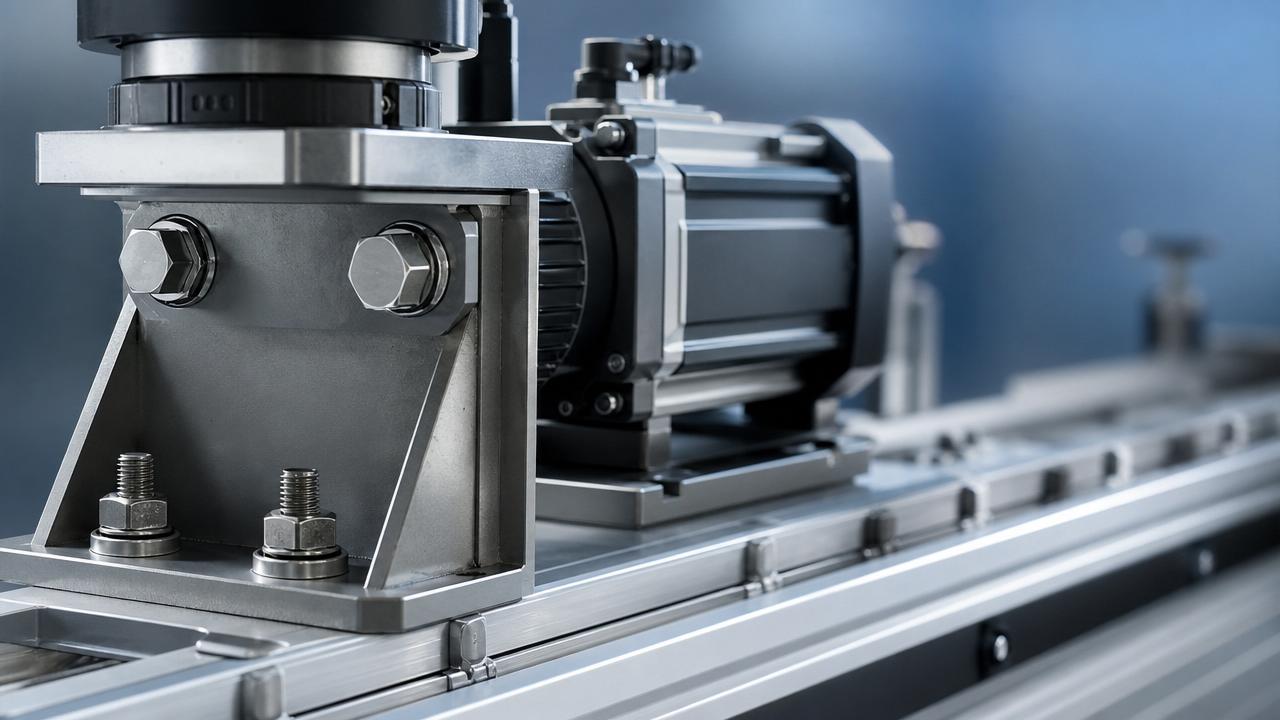
In automated production lines, even a small fastener failure can trigger downtime, safety risks, and costly maintenance. Choosing the right fasteners for industrial automation is essential for preventing loosening under vibration, thermal cycling, and repetitive motion. This article explores how project leaders and engineering managers can evaluate fastening solutions that improve equipment stability, extend service life, and support reliable system performance.
For most project managers and engineering leads, the real question is not simply which bolt or screw is “stronger.” It is which fastening approach will keep automated equipment stable over years of motion, vibration, heat variation, maintenance cycles, and production pressure. In practice, the best fasteners for industrial automation are those that reduce the probability of loosening while also supporting assembly efficiency, serviceability, and predictable lifecycle cost.
That means the decision should go beyond catalog specifications. It should include load conditions, joint design, machine dynamics, maintenance access, reusability, environmental exposure, and the cost of failure. A fastening solution that looks inexpensive at purchase can become costly if it causes recurring retightening, line stoppages, misalignment, or premature wear in surrounding components.
What users searching for fasteners for industrial automation usually need to know
When professionals search for fasteners for industrial automation, their intent is typically practical and risk-driven. They want to know how to prevent screws, bolts, nuts, or studs from backing off in machines that experience constant motion, impact, vibration, or thermal fluctuation. They are often comparing options for a new project, a retrofit, or a recurring field failure that standard fasteners have not solved.
For project leaders, the concern is broader than the fastener itself. They need to know whether a fastening choice will protect uptime, operator safety, quality consistency, and maintenance budgets. They also want a clear method for selecting the right solution without overengineering every joint or introducing avoidable procurement complexity.
This is why the most useful guidance focuses on failure prevention, application matching, and total operating value. Generic discussions about hardware grades are not enough. Decision-makers need criteria they can apply to servo assemblies, robot frames, conveyors, sensor mounts, panel systems, pneumatic modules, and other automation structures where movement and precision interact.
Why loosening happens in industrial automation systems
Loosening rarely comes from one cause alone. In automation environments, it usually results from a combination of dynamic loads, micro-movements at the joint interface, inadequate preload, poor surface conditions, thermal expansion mismatch, and repeated service intervention. Even a correctly torqued fastener can lose clamp force if the joint settles or if external motion repeatedly overcomes friction.
Vibration is one of the most common triggers. Conveyors, pick-and-place units, feeders, packaging equipment, and robotic axes generate repetitive excitation that can gradually reduce preload. When transverse movement occurs across the joint, the risk rises sharply because small slips between contact surfaces can initiate self-loosening.
Thermal cycling is another hidden factor. Components in automated systems may heat up during continuous operation and cool during idle periods. If the fastener and clamped materials expand at different rates, preload can change over time. In mixed-material assemblies, such as aluminum frames with steel fasteners, this effect is especially important.
Maintenance practices also matter. Frequent disassembly, inconsistent torque application, damaged threads, or reused locking elements beyond their effective life can all reduce joint reliability. In many cases, recurring loosening is not a single-part problem but a sign that the fastening system, installation process, and operating conditions are out of alignment.
What project managers should prioritize when selecting fastening solutions
For management-level decision-makers, the priority is not choosing the most sophisticated locking method everywhere. The goal is to match the fastening strategy to the criticality of the joint. Some locations require maximum resistance to vibration-induced loosening, while others may benefit more from quick assembly, corrosion resistance, or easy maintenance access.
A useful first step is to classify joints by business impact. Ask which fasteners, if they loosen, could stop production, affect machine accuracy, create a safety issue, or damage expensive subassemblies. These high-consequence joints deserve more engineering attention, stronger validation, and often premium anti-loosening features.
Next, evaluate service expectations. Will the joint remain untouched for years, or will technicians open it regularly for cleaning, calibration, or replacement? A permanent threadlocker may work well for one application but create unnecessary service burden in another. The right decision depends on how often the joint must be reopened and how reliably it can be reassembled.
Finally, consider supply chain consistency and assembly control. A technically excellent fastener still creates risk if installers lack the right tools, torque procedures, or replacement parts. For large automation programs, standardizing a manageable set of proven fasteners for industrial automation often improves both reliability and operational efficiency.
Which types of anti-loosening fasteners are most effective
There is no single universal answer, but several categories consistently perform well when selected correctly. Prevailing torque locknuts, wedge-lock washers, thread-forming or thread-locking screws, serrated flange fasteners, safety wire systems, and chemical threadlockers are all common solutions. Each addresses loosening through a different mechanism.
Wedge-lock washers are widely valued in high-vibration environments because they use cam geometry to maintain tension when the joint is subjected to dynamic movement. In many automation applications, they provide a robust mechanical solution for critical bolted joints on frames, motors, and moving assemblies.
Prevailing torque locknuts create resistance through a deformed section or polymer insert. They are useful where repeated vibration is expected, though temperature limits, chemical exposure, and reuse policies must be reviewed carefully. In some clean or hot environments, all-metal versions may be preferable to nylon insert designs.
Chemical threadlockers can be highly effective for screws that are not meant to loosen under service vibration. They fill the gaps between threads and help resist rotational movement. However, they require proper surface preparation, curing consideration, and maintenance planning. They are best chosen when process discipline is reliable.
Serrated flange bolts or nuts can improve grip against mating surfaces, but they are not ideal for every material or surface finish. They may damage coatings or softer materials. Safety wire and tab washers, meanwhile, remain useful in specific high-security applications, though they are less common where assembly speed and modular maintenance are top priorities.
Joint design matters as much as the fastener itself
Many teams look for a “better fastener” when the deeper issue is joint design. If the clamped parts are too flexible, poorly supported, misaligned, or exposed to excessive transverse movement, even advanced locking components may struggle. A reliable joint begins with sufficient stiffness, proper contact surfaces, and the right clamp length-to-diameter relationship.
Surface condition is especially important. Paint, coatings, burrs, or uneven contact areas can settle after installation, reducing preload. Soft materials may also embed under load, creating clamp loss over time. In these cases, improving the interface or adding hardened washers may deliver more value than changing the bolt alone.
Hole fit and alignment also influence performance. Sloppy tolerances can increase movement under cyclic loads. Where precision matters, locating features such as dowels or shoulders may be needed so the fastener provides clamping force rather than acting as the primary shear-resisting element.
In other words, the best fasteners for industrial automation work best when the joint is engineered to support them. Project leaders should encourage suppliers and internal teams to review the entire fastening system rather than substitute parts one by one after failures occur.
How to evaluate fasteners by application area in automation equipment
Different automation modules present different loosening risks. Servo motor mounts, gearbox connections, and robot base joints usually face significant dynamic loads and should be treated as high-criticality locations. Here, preload control, locking method, and installation consistency are central to long-term reliability.
Conveyors and transfer systems often combine vibration, misalignment risk, and frequent maintenance. Fasteners in these assemblies should support both resistance to loosening and practical servicing. If maintenance crews must remove guards, brackets, or sensors often, the fastening strategy should reduce the chance of incorrect reassembly.
Control cabinets and electrical mounting systems may not see the same mechanical stress as moving frames, but they still face thermal cycling and service access demands. Loose electrical hardware can create signal problems, grounding issues, or safety concerns. In these areas, stable retention and compliance with electrical standards are both important.
Pneumatic manifolds, valve islands, and sensor brackets often involve repeated machine motion and compact mounting spaces. Here, small fasteners can become weak points if vibration resistance is underestimated. Because these components directly affect automation logic and cycle stability, seemingly minor loosening can quickly become a production issue.
How to compare cost versus reliability without overengineering
One of the most common management concerns is whether premium anti-loosening hardware is worth the added unit cost. The answer depends on the cost of failure. In industrial automation, even a low-cost fastener can protect a high-value process. If one loosened joint can stop a line, create scrap, or require emergency service, the economics often favor a more robust solution.
A simple comparison framework helps. Estimate the direct and indirect cost of one loosening event, including downtime, labor, troubleshooting, spare parts, restart validation, and any quality loss. Then compare that to the incremental cost of upgraded fasteners, washers, nuts, or assembly controls across the equipment population. In many cases, the return is obvious.
That said, not every joint needs a high-end locking system. Overengineering can increase part variety, slow assembly, and complicate maintenance. The best approach is selective reinforcement: invest more in critical joints and standardize practical solutions for lower-risk locations. This delivers reliability where it matters most while keeping the bill of materials manageable.
Installation quality is a major part of loosening prevention
Even the right fastener can fail if installation is inconsistent. Improper torque, contaminated threads, missing washers, incorrect tightening sequence, and tool calibration errors are all common causes of joint problems. For project managers, this means fastening performance should be treated as both a design issue and a process issue.
Torque alone is not always enough, especially where friction variation is high. In some critical joints, torque-angle methods, direct tension verification, or tool data traceability may be justified. The required level of control depends on joint criticality, machine function, and the consequences of failure.
Training matters as well. If maintenance teams regularly reopen joints, they need clear replacement rules for locknuts, threadlocker use, washer orientation, and retightening specifications. Too many field failures happen because a strong original design loses integrity during service events.
For OEMs and integrators, documentation should be part of the fastening strategy. A controlled installation standard helps ensure the selected fasteners for industrial automation perform as intended across production, commissioning, and long-term support.
Questions to ask suppliers before approving a fastening solution
Supplier evaluation should go beyond material grade and pricing. Ask whether the proposed fastener has documented performance under vibration, thermal cycling, or repeated service conditions similar to your application. If possible, request test references, standards alignment, and examples from comparable industries.
It is also important to clarify operating limits. Can the locking element handle your temperature range, cleaning chemicals, humidity, or corrosion exposure? Is the part intended for single use or controlled reuse? What installation tools or torque ranges are recommended, and how sensitive is performance to assembly variation?
For larger projects, ask about lot consistency, coating control, traceability, and global supply continuity. A fastening solution is only as good as its reproducibility. If the same machine platform is installed in multiple regions, procurement and maintenance teams will benefit from components that can be sourced and supported consistently.
A practical selection checklist for engineering managers
To make decisions easier, use a structured checklist. First, define the joint function: is it structural, positioning-related, safety-relevant, or mainly for enclosure attachment? Second, identify the main loosening drivers: vibration, impact, thermal cycling, frequent maintenance, or material settling.
Third, determine whether the joint should be permanent, semi-serviceable, or frequently removable. Fourth, review the base materials, available clamping length, access constraints, and surface condition. Fifth, choose the anti-loosening mechanism that best fits both technical and maintenance requirements.
Sixth, validate the assembly method. Confirm torque values, tool capability, installation sequence, and replacement rules. Finally, assess lifecycle economics: part cost, downtime risk, labor impact, and spare parts standardization. This kind of framework helps teams choose fasteners for industrial automation with more confidence and less trial-and-error.
Conclusion: reliable automation starts with reliable joints
In automated systems, fastener loosening is rarely a minor issue. It can undermine accuracy, disrupt uptime, increase maintenance burden, and introduce avoidable safety and quality risks. For project managers and engineering leaders, the best fastening decision is the one that aligns mechanical reliability with practical service needs and lifecycle cost control.
The most effective strategy is not simply buying stronger hardware. It is understanding why joints loosen, identifying which connections are business-critical, selecting the right anti-loosening method, and ensuring installation quality supports the design intent. When these factors are addressed together, fasteners become a reliability asset rather than a recurring problem.
As automation systems become faster, more compact, and more connected, the value of stable fastening will only increase. Teams that treat fastening as a strategic engineering decision, rather than a commodity line item, will be better positioned to deliver durable machines, lower service costs, and more dependable industrial performance.
Related News