
Global Carbon Steel Fastener FOB Prices Jump 3.7%

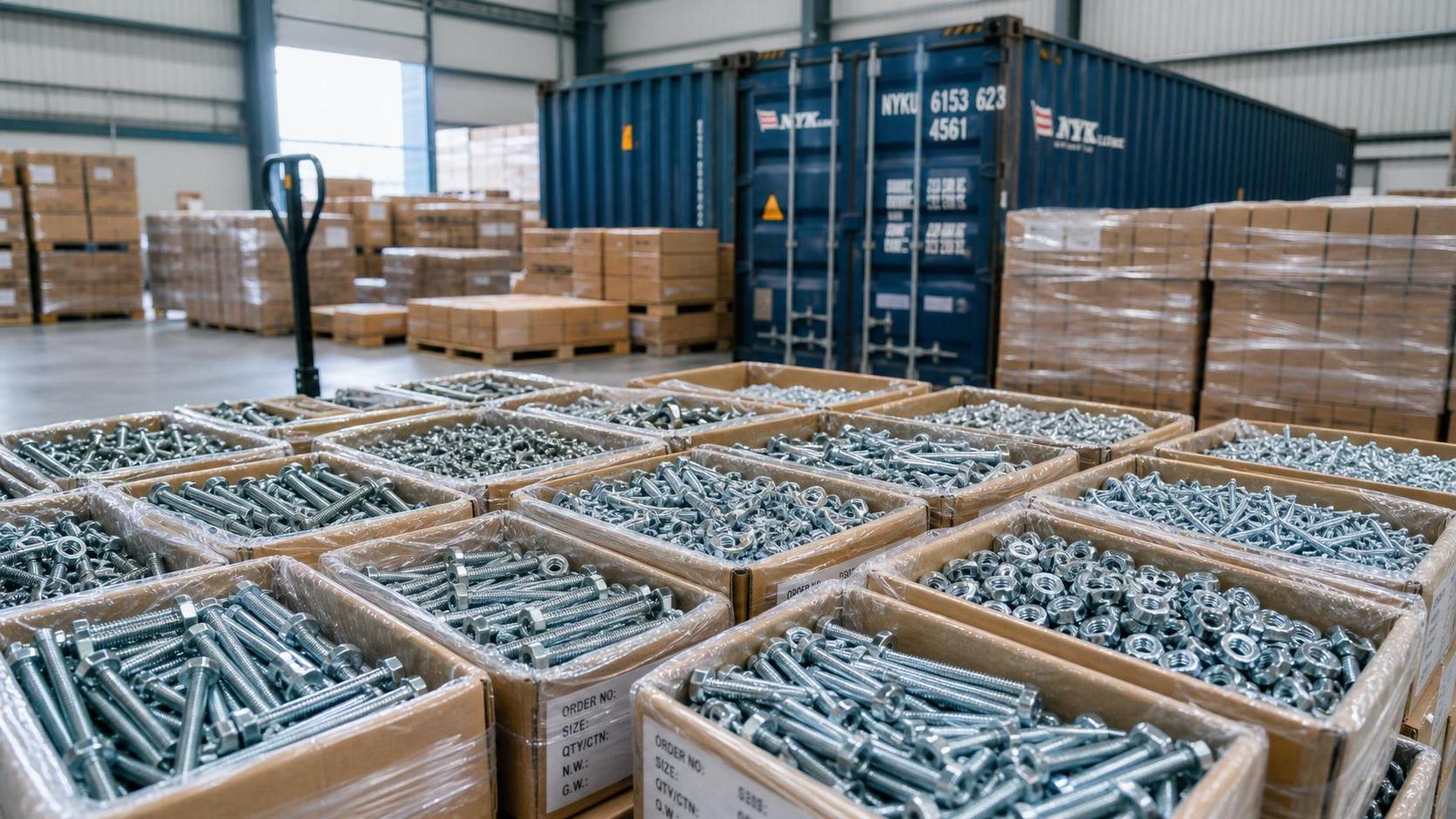
The timing of the underlying market shift is not explicitly stated in the available information, but the latest signal is already clear for export-oriented fastener trade. According to an IISI monitoring report released on July 13, 2026, a rise in Q3 iron ore quotations by Vale pushed the weekly global export FOB average for basic carbon steel fasteners higher, while Chinese production clusters have already issued Q3 price adjustment notices and extended delivery schedules. For exporters, overseas buyers, procurement teams, and supply-chain operators, this deserves attention not simply as a price move, but as a trading and execution signal affecting quotations, contract handling, scheduling, and delivery planning.
What Has Been Confirmed So Far
IISI stated in its global fastener cost monitoring report released on July 13, 2026, that the weekly global export FOB average price for basic carbon steel fasteners such as bolts and screws increased by 3.7%.
The report linked this move to Vale's upward adjustment of Q3 iron ore quotations in Brazil, with the offshore iron ore price exceeding USD 185 per ton.
The reported weekly rise brought the export price level to its highest point since October 2025.
The available information also shows that major Chinese fastener clusters in Wenzhou and Dongguan have sent Q3 price adjustment letters to overseas customers, and delivery cycles have been extended by 5 to 7 working days.
Why This Matters Across Trade and Fulfillment
Export quotations are becoming a live compliance and contract issue
For direct export suppliers, the immediate effect is not limited to margin pressure. Once Q3 price adjustment letters have been issued, the operational focus shifts to how quotations, validity periods, and contract terms are handled in cross-border transactions. What deserves closer attention is whether current offers, order confirmations, and shipment arrangements remain aligned with the revised commercial position, especially where FOB terms are involved.
Procurement teams face tighter timing and documentation discipline
For overseas buyers and procurement departments, the extension of delivery by 5 to 7 working days may affect purchase scheduling, tender timing, and replenishment plans. From an industry perspective, this raises practical attention around order release timing, technical document confirmation, and the completeness of purchase records tied to revised prices and lead times. Even without a formal regulatory change described in the input, execution discipline around procurement documents becomes more important when supply terms move quickly.
Manufacturing and processing links need closer coordination with customer commitments
For processing and manufacturing businesses in the fastener chain, the reported rise in raw-material-linked export prices suggests that upstream cost movement is already being transmitted into customer-facing commitments. Analysis shows that this can affect production scheduling, order prioritization, and communication with overseas accounts. The key issue is less about broad market direction and more about whether promised delivery windows, specification alignment, and shipment commitments can still be met under revised lead times.
Logistics and supply-chain service providers may see execution pressure first
For freight, consolidation, and supply-chain service providers, the extension of delivery cycles can alter booking expectations and shipment planning. Observably, even a short lead-time change can influence cargo readiness, coordination points, and handover timing under export arrangements. Service providers therefore need to watch for updated shipment instructions, revised dispatch schedules, and any supporting trade documentation that reflects new commercial terms.
Practical Signals Companies Should Track Now
Review how price adjustments are reflected in trade paperwork
Analysis shows that companies involved in export fasteners should closely check how Q3 price changes are being reflected in quotations, confirmation documents, order files, and customer notices. The available information confirms that price adjustment letters have already been sent, but it does not define a uniform execution standard. That means businesses should treat document consistency as a near-term control point rather than assume a settled market practice.
Recheck lead-time commitments against current customer obligations
Because delivery has reportedly been extended by 5 to 7 working days, exporters and buyers should reassess whether existing shipping promises, procurement windows, and internal planning assumptions remain workable. What deserves closer attention is not only production timing, but also whether later delivery could affect downstream installation schedules, stock availability, or tender execution milestones where timing matters.
Keep technical and quality files aligned with revised supply arrangements
The input does not describe any change in certification rules or technical standards. Even so, from an industry perspective, once pricing and delivery terms are adjusted, companies should ensure that technical files, inspection records, product descriptions, and quality traceability materials remain synchronized with the orders being fulfilled. This is especially relevant where customers require strict consistency between bid documents, purchase terms, and shipped goods.
Watch for follow-through in market practice, not just the headline move
The reported rise is a concrete market signal, but the downstream execution pattern still needs observation. Companies should pay attention to whether additional price notices, revised tender language, updated customer purchase terms, or broader scheduling adjustments emerge in response. At this stage, the information supports close monitoring rather than any assumption of a fully standardized industry response.
How This Signal Should Be Read
Observably, this development is best understood as an execution signal already affecting trade behavior, because price adjustment letters and longer delivery cycles have been reported in key Chinese fastener clusters. At the same time, it is not yet described in the input as a new formal regulation, mandatory standard, or published enforcement rule.
Analysis shows that the practical significance lies in the transmission of upstream raw-material pricing into export terms. That can reshape how suppliers and buyers handle quotations, procurement timing, and shipment commitments even before any broader market response becomes clear. For that reason, the sector should keep watching not only price indexes but also customer acceptance, document practice, and order execution feedback.
What the Current Development Suggests for the Market
Based on the confirmed facts, the current development points to a near-term tightening of export fastener transaction conditions rather than a standalone pricing headline. The rise in FOB averages, the issuance of Q3 adjustment letters, and the extension of delivery cycles together indicate that commercial terms are already under revision in parts of the market.
It is more appropriate to understand this as a landed execution change in trade practice, with further market interpretation still requiring observation. The most relevant issue for companies now is whether pricing, delivery, and supporting trade documents remain aligned as orders move from quotation to shipment.
Basis of This Article
This article is generated from the user-provided news title, event timing, and event summary. The event timing was not explicitly specified in the source input, and no official source link was provided in the input, so further verification remains necessary.
For developments of this type, commonly relevant source categories may include official notices, regulator releases, customs or trade authority information, industry association publications, standard-setting documents, and reporting by authoritative trade media. Follow-up observation is still needed on any detailed rule interpretation, certification-related execution approach, tender document changes, market feedback, and how companies implement revised pricing and delivery arrangements in practice.
Related News
- Greening components or lower cost materials: which wins long termTime : Apr 29, 2026
- Fastener Grade Comparison: How to Match Strength Classes to Load and Safety NeedsTime : Aug 20, 2026
- China-UAE Open Direct Sea Route, Cutting Export Lead Times for Industrial Fasteners and Pneumatic Parts by 7-10 DaysTime : Aug 16, 2026