
How the global value chain is changing bolt sourcing

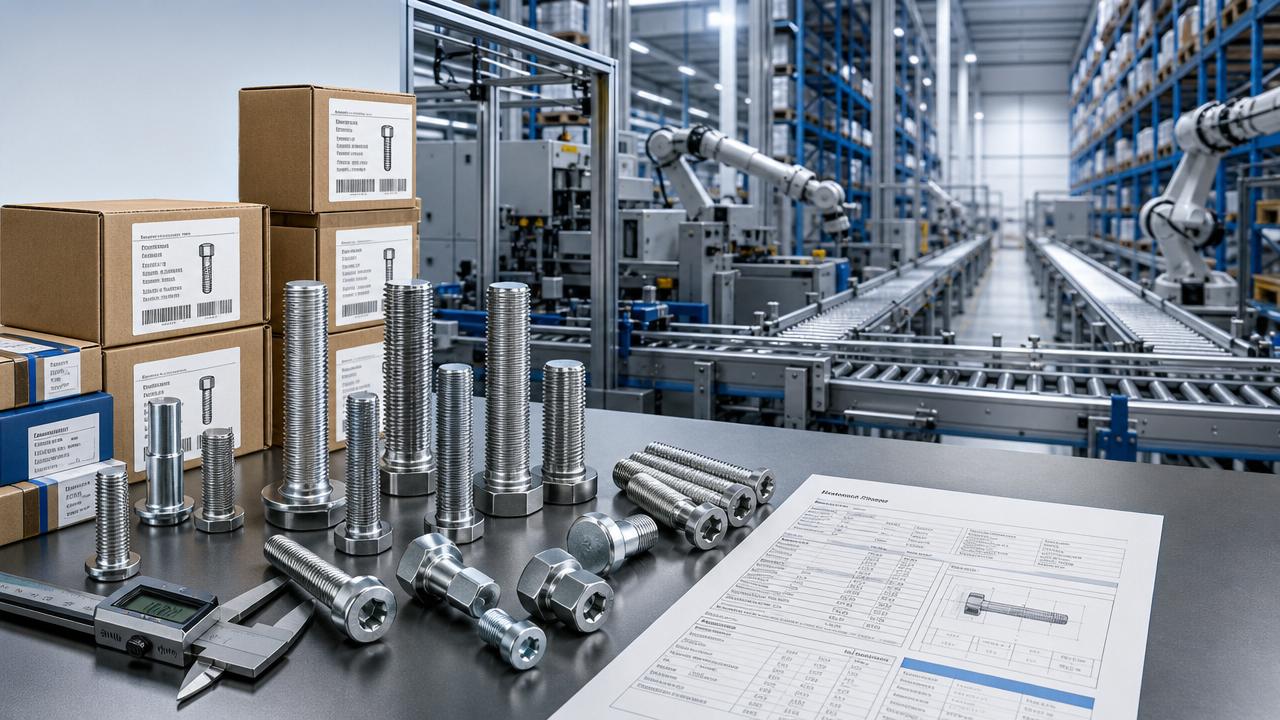
As the global value chain becomes more regionalized, digitalized, and risk-sensitive, bolt sourcing is no longer a simple price comparison. For procurement professionals, understanding shifts in supplier networks, material standards, compliance demands, and delivery resilience is now essential to securing stable quality and competitive cost. This article explores how these structural changes are reshaping sourcing decisions across today’s industrial components market.
Why the global value chain is changing bolt sourcing priorities
For many buyers, bolts used to sit in the low-attention category: standardized, easy to replace, and primarily cost-driven. That assumption no longer holds. In the current global value chain, even common fasteners are affected by trade policy, metal price volatility, regional compliance rules, and supply continuity risks.
A bolt may represent a small share of unit cost, but it can stop an assembly line, delay container loading, or trigger a field failure if the wrong grade, coating, or tolerance is selected. Procurement teams now need a sourcing model that weighs technical fit, supplier resilience, and documentation quality alongside price.
This is especially true across diversified industrial sectors, where fasteners serve machinery, electrical assemblies, tooling systems, mold maintenance, and automated equipment. Different end uses create different risk profiles, so bolt sourcing must be linked to function, not just catalog code.
- Regional manufacturing shifts are shortening some supply routes while increasing dependence on secondary hubs in Southeast Asia, Eastern Europe, Mexico, and India.
- Digital procurement systems are making supplier visibility better, but they also expose gaps in traceability, test records, and quality consistency.
- Customer audits and regulatory reviews are pushing buyers to verify material origin, plating chemistry, and compliance documents more carefully.
- Cost pressure remains strong, yet total cost now includes downtime risk, rejection cost, and emergency replenishment expense.
What procurement teams are really buying today
In a changing global value chain, buyers are no longer purchasing only a bolt. They are purchasing a combination of metallurgy, dimensional consistency, coating performance, packaging accuracy, lead-time predictability, and document reliability. When any one of these breaks down, the sourcing decision fails even if the invoice price looked attractive.
What has changed in supplier networks and sourcing geography?
Bolt sourcing is being reshaped by a move from purely global optimization toward multi-regional balancing. Many procurement departments still source internationally, but they increasingly divide volumes across regions to reduce disruption exposure. This is a major shift in the global value chain for industrial components.
The most visible change is that supplier selection now includes resilience scoring. Buyers ask whether a supplier can secure steel rod supply, maintain heat treatment quality, manage plating subcontractors, and support urgent replenishment from regional inventory. A low quote without supply assurance is losing appeal.
The table below shows how sourcing priorities often differ by supply model in the current global value chain.
The key lesson is not that one model is always better. It is that sourcing strategy must match usage criticality, annual demand stability, and downtime impact. In today’s global value chain, procurement leaders often mix these models rather than relying on a single channel.
Why regionalization matters even for standard bolts
Standard parts are not immune to regional differences. Local standards preferences, thread expectations, coating practices, packaging labels, and test report formats may vary. If a buyer assumes full interchangeability, receiving inspection problems can rise. Regionalization therefore affects both logistics and quality assurance.
Which technical factors now matter more in bolt sourcing?
As the global value chain becomes more transparent, technical mismatches are easier to identify and more expensive to ignore. Buyers need to understand not just diameter and length, but also base material, mechanical class, heat treatment route, corrosion protection, thread tolerance, and surface finish compatibility.
This is particularly important in industrial applications where bolts face vibration, thermal cycling, chemical exposure, humidity, or repeated disassembly. The wrong plating may fail in coastal storage. The wrong hardness window may cause fracture. The wrong head style may slow installation in automated assembly.
- Mechanical grade must align with load path, tightening method, and safety margin.
- Material selection should consider carbon steel, alloy steel, stainless steel, or specialty options based on environment and cost target.
- Surface treatment must be evaluated for corrosion resistance, friction behavior, and potential hydrogen embrittlement concerns.
- Dimensional tolerance influences fit with mating parts, tooling efficiency, and rework rates.
For procurement teams dealing with multiple factories or international vendors, a technical review matrix can reduce interpretation errors before quotation comparison begins.
The following table can be used as a practical screening reference when bolt sourcing decisions are affected by the global value chain.
This framework helps buyers compare suppliers on practical engineering terms. It also supports better internal communication between sourcing, quality, and production teams.
How should procurement professionals evaluate cost in the new global value chain?
A cheaper unit price can easily become a more expensive sourcing decision once hidden costs appear. In bolt sourcing, total cost should include inbound logistics, inspection workload, line-side handling, defect containment, safety stock, payment terms, and disruption recovery.
The global value chain has increased the importance of cost timing as well. A supplier with a lower nominal quote but a 12-week lead time may force higher inventory. Another supplier may cost slightly more per thousand pieces but reduce buffer stock and emergency freight. The better option depends on cash flow, forecast quality, and line criticality.
A practical total-cost checklist
- Separate direct part price from logistics, duty, and customs handling.
- Estimate the cost of incoming inspection failures and repacking errors.
- Measure the inventory carrying cost created by long and variable lead times.
- Assign a downtime exposure value for critical bolts used in bottleneck equipment.
- Review whether the supplier can support packaging customization, kitting, or line-ready labeling.
This type of analysis is increasingly valuable for multi-plant buyers. It converts a broad global value chain discussion into measurable sourcing choices.
What compliance and documentation issues can no longer be ignored?
Compliance is now part of sourcing feasibility, not an afterthought. Depending on end market and application, procurement teams may need declarations related to chemical restrictions, material composition, origin, plating substances, and quality control records. Even when a bolt is mechanically simple, the paperwork burden can be significant.
In the global value chain, documentation quality is often a useful signal of supplier maturity. A vendor that cannot clearly define grade standards, batch traceability, subcontract process control, or inspection frequency may create avoidable risk for industrial buyers.
- Confirm which standard system applies, such as ISO, DIN, ASTM, or customer-specific drawings.
- Check whether the coating process introduces compliance concerns for restricted substances or embrittlement-sensitive parts.
- Request material and process declarations early, before mass order placement.
- Align document format requirements across regions to avoid release delays.
Why documentation affects delivery performance
Documentation gaps often surface at the worst point: before shipment release, during incoming inspection, or in customer audit preparation. When certificates, declarations, or test reports are missing, procurement may need to hold stock, requalify lots, or arrange substitute supply. In short, paperwork failure can become a logistics failure.
How can buyers build a more resilient bolt sourcing process?
The answer is not simply to buy locally or to diversify blindly. A resilient process connects engineering requirements, commercial terms, supplier qualification, and replenishment planning. In a changing global value chain, bolt sourcing should be managed as a repeatable system.
Recommended sourcing workflow
- Classify bolts by application criticality, annual usage, and downtime impact rather than by part family alone.
- Define technical specifications clearly, including grade, finish, thread, packaging, marking, and inspection expectations.
- Pre-screen suppliers for process capability, traceability discipline, and regional supply flexibility.
- Run sample validation or pilot orders for critical parts before volume allocation.
- Build a replenishment model that balances safety stock, lead time, and alternative source readiness.
- Review supplier performance quarterly using delivery, defect, response speed, and document accuracy indicators.
This workflow reduces the common mistake of treating bolt sourcing as a transactional task. It also makes sourcing more defensible when finance teams challenge cost, or when operations teams push for faster replenishment.
Where can GHTN add value for procurement teams?
In a fragmented global value chain, buyers need more than supplier lists. They need decision support that links industrial component performance to market reality. GHTN is positioned to help procurement professionals interpret sourcing changes through the lens of fasteners, tooling, electrical components, and mold-related manufacturing requirements.
Because GHTN focuses on underlying industrial parts and precision manufacturing tools, its perspective is practical. Procurement teams can use this kind of insight to compare material choices, understand performance trade-offs in harsh environments, track standards evolution, and evaluate how regional supply changes affect sourcing risk.
For buyers working across OEM, distribution, maintenance, or project-based purchasing, that cross-sector view matters. A bolt decision can connect to machining constraints, coating process capacity, assembly automation, and downstream compliance. GHTN’s expert-backed content helps bridge those functions.
- Material selection guidance for different industrial environments and performance targets.
- Trade insight that supports regional supplier screening and sourcing timing decisions.
- Standards and compliance interpretation relevant to fasteners and adjacent industrial categories.
- A broader industrial context that helps buyers align sourcing with manufacturing realities.
FAQ: common bolt sourcing questions in the global value chain
How should I compare two bolt suppliers with similar pricing?
Look beyond unit price. Compare lead-time stability, coating process control, batch traceability, sample consistency, packaging accuracy, and responsiveness on technical clarification. In the global value chain, the better supplier is often the one that creates fewer downstream exceptions.
Is dual sourcing always necessary for industrial bolts?
Not always. For low-risk, low-impact items, a strong single source may be efficient. For bolts tied to safety, bottleneck production, or long overseas lead times, a qualified backup source can reduce business risk. The right decision depends on criticality, not fashion.
What are the most common mistakes in bolt sourcing today?
Three mistakes appear often: assuming all standard bolts are interchangeable, underestimating coating and compliance details, and evaluating suppliers without considering logistics volatility. These errors become more costly as the global value chain grows more complex.
What documents should buyers request before placing a larger order?
At minimum, request specification confirmation, applicable standard references, material or grade declaration, dimensional inspection approach, coating information, and traceability method. For regulated or sensitive applications, additional declarations may be needed depending on market and customer requirements.
Why choosing the right sourcing partner now matters more
Bolt sourcing is changing because the global value chain is changing. Procurement teams are balancing cost with continuity, standardization with regional variation, and technical certainty with commercial pressure. The buyers that perform best are those who turn bolt sourcing into a structured decision process rather than a repetitive purchase routine.
If you need support in interpreting bolt specifications, evaluating material and coating options, reviewing sourcing risk across regions, or understanding how standards and trade trends affect industrial parts procurement, GHTN can help you move faster with better information.
Contact us to discuss parameter confirmation, product selection, expected delivery cycles, alternative sourcing routes, documentation and certification requirements, sample evaluation support, or quotation communication for your current sourcing program. For procurement teams managing complex industrial components, clearer decisions start with better technical and market insight.
Related News
- Greening components or lower cost materials: which wins long termTime : Apr 29, 2026
- Fastener Grade Comparison: How to Match Strength Classes to Load and Safety NeedsTime : Aug 20, 2026
- China-UAE Open Direct Sea Route, Cutting Export Lead Times for Industrial Fasteners and Pneumatic Parts by 7-10 DaysTime : Aug 16, 2026