
Shanghai Fastener Expo Opens June 24 as Overseas Demand Builds

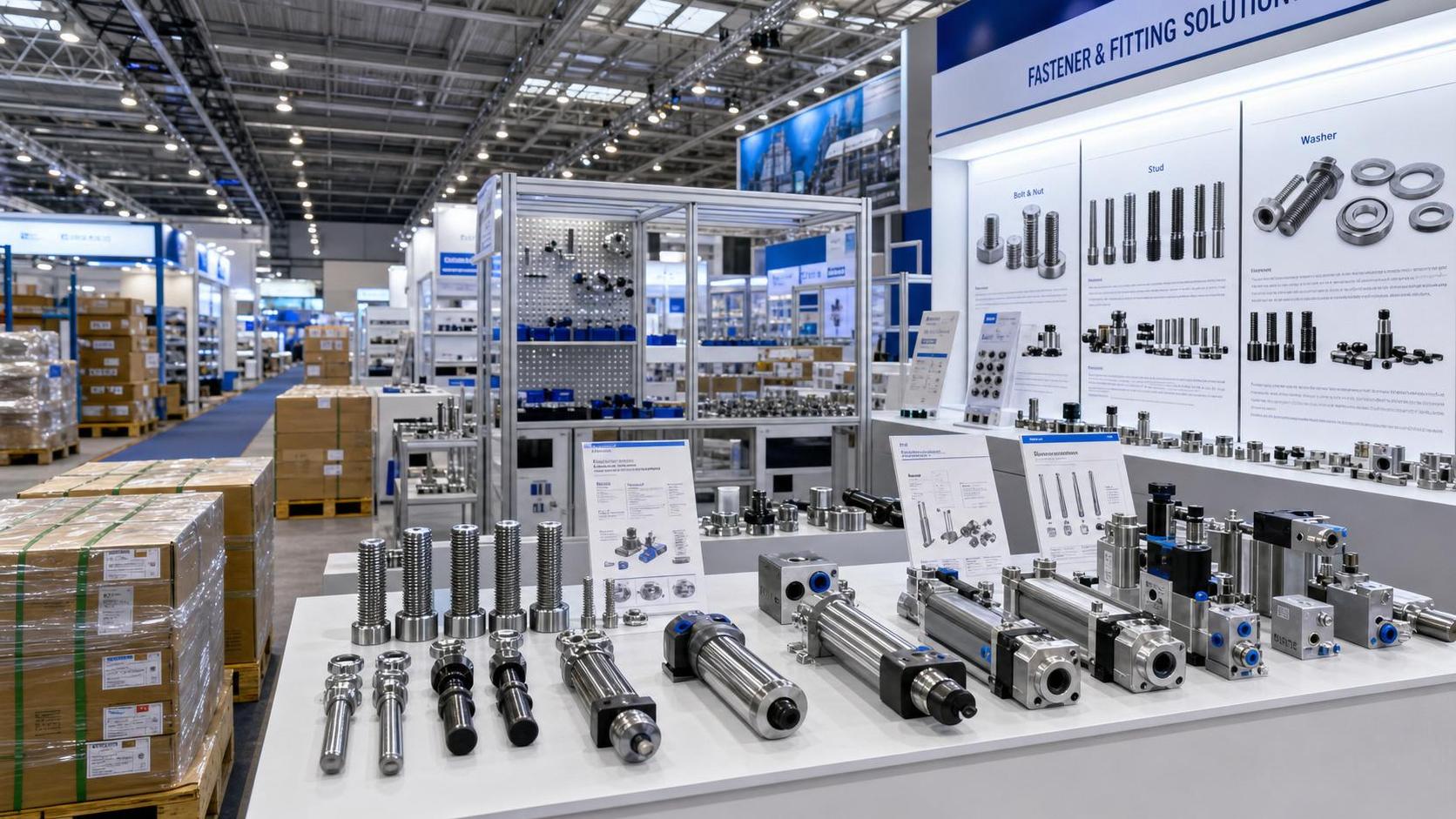
Fastener Expo Shanghai 2026 opens on June 24, 2026, with more than 1,500 overseas professional buyers already pre-registered, led by demand from Russia, Türkiye, the UAE, and India. From an industry perspective, this is not just an exhibition update: it signals that cross-border procurement requirements, delivery coordination, technical documentation, and compliance expectations are becoming more important for fastener suppliers and related assembly solution providers serving export-oriented business.
What has been confirmed ahead of the event
The 22nd Shanghai International Fastener Industry Exhibition, branded as Fastener Expo Shanghai 2026, is scheduled for June 24 to June 26 at the National Exhibition and Convention Center. According to the provided event summary, pre-registered overseas professional buyers have exceeded 1,500. The disclosed buyer mix includes Russia at 32%, Türkiye at 18%, the UAE at 12%, and India at 9%, showing clear interest from key emerging markets.
The event will also include a dedicated zone for intelligent assembly and pneumatic integrated solutions. Its stated focus is on combined application systems built around bolts, cylinders, and valves, with the aim of matching overseas OEM upgrade demand.
Why the procurement signal matters across the chain
Export suppliers may face tighter document and specification alignment
Analysis shows that when overseas buyer registration is concentrated in multiple emerging markets, exporters of fasteners and related assembly components may need to prepare more carefully for specification matching, order documentation, and delivery terms. The immediate impact is likely to fall on quotation preparation, technical file readiness, and communication around product scope, especially where buyers are not sourcing a single part but a combined application system.
Manufacturers may need to respond to system-level demand rather than single-item demand
The dedicated focus on bolt, cylinder, and valve combinations suggests that some buyer interest is shifting from standalone fasteners toward integrated application scenarios. For processing and manufacturing companies, what deserves closer attention is whether future inquiries increasingly require coordination between mechanical fastening parts and pneumatic components, which would affect technical handover, production planning, and after-sales responsibility boundaries.
Supply chain and delivery teams should watch qualification and traceability expectations
Observably, a broader overseas buyer base can raise practical requirements around supplier qualification review, product traceability materials, inspection records, and delivery consistency. This does not confirm any new formal rule by itself, but it does indicate that procurement discussions may place more weight on compliance materials and supporting records during supplier screening and order execution.
Where companies should focus before market follow-through becomes clearer
Review compliance files for export-facing products
Companies targeting these overseas buyers should closely check whether their technical documents, inspection records, and product descriptions are complete and internally consistent. Analysis shows that this is especially relevant when the sales focus extends from standard fasteners to integrated assembly solutions, where mismatched documentation can delay procurement decisions or later delivery acceptance.
Prepare for buyer questions on integrated application scope
The presence of a dedicated intelligent assembly and pneumatic solutions zone means suppliers may need to explain not only individual product parameters but also how different components work together in application settings. From an industry perspective, this raises the importance of clear technical interfaces, scope definitions, and handover materials in commercial discussions.
Track whether procurement language shifts in follow-up requests
Because the event summary points to overseas OEM upgrade demand, companies should pay attention to whether post-event inquiries place greater emphasis on bundled sourcing, qualification thresholds, or more detailed supporting documents. It is more appropriate to understand this as an execution signal worth monitoring rather than as a confirmed rule change that has already been fully defined.
Watch delivery and after-sales commitments in export negotiations
Where procurement covers combined systems rather than a single fastener category, delivery coordination and after-sales responsibility can become more sensitive. Companies should therefore examine how they describe lead times, inspection scope, and issue-tracing procedures in external communication, even though no specific new regulatory requirement has been provided in the input.
How this should be read at this stage
Analysis shows that the strongest message in this event is not a formally published regulation in itself, but a market-side compliance and execution signal. The concentration of overseas buyer interest, together with the exhibition's emphasis on integrated assembly solutions, suggests that commercial opportunities may increasingly be tied to clearer technical alignment, stronger supporting documentation, and more disciplined delivery coordination.
At the same time, it would be premature to treat the event alone as proof of a finalized new rule framework. Observably, the more prudent reading is that companies should watch how buyer requirements, bid language, qualification screening, and order documentation evolve after the event.
A practical reading for the fastener market
For the fastener industry and adjacent component suppliers, this development is best understood as an early operating signal tied to export procurement behavior. It points to rising attention on compliance readiness, system-level solution presentation, and execution quality in cross-border business, especially where overseas OEM demand is connected to upgrades rather than simple volume replenishment.
Current conditions therefore support a measured conclusion: the event reflects a meaningful shift in buyer focus and procurement organization, but the exact rule implications still need to be judged through subsequent market feedback, transaction requirements, and any later formal clarification from relevant channels.
Basis of this article and what still needs verification
This article is based on the user-provided news title, event date, and event summary. No specific official source link was provided in the input, so any later use in business decision-making should continue to verify the underlying information against official event notices, regulatory releases, customs or trade authority updates, industry association information, standards documents, and reporting from authoritative media.
Further observation is still needed on whether follow-up procurement activity leads to clearer compliance expectations, certification practices, specification language, bidding document changes, industry feedback, or company-level execution adjustments.
Related News