
Shanghai Fastener Fair Opens as Export Compliance Takes Focus

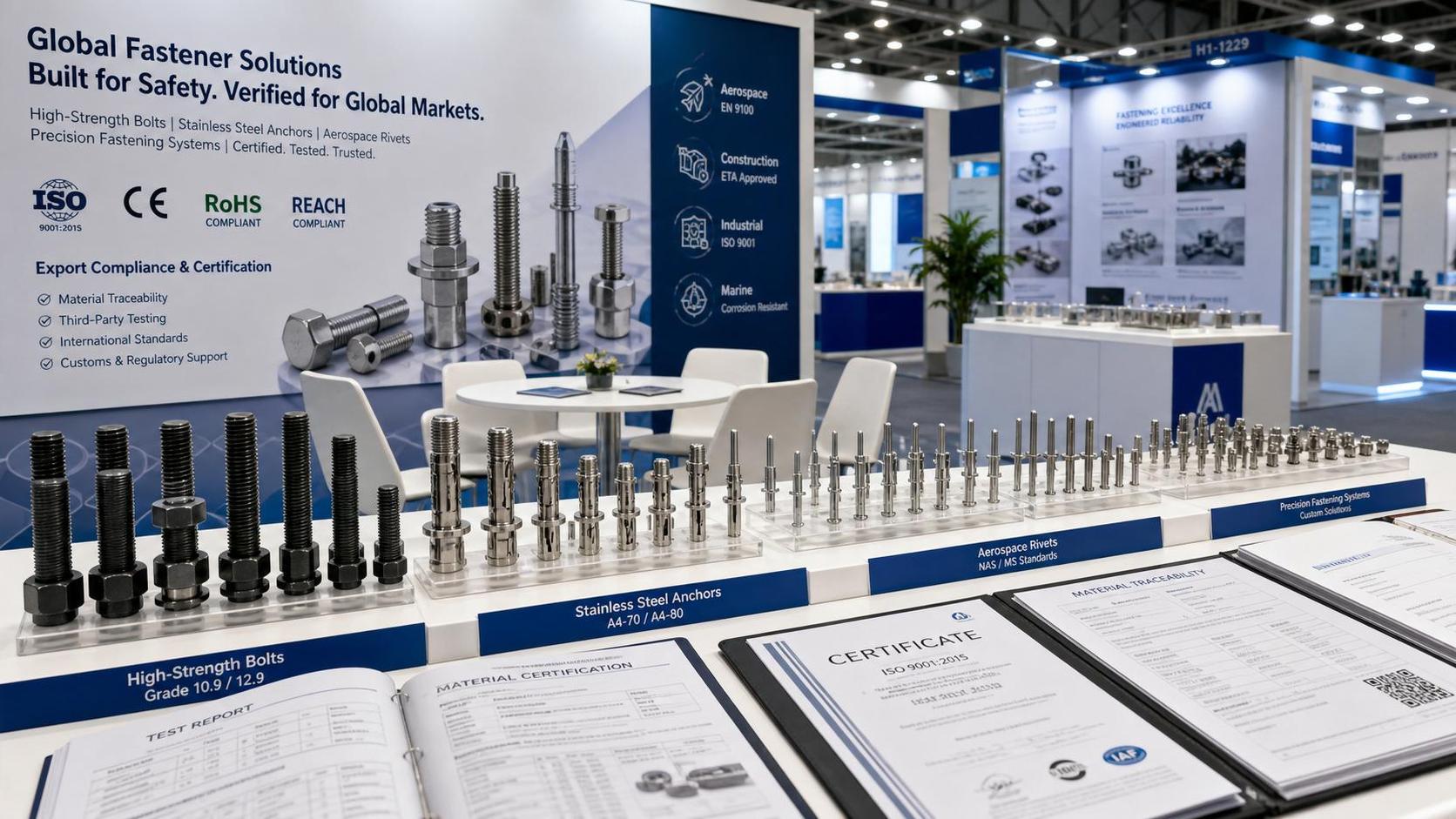
On June 24, 2026, FASTENER FAIR SHANGHAI opened with a notable concentration of pre-registered overseas buyers from Russia, Türkiye, and the UAE, while a concurrent workshop on fastener export compliance and certification placed rules, documentation, and market-entry requirements at the center of industry attention. For manufacturers, exporters, procurement teams, testing-related service providers, and supply chain operators, the development is worth watching not simply as a trade event update, but as a signal that overseas demand in key fastener categories is increasingly tied to compliance readiness and certification alignment.
What the opening day confirms
According to the information provided, FASTENER FAIR SHANGHAI is being held from June 24 to June 26, 2026 at the National Exhibition and Convention Center (Hongqiao) in Shanghai. The organizer disclosed that 1,527 overseas professional buyers had completed pre-registration.
Among those pre-registered overseas buyers, Russia accounted for 312, Türkiye for 289, and the UAE for 203, together representing more than 53% of the total. The stated procurement focus covers high-strength bolts, stainless steel anchoring fasteners, aerospace-grade rivets, and precision fastening systems for mold applications.
The event is also accompanied by a workshop titled China Fastener Export Compliance and Certification Workshop. No further execution details, policy text, or official rule documents were provided in the input.
Why this matters across trade and delivery chains
Demand concentration raises the bar for export-facing suppliers
From an industry perspective, the concentration of pre-registered buyers in three overseas markets matters because suppliers are less likely to compete only on price or lead time when procurement is focused on higher-specification products. For exporters and manufacturing companies, the practical impact may appear first in quotation preparation, product documentation, specification matching, and confirmation of whether existing certificates, test records, and technical files are acceptable for the target market or buyer.
Procurement teams may face tighter document checks
For purchasing organizations and sourcing teams, the combination of specialized product categories and a compliance-focused workshop suggests that supplier selection may increasingly involve review of certification status, test documentation, material traceability, and technical consistency before orders move forward. Analysis shows that this affects not only contract award decisions, but also delivery acceptance, after-sales handling, and responsibility allocation when specification disputes arise.
Testing, certification, and supply chain service providers may see earlier involvement
For certification-related companies, inspection bodies, testing service providers, and supply chain coordinators, the event points to a workflow in which compliance review may move closer to the front end of business development. Observably, when export discussions are linked with certification and compliance workshops, service demand often shifts toward pre-shipment document preparation, technical file review, and coordination of product claims with buyer requirements, even if no new formal rule text is announced at the event itself.
What companies should watch in the coming weeks
Check whether technical claims match available evidence
Companies targeting the highlighted product categories should closely review whether their current product descriptions, grade statements, application claims, and supporting records are internally consistent. This is especially relevant where buyers are likely to compare supplier submissions against technical specifications, testing records, or tender-style document requirements.
Prepare for market-specific certification questions
Analysis shows that exporters engaging buyers from the three named markets should be ready for questions about certification scope, applicable standards, inspection records, and supporting compliance documents. Because the input does not provide specific execution rules or mandatory certificates, it is more appropriate to treat this as a readiness issue rather than as confirmation of a new unified requirement.
Review delivery files, traceability, and after-sales responsibility
What deserves closer attention is not only the product itself, but also the completeness of delivery documents, batch traceability records, and quality-response procedures after shipment. In practice, these areas can influence order conversion and post-delivery risk when procurement is centered on high-strength, stainless, aerospace-grade, or precision-use fasteners.
Track how compliance language appears in buyer communication
Companies should also monitor whether buyer inquiries, RFQs, workshop follow-up materials, or procurement communications begin to use more explicit language around certification, conformity, documentation, and acceptance criteria. Since the input contains no confirmed downstream rule change, this remains an area for continued observation rather than a settled compliance outcome.
How this signal should be interpreted
Observably, this development is better read as an execution signal than as proof of a newly enacted regulation. The combination of concentrated overseas buyer interest and a workshop dedicated to export compliance and certification suggests that market access conversations are moving closer to documentation quality, conformity expectations, and verifiable technical support.
Analysis also shows that the event does not by itself confirm a new binding rule, a revised standard, or a formal regulatory change. What it does indicate is that compliance-related discussion is becoming more visible in commercial settings, which means companies may need to prepare for stricter buyer-side implementation even before any broader rule change is clearly documented.
A practical reading of the event
The current significance of this event lies less in the size of attendance alone and more in what the buyer mix and workshop theme reveal about export execution. It is more appropriate to understand the opening of the show as a market signal that fastener suppliers serving overseas demand, especially in more specification-sensitive categories, should pay closer attention to certification readiness, technical documentation, procurement alignment, and delivery traceability.
That does not yet amount to a confirmed new regulatory regime based on the information provided. A neutral reading is that the industry should treat this as a timely indicator of compliance-sensitive demand and continue watching how requirements are expressed in actual orders, technical documents, and follow-up market feedback.
Basis of this article
This article is generated based on the user-provided news title, event date, and event summary. The confirmed factual basis is limited to the opening of FASTENER FAIR SHANGHAI on June 24, 2026, the disclosed number and distribution of pre-registered overseas buyers, the listed procurement categories, and the concurrent China Fastener Export Compliance and Certification Workshop.
For developments of this kind, relevant source types typically include organizer announcements, regulatory releases, customs or trade authority information, industry association updates, standards organization documents, and reporting by established trade media. However, no specific official source link was provided in the input, so any subsequent interpretation still requires ongoing verification.
Areas that still need continued observation include any later official detail on compliance scope, certification application practice, changes in buyer documentation requirements, tender or procurement wording, industry feedback, and how companies actually implement related export procedures after the exhibition.
Related News