
Shanghai Fastener Show Opens with ISO-Based Verification

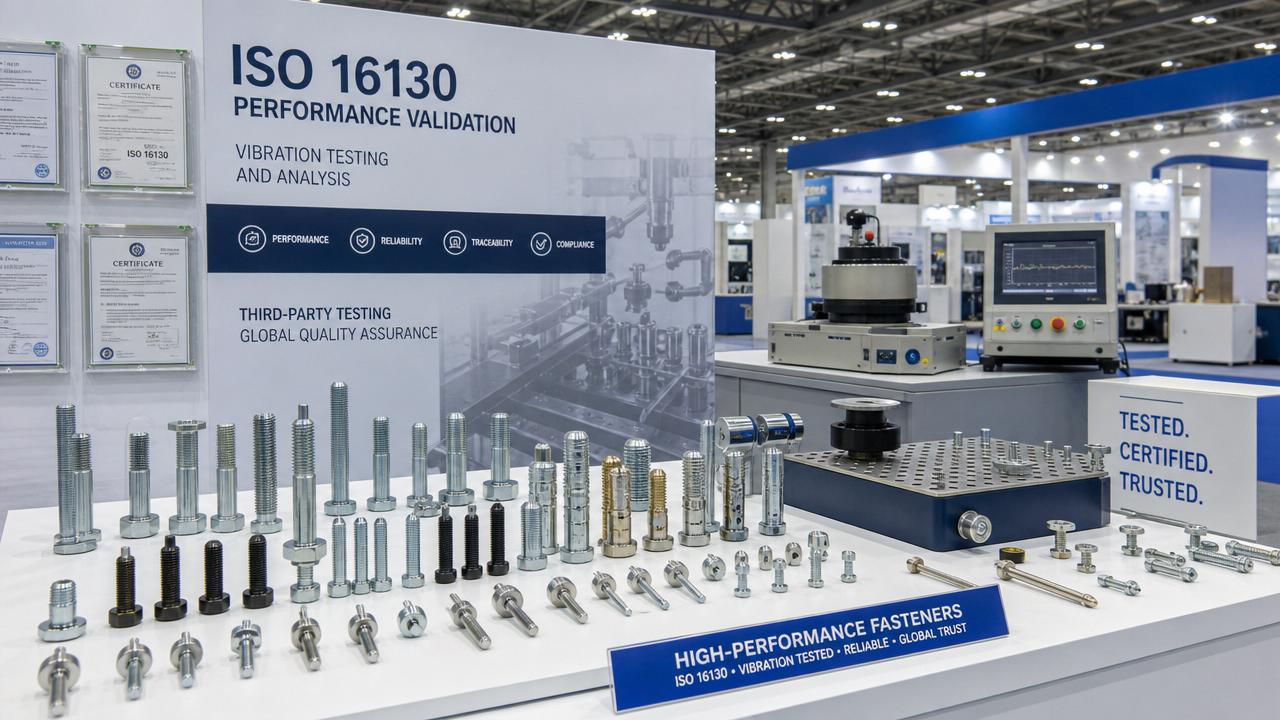
On June 24, 2026, the 16th Shanghai Fastener Professional Exhibition opens alongside a technical forum and a third-party anti-loosening performance competition that applies the ISO 16130 transverse vibration test standard. For the fastener supply chain, this is not just an exhibition update: it signals a practical shift in how performance verification, buyer confidence, and cross-border sourcing may be organized around standardized test data and database access. Manufacturers, exporters, import buyers, testing-related service providers, and procurement teams should pay attention because the development directly touches product qualification, technical documentation, sourcing efficiency, and the way performance claims may be reviewed in trade discussions.
A standard-based verification mechanism is being placed in front of buyers
The 16th Shanghai Fastener Professional Exhibition is scheduled for June 24–26 at the National Exhibition and Convention Center in Shanghai. The event is described as covering 70,000 square meters and bringing together more than 1,400 exhibitors.
During the same period, the 5th Fastener Anti-Loosening Performance Invitational Competition, organized by Haiyan National Inspection, will conduct third-party comparative performance testing for Bolts & Screws, Anchors, and Rivets.
The testing uses the ISO 16130 transverse vibration test standard. According to the provided information, the test results will be connected simultaneously to the Fastener World China international database and made available for overseas buyers to review free of charge.
The provided event summary also states that, for importers in Europe, the Americas, and Latin America, this platform is becoming a technical trust infrastructure that can substitute for traditional TUV/SGS submission-based testing and support an “inspect-and-buy” procurement approach.
Where the practical impact may appear first
Export-facing manufacturers may face a new documentation expectation
Analysis shows that producers of Bolts & Screws, Anchors, and Rivets may be affected first because standardized third-party comparison under ISO 16130 can change what overseas customers expect to see before placing orders. The immediate impact is likely to fall on technical data preparation, product claim support, and the consistency between catalog statements and test-backed performance records. What deserves closer attention is whether buyers begin to request database-verifiable results as part of supplier screening, quotation review, or pre-shipment confidence checks.
Overseas procurement teams may gain a faster screening tool
From an industry perspective, buyers and sourcing teams may be influenced through shorter verification cycles and a different balance between external lab submissions and database review. If procurement decisions increasingly rely on searchable third-party records, the change would affect supplier comparison, shortlist formation, and the handling of technical risk during purchasing. Companies on the buying side should therefore watch how test results, report formats, and product scope are presented and whether those materials become part of routine sourcing documentation.
Testing and compliance service providers may need to adjust their role
Observably, the event points to a possible reallocation of value within testing-related services. If importers treat database-linked performance records as a usable pre-purchase reference, service providers involved in certification support, laboratory coordination, and technical file preparation may see greater demand for data interpretation, report alignment, and document traceability rather than only traditional submission handling. This should be understood as a potential market response, not a confirmed replacement of existing compliance pathways.
Channel and supply-chain participants may feel pressure on delivery promises
Distributors, trading companies, and supply-chain service firms may also be affected because easier buyer access to performance data can tighten expectations around product consistency and claim accuracy. The business impact may appear in quotation language, bid support materials, after-sales handling, and dispute prevention. If a product is marketed with anti-loosening claims, counterparties may pay more attention to whether those claims are supported by recognized test methods and accessible records.
What companies should review now
Check whether technical files can match standardized comparison results
Analysis shows that companies involved in the covered product categories should review whether current technical documents, product descriptions, and quality records can align clearly with ISO 16130-based performance comparison. This does not mean a new mandatory rule has already been imposed, but it does suggest that inconsistent language between sales materials and test evidence could become more visible in buyer review.
Watch how buyers begin to use database-linked records
What deserves closer attention is not only the testing itself, but also how overseas buyers incorporate searchable performance results into procurement practice. Exporters and traders should monitor whether such records begin to appear in RFQs, technical bid alignment, supplier onboarding requirements, or post-claim verification requests.
Prepare for closer scrutiny of reports and supporting documents
Companies should pay attention to the completeness of test reports, product identification details, and supporting technical documentation used in quotations and deliveries. From a practical standpoint, if procurement moves toward faster “inspect-and-buy” behavior, incomplete or poorly matched records may create friction in order confirmation, acceptance review, or after-sales traceability.
Continue tracking execution language rather than assuming immediate replacement
Observably, the event summary describes the platform as an alternative to traditional TUV/SGS submission-based testing for some importers, but the provided information does not establish a universal or mandatory substitution. It is therefore more appropriate for companies to follow buyer-side execution language, tender document wording, and actual market acceptance before treating the model as a settled requirement.
Why this looks more like an execution signal than a formal rule change
Analysis shows that this development is best read as a market-facing execution signal built around standards, verification access, and trade efficiency rather than as a newly issued law or mandatory regulatory act in the provided information. The notable change is the combination of ISO 16130 testing, third-party comparison, and direct database visibility for overseas buyers. That combination may influence how trust is established in transactions, especially where technical performance affects supplier selection.
At the same time, observably, several points still require follow-up: whether buyers treat the database as a primary screen or only a supplementary reference, whether tender and procurement documents begin to cite this type of evidence more often, and how suppliers respond in terms of document readiness and product claim discipline. For that reason, the event should not be overstated as a completed shift in compliance architecture.
How the market may reasonably interpret this event
At present, it is more appropriate to understand this event as an operational sign that standardized third-party performance verification is moving closer to the commercial front end of fastener trade. Its significance lies less in exhibition scale alone and more in the possibility that recognized test methods and open buyer access to results could influence sourcing behavior, technical review, and confidence-building across export transactions.
A neutral reading is that the development may strengthen the role of performance-backed procurement in selected fastener categories, while the actual depth of change will depend on how buyers, suppliers, and testing-related service participants adopt it in practice. Companies therefore have reason to monitor it closely, but not to assume that all existing certification, testing, or procurement routines have already been replaced.
Basis of this article and what still needs verification
This article is generated from the user-provided news title, event date, and event summary. In reporting on developments of this kind, commonly relevant source types may include official event notices, regulator publications, trade or customs authority information, industry association releases, standard-setting organization documents, and reporting from established industry media.
No specific official source link was provided in the input, so the underlying official linkage still requires ongoing verification. What should continue to be watched includes any later clarification on execution scope, buyer-side acceptance practice, certification and testing interpretation, changes in tender or procurement documentation, market feedback, and how participating companies implement the model in real transactions.
Related News