
Structural Bolt Applications Explained: Where High-Strength Bolts Are Required

Structural Bolt Applications Explained: Where High-Strength Bolts Are Required
Understanding structural bolt applications is essential when evaluating load-bearing joints in steel structures, bridges, heavy equipment, and industrial facilities.
High-strength bolts are not simply stronger fasteners. They are specified where preload control, fatigue resistance, safety margins, and code compliance directly affect performance.
In practical engineering work, the real question is not whether a bolt looks robust. The question is whether the joint must transfer force reliably under demanding service conditions.
That is why structural bolt applications appear repeatedly in steel buildings, transportation infrastructure, machinery frames, and process plants. The requirement usually comes from joint behavior, not from appearance.
This article breaks down where high-strength bolts are required, what makes those locations different, and how to evaluate them with fewer surprises during design review or procurement.
What Makes Structural Bolt Applications Different
Not every bolted connection is a structural connection. Standard bolts may hold covers, brackets, guards, or light equipment without major consequences if preload varies.
Structural bolt applications are different because the joint itself becomes part of the load path. If the connection slips, loosens, or fails, the entire assembly can be affected.
High-strength bolts are typically selected for three reasons. They can deliver controlled clamping force, resist dynamic loads, and meet recognized structural standards.
- They create high preload for friction-type joints.
- They reduce joint movement under vibration and cyclic loading.
- They support code-based design in safety-critical assemblies.
In other words, structural bolt applications are driven by mechanical duty and risk exposure. They are not just an upgrade from standard fasteners for general peace of mind.
Where High-Strength Bolts Are Typically Required
Steel Buildings and Industrial Frames
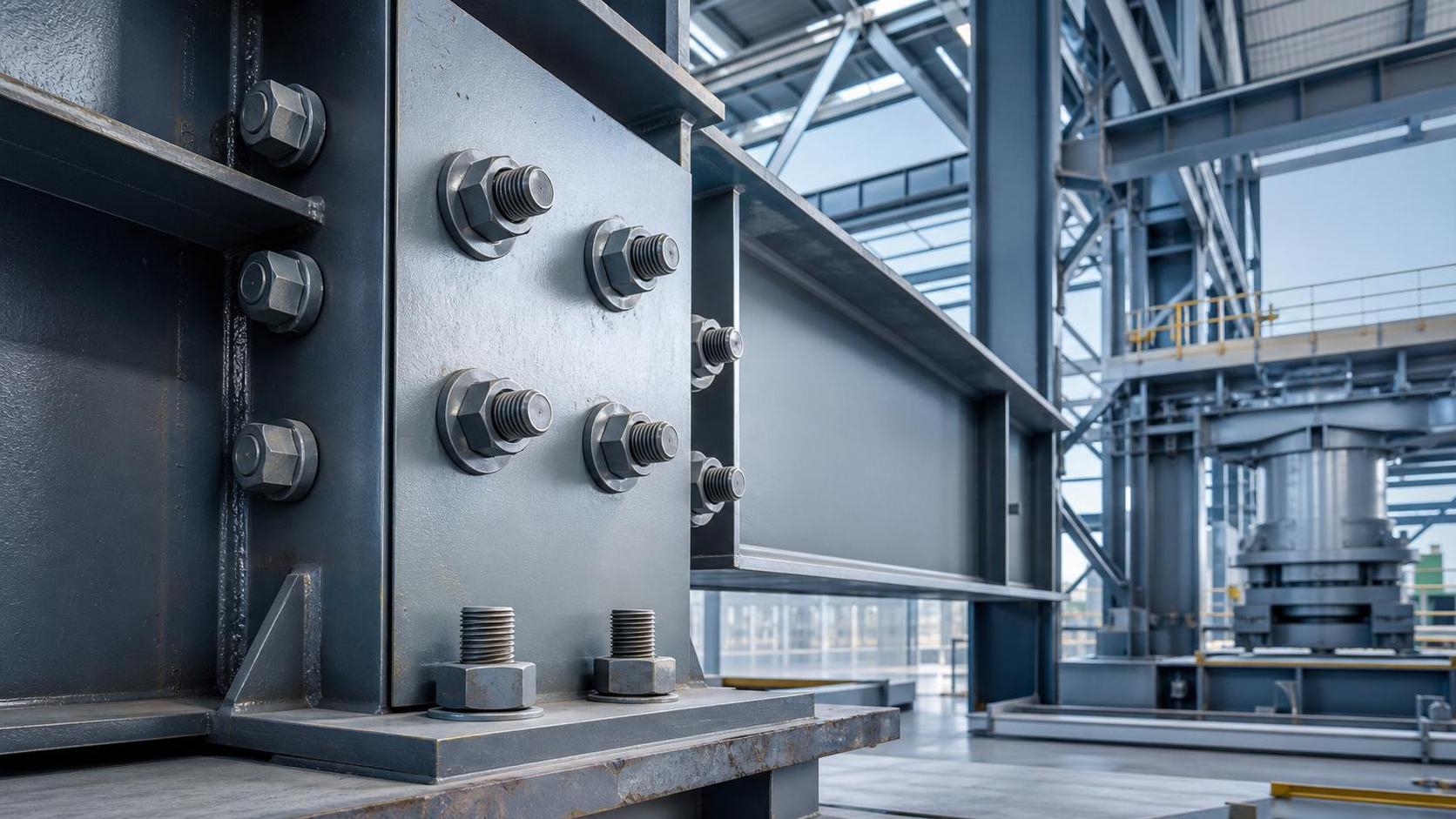
One of the most common structural bolt applications is the connection of beams, columns, braces, and moment-resisting frames in steel construction.
These joints often carry dead load, live load, wind load, and sometimes seismic force. Connection slip or bolt relaxation can change how the whole frame behaves.
High-strength bolts are especially important in splice connections, bracing nodes, gusset plates, and heavy equipment support steel.
Bridges and Transport Infrastructure
Bridge joints face repeated traffic loading, thermal movement, wind, and long service life expectations. That combination makes structural bolt applications unavoidable in many critical locations.
Cross-frames, truss members, deck support systems, and field-spliced sections often rely on preloaded high-strength bolts.
In these cases, fatigue resistance matters as much as static strength. Small joint movement can become a long-term durability problem.
Heavy Machinery and Mining Equipment
Structural bolt applications also appear in crushers, conveyors, presses, lifting systems, and mobile mining equipment.
These machines experience shock loads, alternating loads, and persistent vibration. A standard bolt may meet nominal strength but still perform poorly in service.
High-strength bolts help maintain clamp force and protect interfaces from fretting, hole elongation, and early maintenance issues.
Energy, Process, and Utility Facilities
Pipe racks, turbine bases, substation steelwork, offshore modules, and industrial platforms often use structural bolt applications in core support members.
These environments may add corrosion, thermal cycling, and restricted maintenance access. That changes the cost of failure and raises the value of reliable bolted connections.
Where shutdowns are expensive, the bolt selection decision is usually tied to lifecycle stability rather than upfront hardware cost alone.
Key Conditions That Trigger Structural Bolt Applications
A practical evaluation starts with operating conditions. Several signals usually indicate that high-strength bolts are required.
- The joint carries primary structural load.
- The assembly sees vibration, shock, or repeated cycling.
- Slip control is necessary for alignment or fatigue life.
- Relevant design codes call for preloaded structural fasteners.
- Inspection and maintenance access will be limited.
- Joint failure would create safety, downtime, or legal exposure.
When two or more of these conditions are present, structural bolt applications become much more likely. That is often the point where substitution with general-purpose bolts stops being defensible.
Standards and Technical Factors to Check
Specification review is where many fastener decisions either become rigorous or drift into assumptions. Structural bolt applications should always be tied to recognizable standards and joint requirements.
Common references include ASTM A325, ASTM A490, EN 14399, ISO property classes, and project-specific structural steel codes.
However, the label alone is not enough. Evaluation should include the full connection system.
From a technical review standpoint, structural bolt applications should be assessed as a joint package, not as an isolated bolt purchase.
Common Misjudgments in Structural Bolt Applications
A frequent mistake is assuming higher tensile strength automatically solves every connection problem. It does not.
For example, a strong bolt installed without correct preload can still allow slip. A coated bolt with the wrong friction behavior can also affect expected joint performance.
Another issue is treating structural bolt applications as identical across industries. A bridge splice, a crane frame, and a compressor skid may all use high-strength bolts, but their duty profiles differ.
This also means procurement cannot rely only on dimension and grade. Surface treatment, lot consistency, certification, and installation procedure often carry equal weight.
How to Evaluate Structural Bolt Applications More Effectively
A useful review process starts by asking what the joint must do over time, not just what load it sees on paper.
- Identify whether the connection is part of the primary load path.
- Check for vibration, fatigue, impact, or thermal cycling.
- Confirm whether slip-critical or bearing-type behavior is required.
- Review the governing bolt standard and installation method.
- Assess corrosion exposure and maintenance accessibility.
- Verify supplier traceability, testing, and documentation quality.
This approach helps separate true structural bolt applications from ordinary fastening tasks. It also makes technical decisions easier to defend during design approval, sourcing review, and project audits.
Why This Matters in Industrial Sourcing
In recent market practice, fastener sourcing is under pressure from cost, availability, and lead-time volatility. That can encourage substitutions that look harmless at first glance.
The clearer signal is that structural bolt applications should remain specification-driven. Any replacement decision must preserve preload behavior, standard compliance, and service reliability.
For global manufacturers, OEM buyers, and industrial sourcing teams, this is where better product knowledge reduces downstream risk. A cheaper bolt can become a much more expensive shutdown.
Final Takeaway
Structural bolt applications are required where joints must carry significant loads, resist movement, and perform predictably under real operating stress.
That includes steel frames, bridges, heavy machinery, and industrial infrastructure where failure is costly or dangerous.
The most reliable decisions come from looking at the full connection system, the service environment, and the governing standards together.
When structural bolt applications are evaluated this way, selection becomes more accurate, sourcing becomes more disciplined, and long-term performance becomes far easier to protect.
Related News
- Greening components or lower cost materials: which wins long termTime : Apr 29, 2026
- Fastener Grade Comparison: How to Match Strength Classes to Load and Safety NeedsTime : Aug 20, 2026
- China-UAE Open Direct Sea Route, Cutting Export Lead Times for Industrial Fasteners and Pneumatic Parts by 7-10 DaysTime : Aug 16, 2026