
How to Compare a Cutting Tools Manufacturer Beyond Price

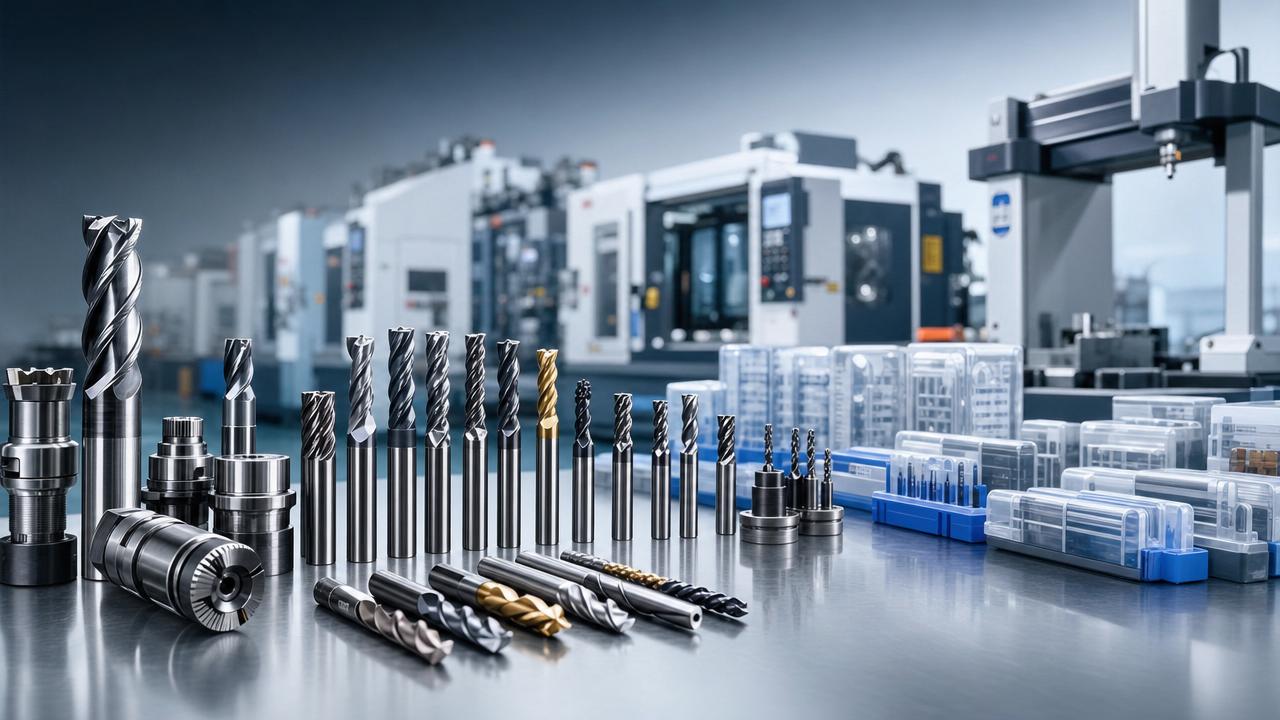
Choosing a cutting tools manufacturer on price alone can expose buyers to hidden costs in quality, lead time, technical support, and long-term reliability. For business evaluators, a smarter comparison looks at production capability, material consistency, certifications, customization strength, and service responsiveness. This guide explains how to assess suppliers more strategically and identify the best overall value for your sourcing decisions.
Why Scenario-Based Evaluation Matters More Than a Low Quote
A cutting tools manufacturer may look competitive on paper because of an attractive unit price, yet the real sourcing outcome depends on where and how the tools will be used. A distributor serving general machining shops has a very different risk profile from an OEM producing aerospace parts, and both differ from a mold maker handling hardened steel with tight tolerances. That is why business evaluators should compare suppliers through application scenarios rather than through pricing tables alone.
In practical sourcing, the best supplier is not always the one with the lowest initial cost. It is the one whose quality stability, technical fit, production planning, and support model match the commercial reality of your operation. If tools fail early, chip evacuation is inconsistent, coatings vary from batch to batch, or replacement lead times are unpredictable, the downstream cost can be far greater than the savings on the purchase order.
For procurement teams, quality managers, and supplier development specialists, the right comparison framework starts with one question: in which business scenario will this cutting tools manufacturer be expected to perform? Once that is defined, evaluation becomes sharper, measurable, and easier to defend internally.
Typical Business Scenarios Where Supplier Differences Become Critical
Not every sourcing case requires the same level of engineering depth or supply chain resilience. Below are common scenarios where selecting a cutting tools manufacturer beyond price has a direct effect on productivity, scrap, and customer satisfaction.
This scenario view helps evaluators avoid a frequent mistake: applying one supplier scorecard to every buying situation. A cutting tools manufacturer that performs well for standard end mills in a distribution channel may not be the right partner for custom reamers used in a tightly validated production line.
Scenario 1: High-Volume Production Needs Repeatability, Not Just Cheap Tools
In automotive, appliance, fastener, and large-scale component machining, the real KPI is repeatable output. A low-priced tool that lasts unpredictably creates line interruptions, rushed changeovers, and unstable cost per part. In this scenario, the best cutting tools manufacturer is one that can prove batch-to-batch consistency.
Business evaluators should ask for evidence of process control in grinding, coating, and edge preparation. Review whether the manufacturer tracks runout, diameter stability, corner radius consistency, and wear performance across multiple lots. It is also important to understand capacity planning. Can the supplier maintain the same quality while scaling volume? Can they support blanket orders or safety stock programs?
In high-volume settings, service responsiveness matters almost as much as tool performance. A manufacturer that can rapidly analyze wear patterns, recommend parameter changes, and ship replacements without delay usually creates more value than one offering a lower initial quote.
Scenario 2: Precision Industries Require Traceability and Engineering Confidence
When the application involves aerospace parts, medical components, electronics connectors, or other high-precision work, buyers must evaluate a cutting tools manufacturer through a risk-control lens. Here, the concern is not merely whether the tool cuts well, but whether the manufacturer can document what was made, how it was made, and how issues will be investigated if performance changes.
Look for robust raw material traceability, coating process records, lot identification, and inspection discipline. Certifications such as ISO 9001 may be a basic requirement, but they should not be treated as the full answer. A serious supplier should also be able to explain measurement methods, calibration routines, and nonconformance handling.
For these industries, technical communication quality is a strong differentiator. If your team needs data on recommended surface speed, feed rate, coolant strategy, or cutting behavior in difficult alloys, the right cutting tools manufacturer should respond with application-specific insight rather than generic catalog statements.
Scenario 3: Mold, Die, and Custom Machining Depend on Adaptability
Mold shops and custom machining businesses often work with short runs, changing materials, and complex geometries. In this scenario, comparing suppliers by standard price lists can be misleading because the real value lies in customization capability. A cutting tools manufacturer that can adjust flute design, neck relief, reach length, corner form, or coating selection may dramatically improve cycle time and surface finish.
Ask whether the supplier has in-house engineering for special tools, how quickly they can produce drawings or samples, and whether they can optimize tools for hardened steel, graphite, aluminum, stainless steel, or composite-related machining conditions. Their ability to recommend the right geometry for slotting, finishing, roughing, or deep cavity work is often more important than nominal price.
This is also where testing discipline matters. A capable cutting tools manufacturer should be comfortable discussing test methodology, benchmark comparisons, and limitations. Overpromising in custom applications is a warning sign; precise technical dialogue is a better indicator of long-term suitability.
Scenario 4: Distributors Need Commercial Stability and Product Breadth
For distributors and trading companies, the evaluation model is broader. The right cutting tools manufacturer must support assortment planning, order accuracy, packaging consistency, and market responsiveness. A supplier may produce excellent tools but still be difficult to scale commercially if labeling is inconsistent, MOQ policies are rigid, or technical documentation is incomplete.
In this scenario, business evaluators should review catalog structure, SKU continuity, branding flexibility, and after-sales support. If the distributor serves multiple customer tiers, the manufacturer should also demonstrate a clear value architecture, such as standard, performance, and premium lines. That makes it easier to position products without constant pricing pressure.
A cutting tools manufacturer with stable export operations, multilingual documentation, and efficient complaint response can help distributors protect reputation and reduce customer churn. These commercial factors often outweigh small price differences.
How to Compare Suppliers Across Key Decision Dimensions
Once the application scenario is clear, build your comparison around several decision dimensions. First, assess manufacturing capability: equipment level, coating resources, carbide sourcing, inspection systems, and process stability. Second, evaluate quality assurance: traceability, documentation, incoming material control, and corrective action processes. Third, measure technical support: parameter advice, failure analysis, sample development, and on-site or remote troubleshooting.
Next, review supply reliability. This includes lead time accuracy, surge capacity, inventory strategy, and communication during disruptions. Finally, assess commercial fit: payment terms, responsiveness, packaging, channel policy, and willingness to improve. A cutting tools manufacturer that performs solidly across all five areas usually delivers better total value than a lower-priced but less reliable alternative.
Common Misjudgments When Comparing a Cutting Tools Manufacturer
One common mistake is treating certifications as proof of application fitness. Certifications matter, but they do not automatically confirm strong performance in your exact material, machine type, or tolerance range. Another mistake is evaluating sample performance without checking long-term consistency. A supplier may provide strong pilot results but struggle to maintain quality over repeated production runs.
Buyers also sometimes overlook communication speed and problem-solving quality. In reality, the best cutting tools manufacturer is often the one that reacts quickly when wear changes, breakage occurs, or machining conditions shift. Finally, many teams ignore total cost of ownership. Tool price is visible, but downtime, scrap, operator intervention, and delayed shipments are usually far more expensive.
Practical Supplier Fit Checklist for Business Evaluators
Before approval, align your internal team on the scenario and score suppliers against measurable criteria. Confirm the workpiece material, machine type, tolerance demand, annual volume, and replenishment model. Then request technical documentation, sample records, lead time commitments, and references from similar industries. If possible, conduct a site audit or virtual process review focused on the tools you actually plan to buy.
For organizations operating across multiple sectors, it may be wise to qualify more than one cutting tools manufacturer rather than forcing one supplier into every application. A specialized partner for precision tools and a broader partner for standard consumables can create a stronger sourcing structure than a single lowest-cost source.
FAQ: What Buyers Often Ask Before Selecting a Supplier
Is the lowest-priced cutting tools manufacturer ever the right choice?
Yes, in low-risk and standardized applications, price can play a larger role. But even then, basic checks on consistency, lead time, and support are necessary to avoid hidden operating costs.
How many samples should be tested before approval?
For critical applications, one successful sample is not enough. Test multiple lots if possible and compare results under normal production conditions, not ideal lab conditions alone.
What is the best sign of a reliable cutting tools manufacturer?
A strong combination of stable quality, clear documentation, responsive technical support, and honest communication about limitations is usually a better sign than aggressive pricing or broad marketing claims.
Final Takeaway: Compare for Fit, Performance, and Business Risk
To compare a cutting tools manufacturer beyond price, start with the application scenario, define the operational risks, and evaluate the supplier against the needs of that exact use case. High-volume production requires consistency and delivery discipline. Precision sectors need traceability and engineering rigor. Mold and custom machining demand flexibility. Distribution businesses need assortment strength and commercial stability.
The most effective sourcing decisions come from matching supplier capability to business reality. If your team wants better long-term value, create a scenario-based scorecard, test suppliers under actual conditions, and compare total cost instead of unit price alone. That approach will help you identify the cutting tools manufacturer that supports performance, reduces risk, and strengthens your supply chain over time.
Related News