
RCEP Tariff Cuts Send China Cutting Tools to Zero Duty in ASEAN

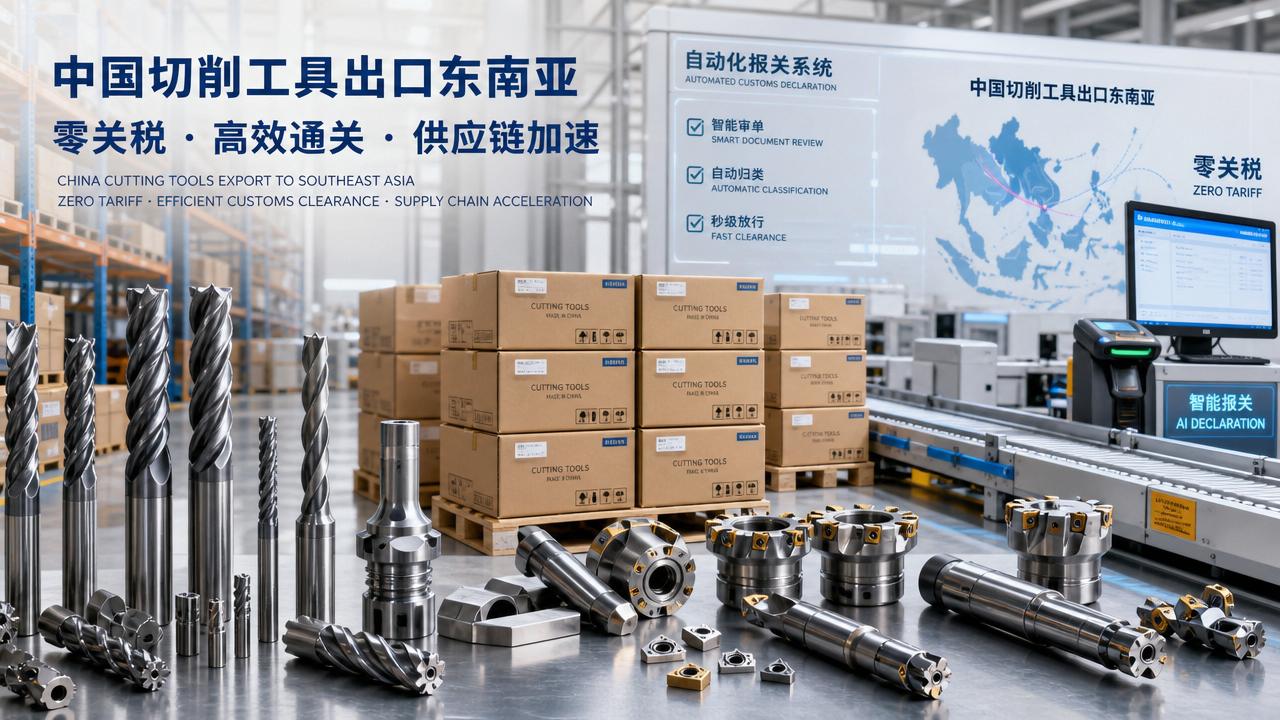
Effective June 5, 2026, the second round of ASEAN tariff reductions under RCEP has taken effect, cutting tariffs on Chinese-made cutting tools such as carbide milling cutters and drills to 0% for exports to Vietnam, Thailand, and Malaysia. At the same time, China Customs has launched an upgraded RCEP origin verification system with one-click FORM R e-certificate generation. For exporters, importers, distributors, and manufacturing buyers tied to cutting tool trade, this is worth close attention because it affects both landed cost and the practical speed of customs documentation.
What Has Officially Taken Effect
According to the information provided, the new RCEP ASEAN tariff reduction list entered into force on June 5, 2026. Under this round of implementation, the most-favored-nation tariff previously applied to Chinese-made cutting tools, including carbide milling cutters and drills, for exports to Vietnam, Thailand, and Malaysia has been reduced from 5.5%–7.8% to 0%.
The information also states that the General Administration of Customs has simultaneously enabled a new RCEP intelligent origin verification system. The system supports one-click generation of the FORM R electronic certificate.
In addition, the provided summary indicates that exports of the relevant product categories to ASEAN are expected to increase by more than 18% quarter on quarter in Q3.
Where the impact may be felt first
Exporters of cutting tools may see cost competitiveness shift immediately
From an industry perspective, companies directly exporting carbide milling cutters, drills, and related cutting tools are the first group likely to feel the impact. The main reason is straightforward: a tariff cut from 5.5%–7.8% to 0% can directly affect the final import cost in Vietnam, Thailand, and Malaysia. What deserves closer attention is whether exporters can convert the tariff change into stronger order conversion, better price positioning, or faster market entry rather than treating the policy benefit as an automatic sales result.
Distributors and channel traders may need to reassess pricing and inventory rhythm
Observably, channel participants serving the three ASEAN markets may also be affected in their purchasing and stocking decisions. If tariffs fall to zero and customs documentation becomes more efficient through the updated RCEP system, distributors may re-evaluate quotation cycles, replenishment timing, and customer pricing discussions. The most relevant business link here is not only import cost, but also how quickly compliant goods can move through documentation and into saleable inventory.
Manufacturing buyers may gain more room in sourcing discussions
For industrial buyers using imported cutting tools in machining and production, the change may matter through procurement economics rather than policy itself. Analysis shows that buyers in Vietnam, Thailand, and Malaysia could pay closer attention to whether Chinese-origin tools become more attractive in tendering, repeat purchasing, or contract renewal. The point to watch is whether tariff savings are reflected in actual transaction terms, lead-time commitments, and product mix, rather than assumed at a headline level.
Customs, documentation, and supply chain service providers may face a higher execution load
The simultaneous launch of the upgraded origin verification system means the operational side of trade may become more important. For customs brokers, trade compliance teams, and supply chain service providers, the change is not only about lower tariffs but also about handling FORM R issuance and origin verification more efficiently. If Q3 exports do rise by more than 18% quarter on quarter as indicated, document accuracy and processing capacity could become practical pressure points.
What companies should watch in the next phase
Check product coverage and transaction eligibility carefully
Analysis shows that companies should focus first on whether their specific cutting tool products fall within the applicable tariff-reduction scope referenced in the provided information. A lower tariff headline does not remove the need to confirm product classification, applicable destination market treatment, and use of the relevant RCEP documentation path.
Prepare origin documentation for actual execution, not only for policy awareness
What deserves closer attention is the difference between a policy change and day-to-day implementation. The launch of one-click FORM R e-certificate generation may improve efficiency, but businesses still need to make sure internal trade, customs, and sales teams can align product data, origin materials, and shipment documents accurately. In practice, this is likely to matter most at the order release and customs filing stages.
Monitor whether demand growth translates into delivery pressure
The provided summary expects Q3 exports of related categories to ASEAN to rise by more than 18% quarter on quarter. This should be understood as an expected development rather than a confirmed market result. For exporters and suppliers, the practical issue is whether increased inquiries or orders create pressure on production scheduling, delivery commitments, and communication with ASEAN customers.
Keep customer communication tied to verifiable benefits
Observably, the tariff change may encourage faster market outreach, but companies should avoid overpromising. Customer communication is more effective when it focuses on verifiable points: the tariff reduction itself, the availability of FORM R e-certificates, and the potential implications for customs handling and total import cost. Any claim beyond that still needs to be tested in actual transactions.
Why this looks like more than a one-day customs update
Analysis shows that this development can be read on two levels. In the short term, it is a concrete trade-cost change for specific cutting tool categories entering Vietnam, Thailand, and Malaysia from China. In the medium term, it also signals that tariff reduction and digitalized origin processing are moving together, which may make policy utilization more practical for firms that are already active in cross-border industrial supply.
At the same time, it is more appropriate to understand this as an actionable trade signal rather than a fully confirmed market outcome. The tariff cut is a fact; the expected export increase is still a forward-looking indicator. That distinction matters for businesses making pricing, inventory, or capacity decisions over the next quarter.
How this news is best understood now
At this stage, the most balanced reading is that the new RCEP tariff arrangement creates a clearer cost advantage for Chinese cutting tools entering three ASEAN markets, while the upgraded origin verification system may reduce part of the administrative friction tied to using that advantage. The industry significance lies in the combination of tariff reduction and documentation efficiency, not in any guaranteed demand outcome. For now, this is best understood as a near-term operational change with broader regional trade implications that still require follow-through in real orders, customs execution, and Q3 shipment performance.
Basis of this article and what still needs verification
This article is based on the user-provided news title, event date, and event summary. The information used includes the June 5, 2026 effective date, the implementation of the second-round ASEAN tariff reduction list under RCEP, the reduction of tariffs on specified Chinese cutting tools to 0% for Vietnam, Thailand, and Malaysia, the launch of the upgraded RCEP origin verification system, and the Q3 export growth expectation mentioned in the input.
For this type of industry update, commonly relevant source categories may include official government announcements, customs notices, trade agreement implementation updates, industry association releases, company disclosures, and reporting by authoritative media. However, no specific official source link was provided in the input, so the exact official publication path still needs to be continuously verified. The main follow-up points to watch are any additional official clarification on applicable product scope, operational details of FORM R electronic issuance, and whether the expected Q3 export increase is reflected in subsequent trade performance.
Related News