
Technical Analysis of Cutting Tools That Misses Real Costs

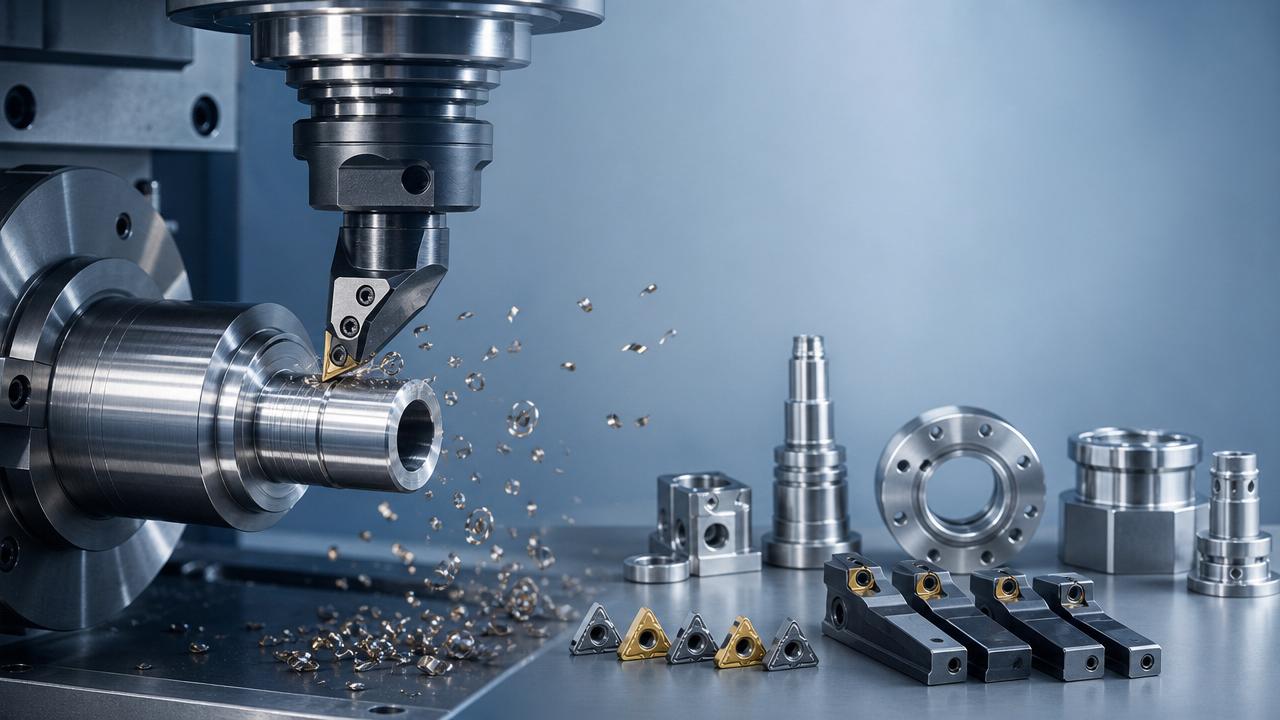
A technical analysis of cutting tools often starts with cutting speed, wear resistance, chip control, and dimensional consistency. Those metrics matter, but they do not tell the full economic story. In many industrial environments, the purchase price of a cutter represents only a small share of its lifetime impact. Downtime during tool changes, scrap caused by unstable edge performance, regrinding limits, spindle energy draw, coolant demand, and setup variation can quietly consume margins over months of production. This is why a more complete technical analysis of cutting tools must connect engineering behavior with financial outcomes. When evaluation expands beyond catalog specifications, approval decisions become more defensible, ROI becomes easier to forecast, and manufacturing performance becomes more stable across different materials, shifts, and batch sizes.
Why does a technical analysis of cutting tools often miss real costs?
A conventional technical analysis of cutting tools usually emphasizes measurable shop-floor indicators: tool life in minutes, surface finish, edge retention, feed rate, and tolerance capability. These are useful, yet they are often observed in short test windows or ideal process conditions. Real production introduces variable workpiece hardness, coolant inconsistency, operator differences, interrupted cuts, and machine vibration. As a result, a tool that looks efficient in a controlled comparison may create hidden losses once scaled into routine production.
The most common blind spot is evaluating cost per tool instead of cost per accepted part. A low-price insert may fail earlier, trigger extra stoppages, increase dimensional drift near end-of-life, and produce more nonconforming pieces. Another blind spot is ignoring changeover time. If a cutting tool requires frequent replacement or unstable offsets, the machine spends more time idle and less time converting spindle hours into sellable output. In high-mix or precision manufacturing, that lost availability can exceed the value of the tool itself.
A rigorous technical analysis of cutting tools should therefore include direct and indirect cost drivers: labor during changeover, scrap rates, regrind cycles, machine occupancy, energy consumption, coolant load, and schedule disruption. In broad industrial sectors such as metalworking, mold making, hardware production, and component finishing, these factors often determine whether a tool improves profitability or simply shifts cost from one line item to another.
What cost factors should be added to a complete technical analysis of cutting tools?
To make a technical analysis of cutting tools decision-ready, it helps to build around total cost of ownership rather than unit price. Several cost elements should be tracked together instead of in isolation.
- Tool acquisition cost: insert, holder, coating, and any premium geometry.
- Tool life consistency: not just average life, but variation between runs or operators.
- Downtime cost: minutes required for indexing, replacement, offset correction, and first-piece verification.
- Scrap and rework exposure: dimensional drift, burr formation, heat damage, and poor finish.
- Regrinding economics: number of viable regrinds, regrind turnaround time, and post-regrind performance loss.
- Energy and machine load: spindle power, cutting force, vibration, and impact on cycle time.
- Inventory risk: need for safety stock, special holders, or multiple geometries for unstable applications.
In practice, these elements interact. A tool with higher cutting efficiency may reduce cycle time but also demand tighter setup control. A tougher grade may lower breakage in interrupted cuts while slightly raising energy use. The value of technical analysis of cutting tools lies in understanding these trade-offs under real production conditions rather than assuming one performance metric predicts total return.
How can cost per part reveal more than tool life alone?
Tool life is often treated as the headline metric, but it can be misleading when separated from throughput and quality. A cutting tool that lasts longer at conservative parameters may still produce a higher cost per part than a shorter-life tool running at more productive conditions. Likewise, a tool with excellent average life but unstable wear progression can generate unexpected scrap near the end of each cycle.
A better method is to calculate cost per accepted part using a simple structure: tool cost plus downtime cost plus quality loss plus energy impact, divided by the number of good parts produced. This approach turns a technical analysis of cutting tools into a business case. For example, if one end mill costs 30% more but reduces cycle time by 12%, cuts scrap by 2%, and extends unattended run stability, the total economics may be significantly better than the cheaper option.
This is especially relevant in comprehensive industrial applications such as hardware components, mold cavities, dies, fastener tooling, and precision slots. In those settings, one rejected batch can erase savings from hundreds of low-cost tools. Cost per part also supports better cross-functional review because it aligns engineering data with operating margin, scheduling reliability, and asset utilization.
Which application scenarios make hidden cutting tool costs more severe?
Not every process suffers equally from hidden losses. Some production conditions magnify the weaknesses of a narrow technical analysis of cutting tools.
First, high-precision machining is highly sensitive to wear progression. In mold inserts, die components, and tolerance-critical hardware, minor edge degradation can lead to out-of-spec dimensions before the tool is visibly worn. The result is rework, inspection delays, and difficult root-cause tracing.
Second, interrupted cutting or difficult materials such as hardened steels, stainless alloys, and abrasive composites expose breakage risk. Here, tool survival is only one concern; unstable failure can damage workpieces, holders, spindles, or fixtures. A cheap tool that chips unpredictably may create cascading cost far beyond its price.
Third, automated or lights-out machining raises the cost of inconsistency. In unattended production, predictable tool wear matters more than maximum peak performance. Even a small increase in failure probability can trigger machine stoppage, missed output, and unplanned intervention. In such cases, a technical analysis of cutting tools should prioritize process stability, alarm avoidance, and repeatable life bands rather than only top-end speed.
How should different cutting tools be compared without falling into common approval mistakes?
A fair comparison requires normalized conditions and broader evaluation criteria. One frequent mistake is comparing two tools at identical speeds and feeds without considering each geometry’s intended operating window. Another is stopping a test after a small sample size, which hides wear variability and thermal effects. A third mistake is excluding setup complexity, holder compatibility, or regrind capability from the analysis.
A stronger technical analysis of cutting tools should compare candidates across five dimensions: productivity, quality stability, reliability, serviceability, and total economics. Productivity covers cycle time and material removal rate. Quality stability includes tolerance drift, finish consistency, and burr behavior across the full wear curve. Reliability means not only average tool life but also failure mode predictability. Serviceability addresses regrinding, stocking, lead times, and support. Total economics combines all direct and indirect costs into a part-level or batch-level model.
What are the most common misconceptions in a technical analysis of cutting tools?
One misconception is that longer tool life always means better value. In reality, slower cutting conditions can artificially increase life while raising machine-hour cost. Another misconception is that premium coatings automatically justify higher prices. Coating performance depends on substrate, edge prep, material pairing, and thermal conditions; it is not a universal shortcut to savings.
A third misconception is that test data from one machine can be transferred directly to another. Spindle stiffness, runout, coolant delivery, and workholding all influence performance. Without controlling these factors, a technical analysis of cutting tools may confuse machine behavior with tool capability.
There is also a tendency to underprice downtime. In integrated industrial workflows, one delayed operation can affect inspection, assembly, heat treatment, or shipment sequencing. That means the cost of a tool change is not limited to minutes at the machine. The downstream effect may include missed commitments, overtime, or excess WIP. Any realistic analysis should account for process flow, not just isolated machining data.
How can a cost-aware framework improve future cutting tool decisions?
An effective framework starts with application segmentation. Separate roughing, finishing, high-precision, difficult-material, and automated runs, because the right economics differ by scenario. Then define a standard test horizon long enough to capture real wear behavior, not just early-life performance. Record accepted parts, offset changes, stoppages, energy load indicators, and scrap causes alongside traditional cutting data.
Next, convert technical findings into a comparable approval sheet. For each candidate, summarize cost per accepted part, expected life band, failure mode, setup sensitivity, regrind options, and supply risk. This turns technical analysis of cutting tools into an operational planning tool rather than a narrow engineering report. It also supports more consistent decisions across hardware production, electrical component machining, mold manufacturing, and other precision industrial processes.
The strongest results come from linking process knowledge with market intelligence. GHTN follows this principle by connecting material behavior, tooling trends, compliance considerations, and manufacturing logic at a granular level. When the analysis includes both technical depth and commercial realism, tool selection becomes less reactive and more strategic.
A technical analysis of cutting tools should never end at edge geometry, coating type, or cutting parameters alone. The real question is whether the tool improves total production economics under actual operating conditions. By measuring cost per accepted part, downtime exposure, wear predictability, serviceability, and application fit, it becomes possible to identify hidden losses before they grow into margin erosion. The next practical step is to review one active machining process using a total-cost template instead of a unit-price comparison. That small shift often reveals where better tooling decisions can unlock stronger ROI, steadier output, and more resilient industrial performance.
Related News