
Technical Analysis of Cutting Tools That Wear Too Fast

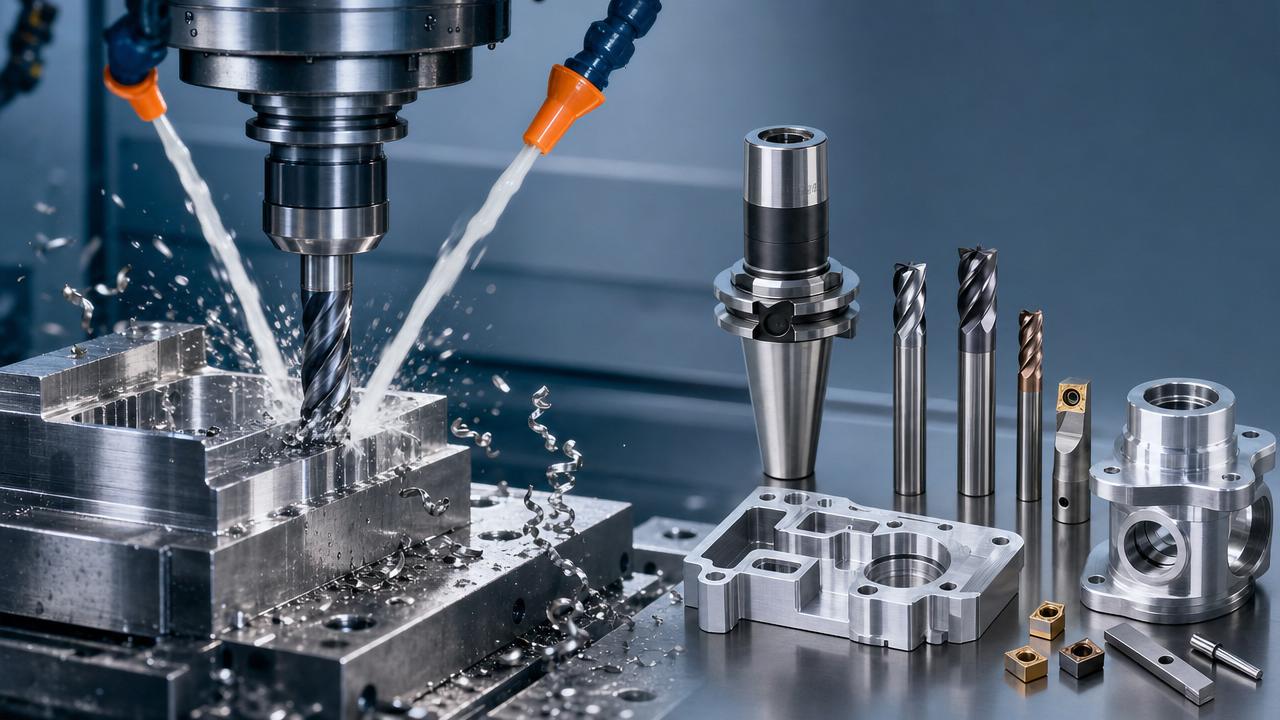
Cutting tools that wear too fast can disrupt production, reduce accuracy, and increase operating costs for machine operators. This technical analysis of cutting tools examines the common causes behind premature wear, from material mismatch and cutting parameters to cooling conditions and machine stability, helping users identify practical solutions and improve tool life with greater confidence.
For operators working across general manufacturing, mold shops, hardware processing, and precision component production, fast tool wear is rarely caused by one factor alone. In most cases, 3 to 5 variables interact at the same time: tool grade, workpiece hardness, spindle stability, feed rate, coolant delivery, and clamping quality. Understanding those links is essential if a shop wants stable cycle times, predictable surface finish, and lower tooling cost per part.
Within the industrial ecosystem served by GHTN, cutting performance is closely connected to broader decisions in material selection, machine utilization, and process control. A worn insert or end mill does not only affect one workstation. It can also increase rework rates, delay downstream inspection, and reduce consistency across OEM supply chains. That is why a practical technical analysis of cutting tools matters to operators as much as to process engineers and buyers.
Why Cutting Tools Wear Faster Than Expected
Premature wear usually appears in recognizable patterns. flank wear, crater wear, chipping, built-up edge, thermal cracking, and sudden edge failure all point to different process conditions. When operators can identify the wear mode within the first 20 to 50 parts, they can often correct the process before tool life drops by 30% to 60%.
Material mismatch between tool and workpiece
One of the most common causes is using the wrong substrate or coating for the workpiece category. A tool suited for low-carbon steel may fail quickly in stainless steel, cast iron, or heat-treated alloy above 35 HRC. In mold and die work, even a small change in hardness from 28 HRC to 42 HRC can significantly increase edge temperature and abrasion.
Operators should not rely only on diameter and geometry. Carbide grade, coating type, edge preparation, and rake angle matter just as much. For example, a sharp positive edge may cut aluminum efficiently, but the same edge can chip early in interrupted cuts on forged parts or scaled surfaces.
Typical mismatch symptoms
- Rapid flank wear within the first 10 to 15 minutes of cutting
- Built-up edge during machining of ductile materials such as aluminum or mild steel
- Micro-chipping on hard spots, cast skin, or interrupted surfaces
- Unstable surface roughness rising from Ra 0.8 to Ra 1.6 or higher
Incorrect cutting parameters
Speed, feed, and depth of cut must match tool geometry, machine rigidity, and workpiece condition. Excessive cutting speed often causes thermal softening and crater wear, while feed rates that are too low can cause rubbing instead of shearing. In many shops, operators lower feed to “protect” the tool, but that can actually shorten life by increasing friction.
A practical starting point is to review three parameter bands: spindle speed, chip load, and radial engagement. Even a 10% to 15% reduction in speed, combined with a 5% to 8% increase in feed per tooth, can improve chip formation and stabilize wear on some milling operations.
Cooling and lubrication problems
Coolant concentration, nozzle direction, pressure, and flow continuity all affect tool temperature. Poor coolant access is especially damaging in deep cavities, drilling, grooving, and high-speed finishing. If coolant reaches the tool intermittently, thermal shock may cause cracking after only a short production run.
For water-miscible coolant, many shops operate in a concentration range of 6% to 10%, but the correct level depends on material and operation. Too lean a mix reduces lubrication; too rich a mix can create residue and maintenance issues. Through-tool delivery is often more reliable than external flood coolant when hole depth exceeds 3 times tool diameter.
Machine rigidity and setup instability
A high-quality tool cannot compensate for poor machine condition. Spindle runout above 0.01 mm to 0.02 mm can create uneven tooth loading, especially on small end mills and drills. Weak fixturing, excessive tool overhang, worn holders, and unstable workholding all increase vibration, which accelerates edge breakdown.
In precision tooling environments, every additional 10 mm of overhang can reduce effective stiffness. That may not be critical in roughing soft material, but it becomes a major risk in hardened steel finishing or mold cavity contouring, where dimensional variation of ±0.02 mm can already be unacceptable.
The table below links common wear patterns to likely causes and first-response actions. It can help operators shorten troubleshooting time from several hours to a focused 15 to 30 minute review.
The key point is that wear patterns are diagnostic signals, not random failures. A disciplined technical analysis of cutting tools starts with visible evidence at the edge, then traces back to speed, feed, cooling, and rigidity in that order.
How Operators Can Diagnose Premature Wear Step by Step
A repeatable troubleshooting routine prevents guesswork. In shops handling mixed production volumes, from small-batch mold inserts to longer hardware runs of 500 to 5,000 pieces, consistent diagnosis can reduce tool trial waste and machine downtime. The goal is not only to replace failed tools, but to identify the variable that changed.
Step 1: Record the failure timing
Start by measuring when wear becomes unacceptable. Did the tool fail after 12 parts, 80 parts, or 3 hours of spindle time? If life varies by more than 20% between identical runs, process instability is likely. Stable but short life usually points to a parameter or grade issue, while unstable life often indicates setup or coolant inconsistency.
Step 2: Inspect edge condition under magnification
A 10x to 30x inspection is enough for most operator-level checks. Look for localized chipping, edge rounding, adhesion, cracking, and discoloration. If one flute is damaged more than the others, holder runout or spindle misalignment may be the source. If all flutes wear uniformly, thermal load or abrasive contact is more likely.
Step 3: Verify machine and holder condition
Check holder cleanliness, pull stud condition, clamping torque, and runout at the tool tip. A practical target for many precision operations is under 0.01 mm runout, though acceptable levels depend on tool diameter and operation type. Also inspect spindle bearings, fixture rigidity, and whether the workpiece is fully supported close to the cutting zone.
Step 4: Review cutting data against the operation type
Compare actual spindle speed, feed per tooth, depth of cut, and width of cut with the application. Roughing, slotting, side milling, face milling, and finishing each load the edge differently. In some cases, a feed increase of 0.01 mm per tooth can improve chip evacuation enough to reduce heat buildup.
Step 5: Examine chip shape and color
Chips give immediate process feedback. Powdery chips may indicate brittle fracture or rubbing. Long stringy chips often point to poor chip breaking. Blue or dark chips in steel cutting may signal excessive temperature, while welded chips in aluminum can indicate inadequate lubrication. A quick 5-minute chip review often reveals what machine data alone cannot.
- Document wear location and life in parts or minutes
- Inspect tool edge visually and under magnification
- Measure runout and confirm holder integrity
- Check speed, feed, and engagement values
- Assess coolant access and chip evacuation
- Test one change at a time and compare results over 2 to 3 runs
The table below provides a simple operator checklist for daily production. It is especially useful in environments where multiple shifts use the same machine and tool family.
Using a checklist converts tool wear from a reactive problem into a controlled process variable. That is especially important for OEM suppliers and component makers who need repeatable quality over several shifts, machine platforms, or export orders.
Practical Solutions to Extend Tool Life
Once the root cause is identified, improvements should be applied in a controlled sequence. Changing too many variables at once makes results hard to interpret. For most operations, the most effective order is tool selection, setup rigidity, cutting data, and then coolant optimization. A 2-step or 3-step correction plan usually works better than a complete process reset.
Match tool design to operation, not just material
Operators often focus on the workpiece material alone, but operation type matters equally. A slotting tool, a high-feed cutter, and a finishing end mill can all cut the same steel grade yet require very different edge strength and chip evacuation behavior. In mold and hardware applications, interrupted cuts, pocket entry, and wall finishing each create different wear stress.
If a tool fails during entry or corner engagement, consider geometry changes before reducing productivity. A stronger core, variable helix, reinforced corner, or tougher coating may improve life more effectively than a simple speed reduction.
Optimize speed and feed as a pair
Speed and feed should be adjusted together. Lowering only speed may reduce heat, but it can also increase cutting force if feed remains too high for the new chip formation condition. Likewise, lowering feed too much may create rubbing. A balanced change such as minus 10% speed and plus 5% feed per tooth often performs better than a large single-parameter change.
Common adjustment logic
- If flank wear dominates, reduce speed first
- If chipping dominates, improve rigidity and consider lower engagement
- If built-up edge appears, increase speed moderately and improve lubrication
- If thermal cracks appear, stabilize coolant strategy and reduce heat cycling
Improve clamping, overhang, and machine stability
Shorter overhang and better holder quality can deliver immediate results. Hydraulic, shrink-fit, or high-precision collet systems may reduce runout compared with worn standard holders, especially in tools below 10 mm diameter. In shops where one holder is reused beyond its maintenance limit, replacing the holder can restore tool life more effectively than changing inserts.
Workholding deserves equal attention. If the part vibrates under load, the edge experiences impact rather than consistent cutting. That is why thin-wall parts, long bars, and deep mold cavities often need process-specific support methods before tooling changes can show full benefit.
Standardize coolant practice
Coolant should be treated as a process tool, not just a background utility. Check concentration weekly, nozzle alignment daily, and filtration condition on a defined cycle such as every 2 to 4 weeks depending on contamination load. Dirty coolant carrying abrasive fines can accelerate wear even when concentration looks correct.
In drilling and cavity milling, chip evacuation often matters more than absolute coolant volume. If chips remain in the cut, they can be recut multiple times, rapidly damaging the edge and affecting hole quality or cavity finish.
Selection and Purchasing Considerations for Industrial Users
For operators involved in recommending or requesting tooling purchases, price per piece is only one part of the decision. The better metric is total cost per machined part, which includes tool life, cycle stability, scrap risk, changeover frequency, and surface quality consistency. A lower-priced tool that fails 40% earlier can raise overall cost significantly.
Four buying criteria that matter in real production
- Grade and coating suitability for the exact workpiece range
- Availability of technical support for parameter setting and troubleshooting
- Consistency of supply for inserts, end mills, drills, and holders
- Compatibility with existing machine power, spindle speed, and holder systems
In B2B environments like those covered by GHTN, technical support and process transparency are often as valuable as the cutting tool itself. Shops producing fasteners, mold bases, die components, or electrical hardware need suppliers that can discuss material behavior, tolerance risks, and delivery continuity across several product categories.
Questions operators should raise before a tooling change
Before switching tools or suppliers, operators should ask for recommended cutting windows, expected wear mode, holder requirements, coolant guidance, and suggested trial length. A useful evaluation period is often 2 to 3 production batches rather than one short trial, because early success does not always reflect long-run stability.
Red flags during evaluation
- No clear guidance on speed, feed, or application limits
- Good performance in one batch but tool life variation over 25% later
- Frequent edge chipping with no review of holder or machine condition
- Claims focused only on price without discussing part quality or uptime
A disciplined technical analysis of cutting tools helps industrial users avoid those mistakes. Better decisions come from matching the tool to the process window, machine capability, and expected production volume, not from selecting by catalog description alone.
Common Operator Mistakes and How to Avoid Them
Several repeated habits shorten tool life unnecessarily. The first is changing parameters without recording the previous condition. The second is blaming the tool before checking runout, clamping, or coolant access. The third is using the same tool strategy for roughing and finishing when the load profiles are completely different.
Another common issue is waiting too long to index or replace the tool. If operators push wear past the stable limit, the next stage is often rapid failure, which can damage the workpiece and even the holder. Setting a preventive wear threshold, such as replacing at a measured flank wear band before catastrophic breakage, protects both quality and spindle time.
Shops that document wear mode, part count, material batch, and setup condition typically improve much faster than shops relying on memory alone. Even a simple paper or digital log covering 6 to 8 checkpoints can build a usable wear history within a few weeks.
From Wear Control to Process Reliability
Fast tool wear is not just a tooling issue. It is a process reliability issue that affects machining accuracy, delivery confidence, and manufacturing cost. For operators, the most effective response is to read the wear pattern, verify setup stability, review cutting data, and correct one variable at a time. That approach improves both daily production control and longer-term purchasing decisions.
GHTN supports industrial users with practical insight across mechanical tools, precision manufacturing, and component production logic. If you need help comparing tooling options, refining machining parameters, or building a more stable wear-control process, contact us to get a tailored solution, discuss product details, or explore more manufacturing-focused tooling insights.
Related News