
Tooling Technology Choices That Improve Repeatability, Not Just Speed

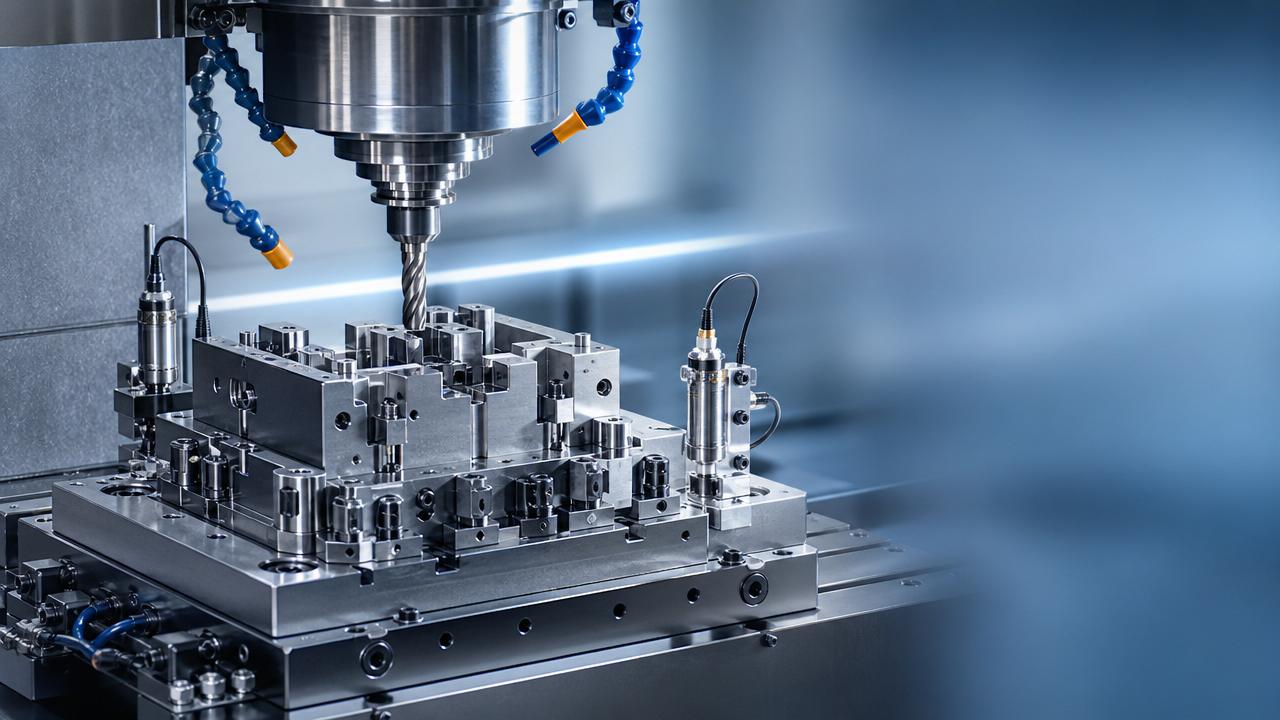
In manufacturing, faster cycles mean little if quality drifts from run to run. For technical evaluators, the real value of tooling technology lies in choices that strengthen repeatability, process stability, and long-term cost control. From material selection to mold design and monitoring systems, this article explores how smarter tooling decisions can reduce variation, improve consistency, and support reliable production at scale.
Why scenario differences matter more than headline speed gains
Technical evaluation teams are often asked a deceptively simple question: which tooling technology will make production better? In practice, the answer depends on where variation is coming from, how often setups change, what tolerance window matters to the customer, and whether the line is expected to run for weeks or switch every few hours. A tooling decision that improves speed in one environment may reduce repeatability in another.
This is especially true across the broad industrial landscape served by global component, electrical, and mold supply chains. High-volume fastener production, precision mold manufacturing, electrical enclosure machining, and automated assembly support all rely on tooling technology, but they do not fail for the same reasons. Some operations suffer from thermal drift, others from tool wear, fixture inconsistency, material batch variation, or poor maintenance discipline. Evaluators therefore need a scenario-based view, not a generic list of advanced features.
A useful framework is to judge tooling technology by one core question: does it make output more predictable over time, across operators, between machines, and through material changes? If the answer is yes, faster throughput is a welcome secondary gain. If the answer is no, the speed improvement may only accelerate scrap, rework, and customer risk.
Where repeatability-focused tooling technology typically shows the highest value
Repeatability becomes a strategic issue in several common business scenarios. The first is high-volume production, where a small deviation multiplied across thousands or millions of parts becomes expensive very quickly. The second is multi-site or multi-machine production, where consistent transfer of process conditions matters more than peak output on a single machine. The third is tight-tolerance manufacturing, where dimensional variation directly affects assembly fit, sealing, electrical performance, or mold life. The fourth is regulated or customer-audited supply, where traceability and documented process control are part of supplier approval.
For technical evaluators in these environments, the best tooling technology is often not the most complex option. It is the option that reduces hidden process noise. That can mean stable tool materials, better surface treatments, modular fixtures with reliable location references, controlled cooling paths, digital condition monitoring, or standardized tool libraries that prevent setup drift.
Scenario comparison: what to prioritize in different production environments
The table below helps translate tooling technology choices into practical evaluation priorities across common industrial scenarios.
Scenario 1: high-volume production needs tooling technology that slows variation before it starts
In high-volume manufacturing, repeatability problems rarely begin as dramatic failures. They begin as small shifts in edge wear, burr formation, cavity pressure, clamp balance, or cooling consistency. Because production is continuous, these shifts can stay hidden until a batch crosses the tolerance line. That is why tooling technology for this scenario should be selected for stability over long runs, not only cycle time.
Technical evaluators should look closely at tool substrate choice, coating durability, thermal conductivity, lubrication compatibility, and the predictability of wear behavior. In mold-based processes, conformal or optimized cooling design may improve repeatability more than an aggressive cycle reduction strategy. In cutting or forming operations, repeatable clamping force and tool presetting can be more valuable than chasing the highest feed rate.
A practical sign of suitable tooling technology in this scenario is not simply a fast benchmark run. It is a stable process window after many hours of operation, with minimal drift in dimensions, surface quality, and machine load.
Scenario 2: high-mix environments need repeatable setup more than maximum machine capability
Job shops, custom component suppliers, and plants serving diverse OEM programs often live with frequent product changes. In these environments, production variation is often created during setup, not during steady-state machining or molding. A powerful machine paired with poorly standardized tooling can still deliver inconsistent first-off parts and long adjustment cycles.
Here, the most effective tooling technology often includes modular fixture systems, standardized locating references, quick-change tool holders, digital offset management, and documented setup recipes. These choices reduce dependence on individual operator memory and make it easier to reproduce a validated process weeks later. For evaluators, one of the strongest indicators is first-pass acceptance after changeover. If every setup requires repeated trial correction, the tooling system is not truly repeatable.
This scenario is common in the broader hardware and electrical supply chain, where distributors and OEM customers may request many variants with relatively short demand cycles. In such cases, tooling technology that preserves setup discipline creates more value than equipment that looks faster on paper but is difficult to reset consistently.
Scenario 3: precision mold and die applications demand control of thermal and geometric behavior
Precision mold manufacturing is one of the clearest examples where repeatability outranks raw speed. A cavity that machines quickly but shifts under heat, or an insert that wears unpredictably, creates downstream problems in molding, maintenance, and part quality. The evaluator’s task is to connect upstream tooling technology choices with downstream production consistency.
Important decision areas include tool material stability, holder runout, coolant delivery, electrode consistency in EDM workflows, and mold steel behavior after heat treatment. Surface integrity also matters. A finish that appears acceptable visually may still influence release behavior, resin flow, or vent performance. In this setting, tooling technology should support repeatable micron-level outcomes, not just a one-time dimensional hit.
For organizations working across injection, die-casting, or precision stamping support, it is useful to test tooling options by measuring repeatability across multiple cavities, multiple operators, and multiple production restarts. A process that only performs under one ideal setup is not robust enough for industrial scaling.
Scenario 4: automated lines need tooling technology that protects positional consistency
In automated or semi-automated lines, the biggest risk is often not cutting speed or molding speed but positional inconsistency. If a fixture presents parts with slight variation, robots, sensors, and downstream stations may all experience compounded errors. This makes tooling technology selection closely tied to alignment logic, datum strategy, and error-proofing design.
Repeatability here depends on robust contact surfaces, controlled clamping paths, wear-resistant locating elements, and sensor feedback where needed. Technical evaluators should ask whether the tooling system can maintain location accuracy across contamination, vibration, and maintenance cycles. In many cases, a simpler, mechanically robust fixture outperforms a more sophisticated but delicate system.
This matters especially in electrical and mechanical component assembly, where part fit, torque behavior, and connector alignment depend on consistent upstream positioning. Tooling technology that reduces micro-misalignment helps protect throughput, quality, and line uptime simultaneously.
How different business types should evaluate the same tooling technology differently
Not every company should judge tooling technology by the same scorecard. A global OEM with validation resources may value traceability, parameter locking, and platform-wide standardization. A contract manufacturer may prioritize faster repeatable changeovers and easier operator training. A mold specialist may focus on dimensional consistency and maintenance life. A distributor or sourcing team may care about whether the supplier’s tooling choices support stable deliveries over time.
Common misjudgments when comparing tooling technology options
One common mistake is to accept a short trial as proof of repeatability. A trial can confirm feasibility, but not long-run stability. Another is to compare technologies by unit cost alone, ignoring rework, inspection burden, unplanned maintenance, and customer complaints. A third is to overvalue flexibility without checking whether each configuration can be reproduced consistently. Finally, many teams evaluate tooling technology at the machine level but ignore upstream material consistency and downstream handling conditions that influence actual repeatability.
A more reliable approach is to ask for evidence across time, shifts, operators, and production restarts. If a supplier or internal team can demonstrate stable outcomes under normal operating variation, the tooling choice is likely robust. If performance depends on a single expert operator or tightly controlled trial conditions, risk remains high.
A practical checklist for scenario-based selection
Before approving a tooling technology investment, technical evaluators should confirm several points. First, identify the dominant source of variation in the target scenario: wear, heat, setup, alignment, or material change. Second, verify whether the proposed tooling solution directly addresses that source instead of only improving nominal speed. Third, review evidence such as process capability data, repeat setup results, maintenance intervals, and scrap trends. Fourth, check whether the solution can scale across shifts, sites, and operator skill levels. Fifth, ensure that documentation and monitoring are sufficient to preserve the gain over time.
When these checks are applied consistently, tooling technology becomes a strategic control lever rather than a purchasing line item. That is the perspective increasingly needed in global industrial networks where precision parts, electrical systems, and mold-dependent products must perform reliably under real market pressure.
Final takeaway for technical evaluators
The most valuable tooling technology is not automatically the fastest, newest, or most complex. It is the one that best fits the production scenario and reduces variation in a measurable, repeatable way. High-volume lines need long-run stability. High-mix plants need reliable setup control. Precision mold work needs thermal and geometric discipline. Automated lines need positional consistency and error-proofing.
For teams evaluating suppliers, equipment upgrades, or process changes, the next step is to map your own operating scenario first, then compare tooling technology options against actual repeatability risks. That scenario-first method leads to better qualification decisions, lower lifecycle cost, and stronger confidence that quality will hold not just in a trial, but in real production.
Related News