
What Separates a Reliable Cutting Tools Manufacturer Today

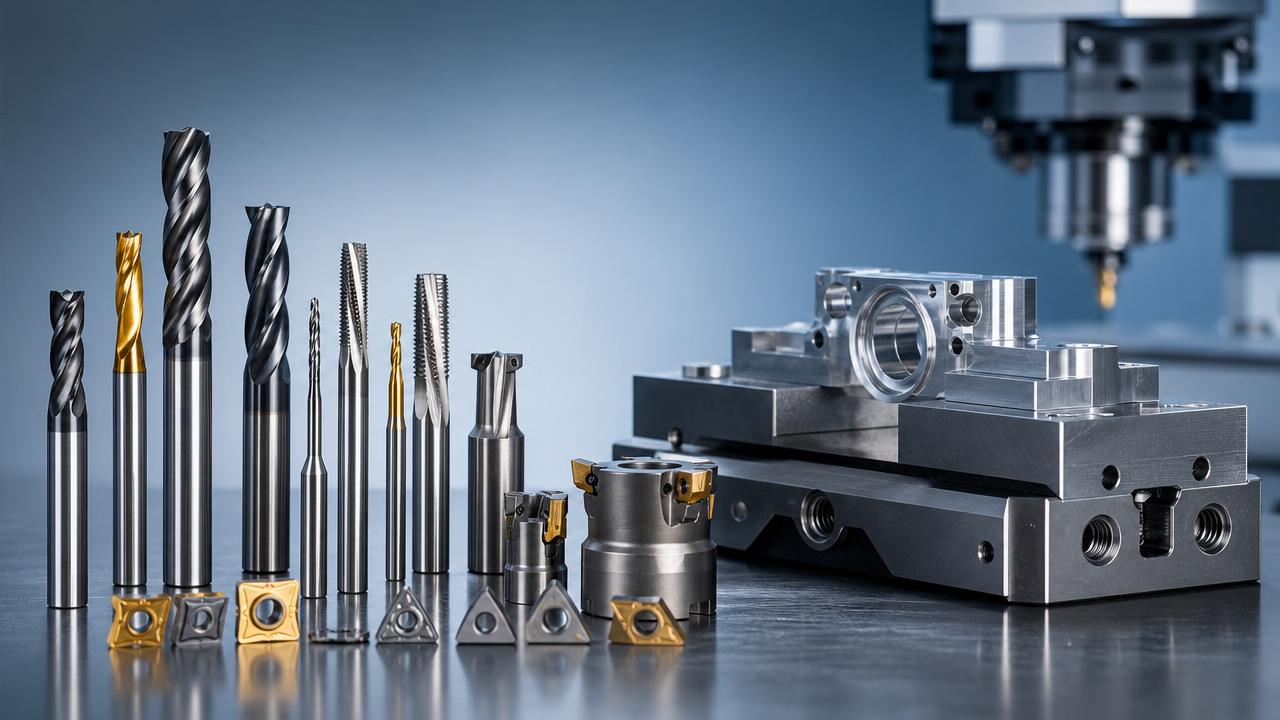
Choosing a reliable cutting tools manufacturer today means looking beyond price lists to proven precision, stable supply, and application-driven support. For distributors, agents, and industrial buyers, the right partner can directly influence inventory efficiency, customer retention, and market competitiveness. This article explores the core qualities that distinguish a dependable cutting tools manufacturer in a fast-changing global tooling landscape.
Understanding the role of a cutting tools manufacturer
A cutting tools manufacturer is no longer defined only by its ability to produce drills, end mills, inserts, reamers, taps, or custom tooling at scale. In today’s industrial environment, a capable manufacturer is expected to combine material science, precision grinding, coating technology, process control, and market responsiveness into one dependable supply model. That shift matters because end users now demand tighter tolerances, faster cycle times, and more consistent tool life across a broader mix of materials and machines.
For distributors and agents, this means supplier selection has become more strategic. A reliable cutting tools manufacturer does not simply sell catalog items; it supports productivity across automotive parts, mold making, metal fabrication, aerospace subcontracting, electronics hardware, and general machining. In many markets, the manufacturer’s technical depth affects whether a distributor can win repeat orders, reduce returns, and serve customers with confidence.
From the perspective of industrial intelligence platforms such as GHTN, cutting tools sit at the granular core of production efficiency. Tool geometry, substrate quality, coating stability, and edge preparation all shape machining performance. That is why evaluating a cutting tools manufacturer should be treated as an assessment of manufacturing logic, not just a sourcing exercise.
Why the market pays closer attention today
Several structural changes explain why the market is paying more attention to the reliability of each cutting tools manufacturer. First, global manufacturing is under pressure to improve productivity while controlling cost volatility. A low-cost tool that creates unstable machining, poor finish, or frequent replacement often increases the total cost per part. Second, supply chains have become less predictable. Tooling buyers now value continuity, lead-time discipline, and transparent production planning as much as unit price.
Third, material diversity has expanded. Shops regularly machine stainless steel, hardened steel, aluminum alloys, titanium, copper, cast iron, composites, and specialty materials. A manufacturer that understands applications across these materials can help distributors offer more precise recommendations. Fourth, digital expectations are rising. Buyers increasingly want technical data, traceability, cross-reference information, and faster communication. A modern cutting tools manufacturer must therefore operate as both a production specialist and a service platform.
In short, reliability now includes production quality, engineering capability, delivery performance, and commercial support. This broader definition is especially relevant for channel partners who represent multiple brands and need stable supplier behavior over the long term.
Core traits that separate a reliable cutting tools manufacturer
Consistent precision and process control
Precision is the first line of trust. A reliable cutting tools manufacturer maintains tight dimensional consistency, repeatable geometry, and stable edge quality across production batches. This requires disciplined grinding operations, robust in-process inspection, and clear control over raw material variation. For distributors, consistency reduces disputes and simplifies customer feedback handling. For end users, it supports predictable performance on CNC machines and automated lines.
Application-driven engineering
Not all cutting applications can be solved with standard tools. A strong cutting tools manufacturer can connect tool design with chip evacuation, spindle speed, feed rate, coolant conditions, and workpiece material. This matters in sectors like mold manufacturing, where cavity precision and surface quality directly affect final component performance. Engineering support also helps distributors move from price-based selling to value-based selling.
Stable supply capability
Reliability is impossible without dependable supply. A qualified cutting tools manufacturer should demonstrate reasonable production capacity, lead-time control, safety stock planning for key items, and the ability to maintain quality during scaling. Channel partners need assurance that high-rotation items will not suffer chronic shortages, especially when serving OEMs, maintenance networks, and regional machine shops.
Transparent quality systems
A trustworthy manufacturer can explain how it controls incoming materials, geometry verification, coating adhesion, hardness consistency, and final inspection. Transparency does not require revealing every proprietary detail, but it does require evidence. Reliable suppliers usually provide technical documentation, testing references, and corrective-action responsiveness when problems appear.
Commercial support for channel partners
For distributors and agents, support quality is often as important as product quality. A dependable cutting tools manufacturer offers clear catalogs, product training, cross-reference support, quotation discipline, and market-ready communication materials. It should also be able to help channel partners position products by application, not just by SKU number.
A practical overview of evaluation priorities
When reviewing a cutting tools manufacturer, decision-makers benefit from a balanced framework that includes technical, operational, and commercial factors. The table below summarizes common evaluation dimensions used by distributors, industrial buyers, and market intermediaries.
Where reliability creates real business value
The practical value of a reliable cutting tools manufacturer extends beyond workshop performance. For distributors, reliability improves inventory planning because demand can be forecast more accurately when tool quality and supply are stable. For agents, it strengthens reputation because technical promises made to customers are easier to fulfill. For OEM-oriented traders, it lowers the hidden cost of claims, emergency substitutions, and application failures.
There is also a competitive value dimension. In many industrial categories, product lines appear similar at first glance. The real separation emerges in machining results, service quality, and responsiveness to non-standard needs. A cutting tools manufacturer that can support both standard stock items and semi-custom or custom solutions gives channel partners more room to enter higher-margin business.
GHTN’s industry perspective is especially relevant here: precision tools are part of a wider ecosystem that includes molds, fasteners, electrical systems, and automated production components. When tooling reliability improves, the effect is often felt across the entire value chain, from prototype development to mass production and aftermarket maintenance.
Typical customer segments and their expectations
Different customer groups evaluate a cutting tools manufacturer through different operational priorities. Understanding these differences helps distributors and agents align the right supplier with the right market segment.
How to assess a manufacturer beyond the catalog
Catalog breadth can be useful, but it should never be the only basis for evaluation. A better method is to test how a cutting tools manufacturer performs across real decision points. Ask for evidence of machining results on representative materials. Review how quickly the supplier responds to technical questions. Check whether sample quality matches mass-order quality. Compare lead-time promises against actual delivery records. Examine whether product naming, packaging, and specifications remain consistent across batches.
Distributors should also look for signs of operational maturity. These include documented change control, structured handling of nonconformities, and the ability to support cross-border business with stable communication. If the manufacturer serves multiple industrial sectors, it may also bring broader process knowledge that benefits channel development in emerging market niches.
Another useful test is application dialogue. A serious cutting tools manufacturer usually asks questions before recommending a tool: machine type, material hardness, cutting depth, coolant mode, tolerance target, and expected productivity goals. That behavior indicates an engineering mindset rather than a commodity mindset.
Common warning signs to watch carefully
Not every supplier with an attractive catalog or polished presentation qualifies as a reliable cutting tools manufacturer. Warning signs include inconsistent sample performance, vague responses about substrate or coating processes, frequent unexplained lead-time changes, and poor alignment between technical claims and field results. Another red flag is weak after-sales handling. If a supplier cannot analyze failures systematically or only blames machine conditions without evidence, future cooperation may become costly.
For agents and distributors, commercial instability also matters. Unclear territory policies, irregular pricing logic, and weak product data can make market development difficult. In industrial tooling, trust is built over time through repeatable execution. Reliability should therefore be judged by patterns, not isolated promises.
Practical guidance for distributors, agents, and industrial traders
A practical approach starts with segment focus. Instead of searching for a universally perfect cutting tools manufacturer, identify the priority markets you serve: standard metalworking, precision mold work, heavy-duty machining, or mixed industrial distribution. Then match supplier strengths to those segments. Build a shortlist based on precision stability, application support, and supply discipline. Run limited product trials in your main customer categories, and collect measurable feedback such as tool life, finish quality, replacement frequency, and delivery reliability.
It is also wise to evaluate long-term collaboration potential. A manufacturer that invests in product training, technical communication, and problem-solving support can help channel partners grow faster than one that competes only on initial pricing. In many cases, the best partner is the one that improves your customer’s process confidence while simplifying your own inventory and service operations.
Final perspective
What separates a reliable cutting tools manufacturer today is not a single feature but a disciplined combination of precision, engineering insight, supply stability, and channel support. In a market shaped by tighter tolerances, diverse materials, and higher service expectations, reliable manufacturers help distributors and agents move beyond transactional selling toward durable industrial partnerships.
For companies tracking industrial component trends through platforms like GHTN, the message is clear: precision tooling should be evaluated as a strategic production resource. If you are reviewing your supplier portfolio, focus on the manufacturers that can prove performance, communicate clearly, and support real applications over time. That is where lasting commercial value is created for distributors, industrial buyers, and the wider manufacturing network.
Related News