
Mechanical engineering tools that save setup time on site

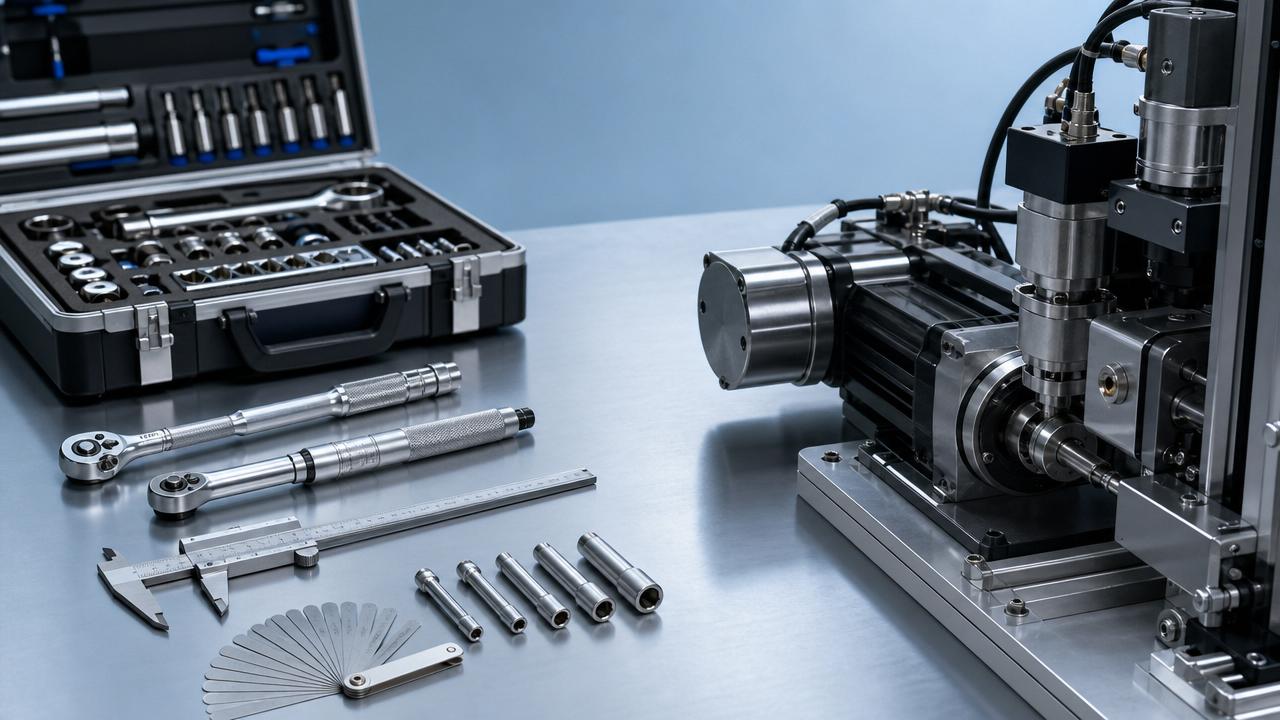
For after-sales maintenance teams, every minute on site matters. The right mechanical engineering tools can dramatically reduce setup time, improve first-time fix rates, and keep equipment running with less disruption. This article explores practical tool choices, field-ready strategies, and efficiency insights that help technicians work faster, safer, and with greater precision in demanding industrial environments.
Why setup time on site is becoming a bigger operational issue
A clear shift is taking place across industrial service work: maintenance is no longer judged only by repair quality, but also by how quickly teams can diagnose, prepare, and restore equipment. For after-sales maintenance personnel, setup time has become a visible performance metric because customers expect shorter shutdowns, tighter safety control, and more predictable service outcomes. In this context, mechanical engineering tools are not just workshop assets. They are time-management assets.
Several industry signals explain this change. Production lines are more automated, machine layouts are more compact, and installed equipment bases often mix legacy components with newer control systems. As a result, technicians arrive on site with less room for trial and error. They need mechanical engineering tools that support rapid access, quick adjustment, reliable measurement, and repeatable fastening in the first intervention window.
This trend matters across the broader industrial ecosystem highlighted by GHTN: mechanical tools, electrical hubs, fastening systems, pneumatic assemblies, and mold-related production environments all depend on precision work under time pressure. The growing value of setup efficiency shows that tool selection is shifting from simple ownership to application fit, portability, and integration with modern maintenance workflows.
The most important trend signals shaping tool demand
Demand for mechanical engineering tools is evolving in a few practical directions. First, field service teams increasingly prefer multi-function tools that reduce the number of separate items carried to site. Second, precision is being pushed closer to the point of service, meaning portable measurement and controlled fastening matter more than before. Third, technicians need durable tools that perform in dust, vibration, heat, moisture, and restricted access conditions. Finally, service managers want tools that help standardize work between experienced engineers and newer maintenance staff.
These changes reflect a broader move toward maintenance standardization. In the past, a highly experienced technician could compensate for missing kit through improvisation. Today, customers and OEM service networks are less willing to depend on improvisation alone. They prefer tool systems that support consistent service quality across different regions, shifts, and technician experience levels.
Trend change table: what is changing in field maintenance tool priorities
Which mechanical engineering tools are saving the most setup time
Not every tool contributes equally to faster setup. The biggest time savings usually come from tools that remove repeated micro-delays: searching for the right size, resetting position, correcting overtightening, checking dimensions twice, or dismantling nearby parts to gain access. In practice, the most effective mechanical engineering tools are those that shorten preparation, improve first-pass accuracy, and reduce rework risk.
1. Quick-adjust fastening tools
Ratcheting spanners, adjustable torque wrenches, slim-head socket systems, and compact impact drivers help technicians move faster during disassembly and reassembly. On site, this matters when service teams face mixed fastener types, awkward mounting points, or repeated bracket removal. Faster fastening means less exposure time around energized, hot, or moving equipment during controlled shutdown windows.
2. Portable alignment and measurement tools
Calipers, feeler gauges, dial indicators, portable laser alignment systems, and digital angle tools reduce the time spent validating shaft position, coupling fit, clearances, and installed part geometry. In many service calls, the repair itself is not the main delay. The delay comes from confirming whether the machine is truly back within tolerance. Good measurement tools shorten that decision cycle.
3. Access-optimized hand tools
Low-profile pliers, offset screwdrivers, extendable magnetic retrieval tools, inspection mirrors, and articulated handles are increasingly valuable because machine envelopes are shrinking. Modern equipment often packs mechanical and electrical elements tightly together. Access-optimized mechanical engineering tools reduce the need to remove surrounding guards or assemblies simply to reach one service point.
4. Modular tool storage and mobile kits
A tool that is technically suitable but difficult to locate still wastes time. Foam-shadowed cases, modular service boxes, preconfigured maintenance kits, and labeled consumable packs are now part of the time-saving conversation. For after-sales maintenance teams, organization is a performance feature. Faster retrieval means faster setup, fewer forgotten items, and better handoff between technicians.
5. Condition-support tools for real environments
Corroded fasteners, vibration looseness, contamination, and poor lighting can slow setup before the main repair even begins. Anti-slip grips, corrosion-release tools, portable work lights, compact clamping aids, and durable inspection devices help stabilize the work area quickly. These are often underestimated, yet they have strong influence on service speed in factories, utility sites, transport depots, and heavy equipment environments.
Why these changes are happening now
The push toward faster setup is not random. It is being driven by operational, technical, and commercial pressures that are affecting both manufacturers and service providers. Maintenance teams should understand these drivers because they shape what customers will expect next from mechanical engineering tools and from service execution itself.
Who is most affected by the shift in mechanical engineering tools
The impact is broad, but not identical for every role. After-sales maintenance technicians feel it first because they work closest to the downtime clock. However, service managers, OEMs, distributors, and plant operators also face consequences when tool strategy does not match current field demands.
Impact by stakeholder
What maintenance teams should watch when evaluating tool upgrades
The key question is not simply whether a new tool is more advanced. The right question is whether it removes a known setup bottleneck. Maintenance teams should map recent delays and identify where mechanical engineering tools influence the outcome most directly. In many cases, a modest investment in access, measurement, or fastening control creates more value than buying a larger number of general-purpose tools.
Useful evaluation points include carry weight, battery runtime, calibration needs, compatibility with existing fasteners and assemblies, resistance to harsh environments, and ease of training. Teams should also review whether tools support documentation and repeatability. If a torque setting, alignment result, or wear measurement can be captured consistently, service quality becomes easier to scale.
Practical signals worth monitoring
If setup times are rising despite similar repair volumes, that is a signal that access or organization issues may be undermining productivity. If repeat visits happen because parts were installed correctly but not verified properly, portable precision tools may be the missing link. If senior technicians still outperform newer staff by a wide margin, tool standardization may help narrow the execution gap. These are operational clues that point directly to better use of mechanical engineering tools.
A practical response plan for the next service cycle
For maintenance organizations, the best response is phased rather than reactive. Start by reviewing the top ten service jobs that consume the most setup time. Break the delay into access, identification, adjustment, fastening, measurement, and verification stages. Then match each stage with the mechanical engineering tools currently used and note where technicians improvise, borrow, or wait.
Next, redesign tool kits around real field sequences instead of catalog categories. A technician does not solve problems in alphabetical order. They move through a workflow. Tool kits should reflect that workflow, with the most frequently used items immediately available and specialized tools clearly assigned to target equipment families.
Finally, connect tool decisions to service outcomes. Measure setup duration, repeat intervention rate, and first-time fix performance before and after changes. This turns tool selection from opinion into evidence. For organizations operating across regions or service partners, it also creates a stronger basis for procurement alignment and training design.
How the direction of tooling is likely to develop
The broader direction is clear: mechanical engineering tools for field service will continue moving toward portability, task integration, traceable precision, and environment-specific durability. This does not mean traditional hand tools will disappear. It means their value will increasingly depend on how well they fit a faster, more standardized maintenance model. Suppliers and industrial platforms that understand both component behavior and on-site service realities will be better placed to support this shift.
For a network such as GHTN, this trend also reinforces the importance of connecting tool selection with deeper manufacturing logic. Fasteners, pneumatic assemblies, electrical interfaces, and precision mechanical parts all influence service conditions. Better tooling decisions come from understanding these connections, not from viewing each repair in isolation.
Final judgment and next-step questions
The most important takeaway is that setup time is no longer a minor field inconvenience. It is a strategic indicator of service readiness, customer satisfaction, and maintenance efficiency. Mechanical engineering tools now play a larger role in that equation because they shape access, control, verification, and repeatability at the point where downtime costs are highest.
If your team wants to judge how these trends affect your own operation, focus on a few direct questions: Which jobs lose the most time before the repair really begins? Which mechanical engineering tools are repeatedly missing, oversized, or too general for current equipment layouts? Where do verification errors create avoidable repeat visits? And which service tasks would benefit most from standardized kits and portable precision capability?
Those answers will show where faster setup can be won first, and where better tool choices can deliver lasting gains in uptime, safety, and service consistency.
Related News