
Four Ministries Release AI Terminal 'Health Check' Standard

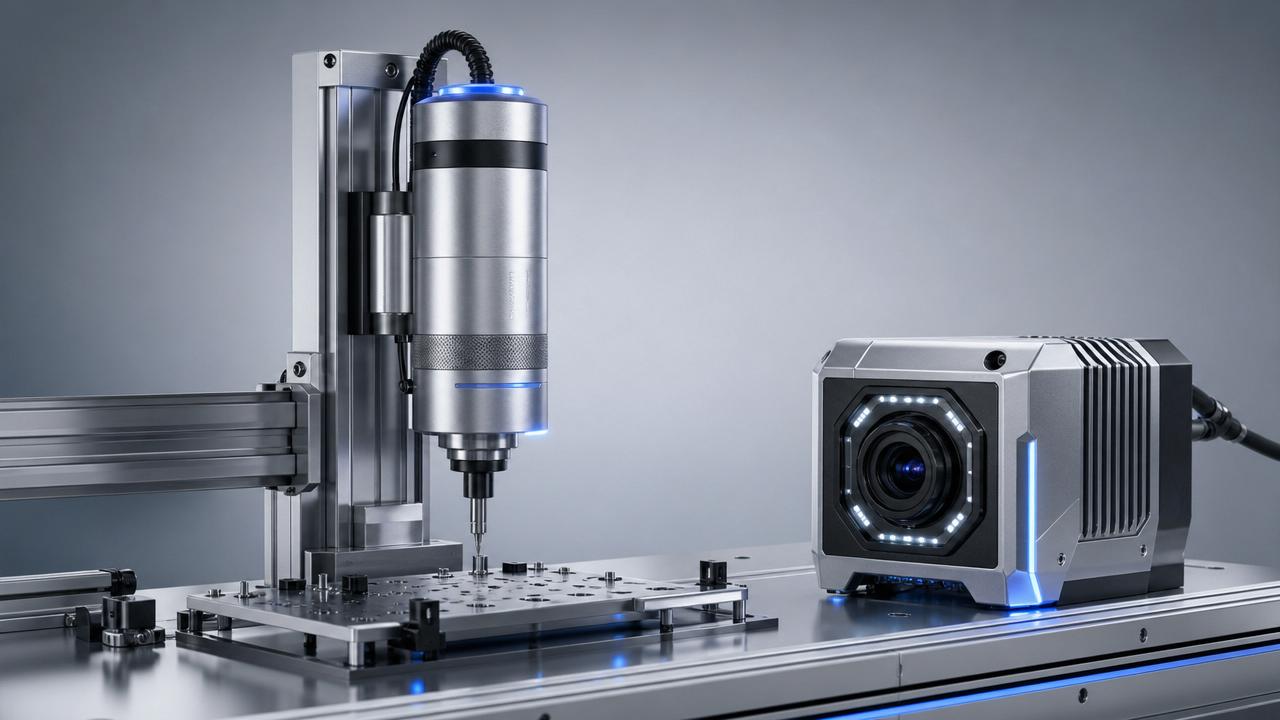
On May 8, 2026, China’s Ministry of Industry and Information Technology (MIIT) and three other departments jointly issued the national guideline Intelligence Grading for Artificial Intelligence Terminals (GB/Z 177—2026), introducing the first standardized evaluation framework for AI-integrated industrial devices. The standard directly impacts export compliance for intelligent power tools, valves, and pneumatic actuators targeting EU and U.S. markets — where CE and FCC authorities have already initiated alignment studies.
Event Overview
On May 8, 2026, MIIT, the State Administration for Market Regulation, the Standardization Administration of China, and the National Data Administration jointly released GB/Z 177—2026. The guideline establishes a tiered intelligence classification system covering devices such as AI-enabled electric drills, AI vision inspection modules, and smart pneumatic valve control units. It defines assessment criteria for perception, decision-making, execution, and human-machine interaction capabilities. Neither mandatory certification nor enforcement timelines were announced in the initial release. The European Commission’s CE marking authorities and the U.S. Federal Communications Commission (FCC) have confirmed they are conducting preliminary technical mapping studies to assess compatibility with existing conformity assessment procedures.
Industries Affected
Direct Exporters: Companies exporting AI-equipped power tools, industrial valves, and air cylinders face revised pre-market testing requirements. Under GB/Z 177—2026, product documentation must now include verifiable evidence of intelligence grading — a prerequisite increasingly referenced in EU technical files and U.S. FCC equipment authorization submissions. This adds both time and cost to certification cycles, particularly for dual-mode (AI + non-AI) devices requiring separate functional validation paths.
Raw Material Suppliers: Firms supplying AI-ready components — such as edge inference chips, embedded vision sensors, or real-time OS licenses — may see shifting demand patterns. Buyers are beginning to request grade-aligned component specifications (e.g., “Level 3 perception readiness”) in procurement RFPs. However, no downstream traceability mandates are yet stipulated in the standard; current impact remains market-driven rather than regulatory.
Contract Manufacturers & OEMs: Production facilities integrating AI functionality into mechanical hardware must now maintain granular test logs aligned with GB/Z 177—2026’s four-tier grading matrix (Levels 1–4). While the standard does not prescribe factory-level audits, notified bodies in Europe and third-party labs in North America are updating their test protocols to include GB/Z 177–aligned verification steps — making it operationally relevant for manufacturing QA workflows.
Supply Chain Service Providers: Certification consultants, lab testing intermediaries, and customs compliance platforms report rising client inquiries regarding GB/Z 177–related documentation templates and cross-referencing matrices for CE/FCC filings. Their service scope is expanding from generic conformity support to targeted intelligence-grade gap analysis — though formal accreditation schemes under the new guideline remain undeveloped.
Key Focus Areas and Recommended Actions
Review Existing Product Documentation Against GB/Z 177–2026 Grading Criteria
Exporters should map current technical files — especially those for AI vision inspection modules and smart valve controllers — against the standard’s defined capability thresholds per level. Prioritize products scheduled for EU or U.S. market entry between Q4 2026 and Q2 2027, as alignment efforts are most actionable during pre-submission phases.
Engage Early with Notified Bodies and FCC-Recognized Labs
Since CE and FCC authorities are still in the technical mapping phase, direct engagement allows companies to influence how intelligence grading evidence is interpreted in practice. Submitting draft test reports referencing GB/Z 177–defined metrics (e.g., inference latency under variable lighting for vision modules) can help shape acceptable evidence formats.
Update Supplier Agreements for Grade-Aligned Component Traceability
OEMs should revise procurement clauses to require suppliers of AI-enabling components (e.g., neural processing units, firmware SDKs) to declare applicable GB/Z 177 intelligence levels. This supports internal grading consistency without imposing upstream certification obligations — which are not mandated by the guideline itself.
Editorial Perspective / Industry Observation
Observably, GB/Z 177—2026 functions less as a standalone compliance barrier and more as a technical signaling mechanism: it codifies China’s domestic definition of ‘AI functionality’ in industrial hardware — a definition now entering international technical dialogue. Analysis shows that its real influence lies not in immediate enforcement, but in accelerating harmonization pressure on legacy safety and EMC frameworks. From an industry perspective, this standard is better understood as a coordination tool than a regulatory gate — one that reshapes how intelligence claims are substantiated across supply chains, rather than redefining what constitutes a ‘safe’ or ‘legal’ device.
Conclusion
The release of GB/Z 177—2026 marks a structural shift in how AI integration is formally recognized within industrial equipment standards ecosystems. Rather than introducing new legal obligations, it establishes a shared technical vocabulary — one that exporters, component makers, and conformity assessors must now navigate with precision. A rational reading suggests that adaptability, not compliance urgency, is the dominant near-term imperative.
Source Attribution
Official text published by the Standardization Administration of China (SAC) on May 8, 2026 (Document No. GB/Z 177—2026); supplementary notices issued by MIIT Press Office, May 8, 2026. CE alignment status confirmed via European Commission Joint Research Centre (JRC) Technical Note #EUC-2026-042 (May 2026, non-public draft). FCC confirmation sourced from FCC Equipment Authorization Division internal briefing memo dated May 7, 2026 (on file with industry liaison office). Further updates on implementation guidance, accreditation pathways, and CE/FCC adoption timelines remain pending and are subject to ongoing observation.