
Die-Casting Machine Supplier Comparison Beyond Unit Price

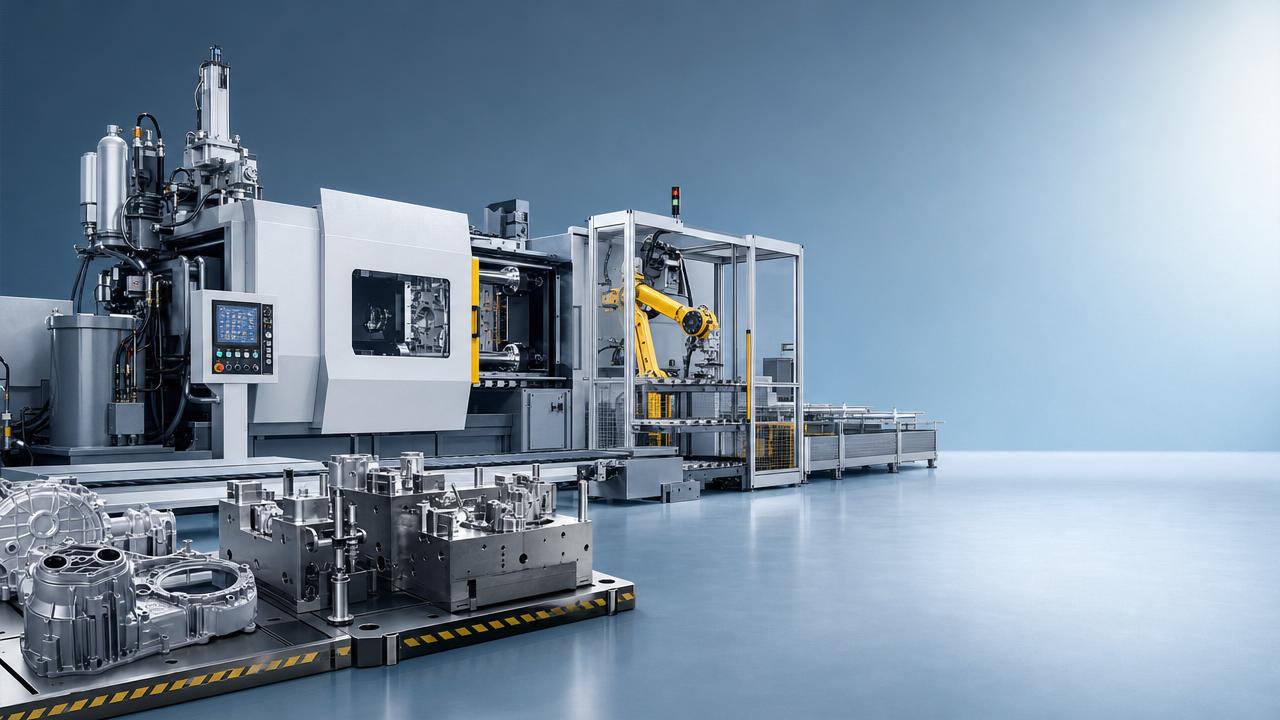
For procurement teams, choosing a die-casting machine supplier goes far beyond comparing unit price. Long-term value depends on tooling compatibility, production stability, after-sales support, energy efficiency, and delivery reliability. This comparison helps buyers evaluate suppliers through a total-cost and risk-control lens, so they can make sourcing decisions that support quality, uptime, and global competitiveness.
In die-casting, a lower purchase price can quickly be offset by longer mold changeover time, unstable shot repeatability, spare-part delays, or higher scrap rates. For buyers serving OEM programs, contract manufacturing, or export-oriented production, the real question is not only which die-casting machine supplier offers the cheapest machine, but which supplier reduces lifetime manufacturing risk over the next 5 to 10 years.
This guide is designed for procurement professionals who need a practical comparison framework. It focuses on measurable sourcing criteria, typical commercial terms, service expectations, and technical checkpoints that matter in aluminum, zinc, and magnesium die-casting operations. It also reflects the broader industrial logic valued by GHTN: precision, tooling fit, process reliability, and scalable manufacturing performance.
Why Unit Price Is an Incomplete Measure of Supplier Value
A die-casting machine supplier affects more than CAPEX. Supplier capability influences cycle stability, mold life, operator workload, utility consumption, and maintenance planning. Even a 3% to 5% increase in reject rate can outweigh an initial price advantage within a few quarters, especially in high-volume parts such as housings, brackets, motor covers, and electrical enclosures.
For procurement, the comparison should include at least 6 dimensions: machine specification fit, tooling integration, automation readiness, service response time, parts availability, and total operating cost. In many cases, the machine itself represents only one layer of the sourcing decision; peripherals, software, die interface, and local technical support can determine whether output targets are achieved in practice.
The Hidden Costs That Commonly Emerge After Installation
The most frequent post-purchase cost drivers are not always visible in the quotation. Buyers often discover extra expense in foundation modification, robot interface adaptation, hydraulic oil management, training gaps, and non-standard wear parts. A machine that saves 8% upfront may create 12 to 18 months of avoidable operating friction if commissioning support is weak.
- Longer die setup time, often increasing by 20 to 40 minutes per mold change
- Higher energy demand during warm-up and peak load periods
- Inconsistent injection control causing porosity or flash issues
- Spare parts lead times stretching from 3 days to 6 weeks
- Limited remote diagnostics, forcing more site visits and downtime
A Practical Procurement Comparison Matrix
Before requesting final commercial offers, buyers should score each die-casting machine supplier against common decision factors. The table below can be used in RFQ reviews, supplier meetings, or technical-commercial alignment sessions.
The key insight is that supplier value becomes clearer when the machine is judged as part of a production system. A strong die-casting machine supplier should be able to explain not only machine features, but also how those features support mold behavior, casting consistency, and downstream finishing efficiency.
Technical Criteria Procurement Teams Should Validate Early
Technical misalignment is one of the costliest sourcing mistakes. Buyers should confirm application fit before price negotiation reaches the final stage. In most projects, 7 to 10 technical checkpoints are enough to eliminate suppliers that look competitive on paper but cannot support stable long-run output.
Clamp Force, Shot Size, and Tooling Envelope
The correct clamp force depends on projected area, alloy type, cavity layout, and process window. For general aluminum die-casting, buyers may see equipment bands from 280T to 1600T, while zinc parts often run on smaller platforms. Procurement should request recommended operating ranges, not just maximum values, because oversizing can increase energy use and underutilize assets.
Shot sleeve diameter, injection pressure curve, and die opening stroke should match the targeted parts family. If a machine frequently runs at the edge of its shot capacity, quality stability usually suffers first. As a rule of thumb, maintaining some process margin supports repeatability during alloy variation, tool wear, and peak demand cycles.
Questions Buyers Should Ask
- What is the recommended die weight range for this machine, not only the maximum value?
- How does the supplier verify injection repeatability over 8-hour and 24-hour runs?
- What die interface modifications are typically required for existing tooling?
- Can the system integrate extractors, sprayers, ladlers, and trim press signals without custom redevelopment?
Automation, Controls, and Digital Integration
A modern die-casting machine supplier should support more than standalone operation. Procurement teams increasingly need connectivity for MES, alarm tracking, recipe storage, and preventive maintenance records. Even basic data points such as cycle time, oil temperature, downtime code, and shot count can improve planning accuracy when captured consistently across 2 to 4 shifts.
Control architecture also matters. A user-friendly HMI, multilingual interface, and role-based parameter access help reduce setup mistakes. If training takes 5 days instead of 12, or if recipe recall cuts changeover adjustment time by 15%, the sourcing benefit is operational, not theoretical.
Key Technical Checks by Procurement Stage
The following table shows how technical review can be organized from early screening to final acceptance. This structure is especially useful when procurement, engineering, and production teams evaluate the same die-casting machine supplier together.
A structured review process reduces late-stage surprises. It also forces each die-casting machine supplier to respond in comparable terms, making commercial negotiations more transparent and technically grounded.
Commercial Terms, Delivery Risk, and Service Capability
A capable supplier can still become a weak sourcing choice if delivery execution is uncertain. Procurement teams should examine payment milestones, lead time realism, installation scope, warranty boundaries, and spare-part commitments. For capital equipment, a 2-week delay in shipment can easily become a 6-week delay in production launch once foundation work, customs clearance, and line balancing are affected.
Lead Time Should Be Broken Into Clear Milestones
Instead of accepting one total lead-time figure, buyers should ask for milestone visibility. A practical schedule usually includes engineering release, machine assembly, factory acceptance test, shipment, installation, and site acceptance. For standard platforms, delivery may range from 8 to 16 weeks; for customized cells with robots and trimming integration, 16 to 28 weeks is more realistic.
- Week 1 to 3: engineering confirmation and interface freeze
- Week 4 to 10: manufacturing and subsystem assembly
- Week 11 to 14: FAT, correction, and packing
- Week 15 onward: shipment, installation, SAT, and training
After-Sales Strength Often Separates Similar Suppliers
When two quotations are technically close, service capability often becomes the decisive factor. Procurement should verify response times such as remote support within 4 hours, spare-parts quotation within 24 hours, and field engineer dispatch within 48 to 72 hours where feasible. These are not universal guarantees, but they are useful commercial benchmarks.
A strong die-casting machine supplier typically offers a recommended spare-parts list for the first 12 months, training for maintenance and operators, and documented preventive service intervals. This reduces reliance on emergency troubleshooting and helps plants stabilize OEE faster after start-up.
Commercial Red Flags to Watch
- Lead times shorter than market norms without detailed production plan
- Warranty terms that exclude major hydraulic or control components
- Unclear FAT standards or no defined acceptance samples
- Consumables and critical spares not itemized in the quotation
- Training scope limited to operation only, with no maintenance coverage
How to Compare Total Cost of Ownership Over the Full Machine Life
The best die-casting machine supplier is rarely the one with the lowest invoice price. Procurement should compare 5-year ownership cost using common categories: purchase price, tooling adaptation, installation, power consumption, planned maintenance, wear parts, downtime exposure, and residual serviceability. Even a simplified TCO model can reveal major differences between suppliers that appear similar in initial quotations.
Core TCO Categories Buyers Should Model
A practical TCO review does not require perfect data. Typical estimates can be built from operating hours, local energy rates, planned mold changes, and expected annual output. For a plant running 6 days per week over 2 shifts, small differences in efficiency and downtime can become highly visible within the first 12 months.
This type of TCO comparison helps procurement move discussions away from headline discounts and toward measurable factory economics. It also supports internal justification when operations or finance teams ask why a higher-priced supplier may still represent lower lifecycle cost.
Risk-Control Tactics for Buyers
To improve sourcing outcomes, buyers can build risk controls directly into the purchase process. These are especially useful when onboarding a new die-casting machine supplier or purchasing for multi-plant deployment.
- Use a technical-commercial scorecard with weighted values such as 40% technical, 30% service, 20% cost, and 10% delivery
- Define FAT and SAT criteria in writing, including cycle verification and safety checks
- Request a first-year critical spares package and recommended PM list
- Link payment milestones to documented project stages rather than shipment only
- Include training hours, manuals, and remote support scope in the contract annex
Common Procurement Mistakes When Selecting a Die-Casting Machine Supplier
Some sourcing errors repeat across industries. They usually happen when procurement is pressured by budget, timing, or incomplete technical input. Recognizing these mistakes early can save months of correction work after delivery.
Mistake 1: Comparing Quotes Without a Unified Scope
One supplier may include extractor interfaces, safety guarding, and commissioning, while another may quote machine-only pricing. Without scope normalization, a cheaper offer may be artificially low. Buyers should issue a clear checklist with no fewer than 15 to 20 line items covering utilities, controls, accessories, and documentation.
Mistake 2: Underestimating Tooling and Process Integration
A machine that looks suitable by tonnage alone may still struggle with die height, tie-bar clearance, or spray robot timing. Procurement should involve tooling and production teams before final award. Integration errors are often more expensive than visible machine options.
Mistake 3: Treating Service as a Secondary Issue
For facilities with tight delivery commitments, after-sales support is not optional. If a plant loses 1 to 2 production days due to slow diagnostics, the commercial impact can exceed the value of the negotiated price reduction. That is why an experienced die-casting machine supplier should be evaluated on support structure as rigorously as on equipment specification.
A Buyer-Oriented Selection Framework for Better Sourcing Decisions
A disciplined sourcing framework helps procurement defend decisions internally and improve supplier accountability externally. In practice, the most reliable approach is a 4-step method: define process needs, standardize quote scope, score supplier capability, and lock acceptance criteria before PO release.
Recommended 4-Step Process
- Map part family, alloy, annual volume, and tooling constraints.
- Issue the same RFQ package to each die-casting machine supplier.
- Evaluate technical fit, TCO, and service readiness using a weighted matrix.
- Finalize FAT, SAT, training, warranty, and spare-parts obligations in writing.
This method is especially effective for OEM buyers, contract manufacturers, and regional distributors that manage multiple machine investments across product lines. It creates more predictable launch timing and reduces the chance of post-award scope disputes.
For procurement teams, the best die-casting machine supplier is the one that combines machine-process fit, dependable delivery, responsive service, and a realistic lifetime cost profile. Price still matters, but it should be interpreted alongside tooling compatibility, automation readiness, spare-parts support, and operating stability. That is how buyers protect uptime, maintain part quality, and strengthen long-term competitiveness in demanding industrial markets.
If you are evaluating suppliers for a new project or replacing legacy equipment, GHTN can help you compare options through a precision-driven industrial lens. Contact us today to discuss your sourcing criteria, request a tailored comparison framework, or explore more solutions for tooling, die-casting, and precision manufacturing procurement.
Related News