
Where Die-Casting Process Defects Usually Start

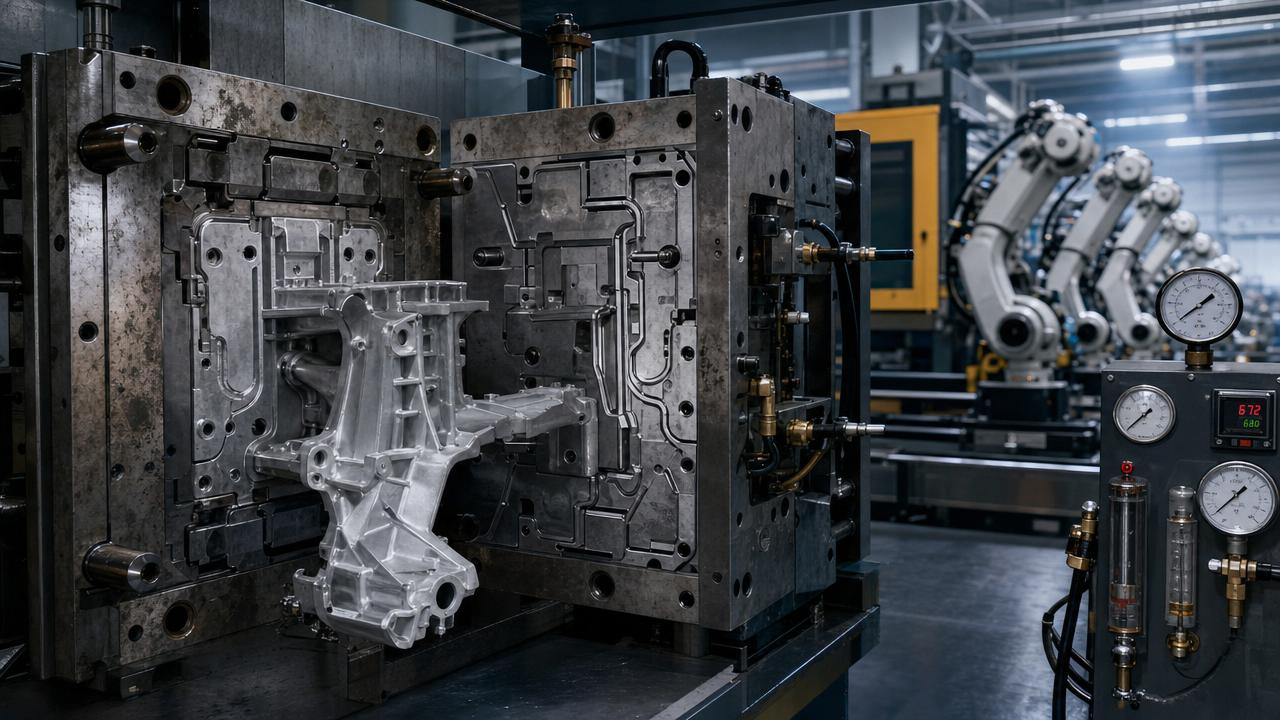
In die-casting, defects rarely appear by accident—they usually begin with small variations in tooling, melt control, venting, or operator decisions. This die-casting process technical analysis highlights where common quality and safety risks first emerge, helping quality control and safety managers identify root causes earlier, reduce scrap, and build more stable, compliant production across precision manufacturing environments.
For teams responsible for dimensional consistency, workplace safety, and process reliability, the earliest warning signs often appear long before parts are rejected. A slight shift in melt temperature, a blocked vent only 0.02–0.05 mm wide, or a lubrication routine missed for 1 shift can trigger porosity, flash, soldering, or even die damage. In high-volume operations, these small deviations scale quickly into scrap, rework, downtime, and compliance risk.
Within the industrial ecosystem served by GHTN, die-casting sits at the intersection of mold engineering, tooling precision, automation, and quality assurance. That makes defect prevention more than a foundry issue. It is a cross-functional control task involving tooling design, machine settings, thermal balance, preventive maintenance, and operator discipline. Understanding where defects usually start is the fastest path to lower cost per part and safer, more predictable production.
Why Defects Start Earlier Than Most Plants Think
A common mistake in die-casting is to treat defects as final inspection events. In practice, most defects begin 3–5 steps earlier: during alloy preparation, shot parameter setup, die temperature stabilization, vent condition, or part ejection. By the time blisters, cold shuts, or distortion are visible, the initiating process variation has usually repeated across dozens or hundreds of cycles.
For quality control personnel, the key issue is traceability. For safety managers, the concern expands to molten metal handling, die sticking, hydraulic instability, and unplanned manual intervention. A stable die-casting process technical analysis therefore starts with process windows, not just defect labels. Typical control windows may include melt temperature bands of ±10°C, die surface temperature ranges within 20–40°C by zone, and fill time repeatability within tightly controlled milliseconds.
The four earliest origin points
- Tooling condition: wear, erosion, poor draft, gate imbalance, vent blockage, or thermal fatigue cracks.
- Melt and alloy control: temperature drift, oxide formation, hydrogen pickup, contamination, or holding time that is too long.
- Machine and parameter control: inconsistent injection speed, pressure spikes, plunger lubrication variation, or shot sleeve mismatch.
- Human and maintenance factors: incorrect setup changes, delayed cleaning, incomplete startup checks, or unsafe manual clearing of stuck parts.
These four origins account for a large share of repeated casting instability in aluminum, zinc, and magnesium applications. Even when a plant uses automated trimming and vision systems, the process can still drift if first-stage velocity, intensification pressure, or die cooling is adjusted without a controlled trial plan.
What quality and safety teams should monitor first
The table below translates common defect origins into early process checks. It is especially useful for shift supervisors, QC engineers, and EHS personnel who need a practical inspection sequence instead of a generic defect list.
The operational lesson is clear: many visible defects begin as hidden process instability. Plants that monitor vent condition, thermal distribution, and setup discipline at least once per shift often identify drift earlier than plants relying only on end-of-line sorting.
Where Technical Defects Usually Begin in the Die-Casting Process
A practical die-casting process technical analysis should follow the part backward—from the rejected feature to the likely initiation stage. This section breaks down the most frequent starting points by process layer, allowing QC and safety teams to align inspections with actual failure mechanisms.
Tooling and die design: the first layer of risk
Vent size, overflow layout, and gate balance
If vents are undersized, poorly located, or partially blocked by residue, trapped gas begins affecting the part before metal reaches the final cavity edge. In many molds, effective vent paths are extremely small, and a contamination layer built over just 1–2 production shifts can reduce evacuation enough to increase porosity rates. Overflow pockets that are too shallow or too few may also leave oxides in the part instead of pulling them out of the flow front.
Thermal fatigue and surface degradation
Die surfaces face cyclic heating and cooling hundreds or thousands of times per day. Over time, this leads to heat checking, erosion near gates, and dimensional drift around shut-off surfaces. Once cracks begin, they can alter metal flow, create flash, and force additional manual handling. For safety managers, flash removal and jam clearing increase exposure to sharp edges, hot surfaces, and unexpected machine movement if lockout discipline is weak.
Melt preparation and metal handling: small chemistry shifts, large quality impact
Alloy control is often treated as stable once the furnace is running, but defect initiation can begin with excessive holding time, poor skimming, or contamination from return scrap. A melt held too long can build oxide films; excessive turbulence during transfer can fold those oxides into the casting. In aluminum die-casting, even modest variation in melt cleanliness may show up later as leakage, poor machining response, or inconsistent pressure tightness.
Safety risks also rise during this stage. Temperature overshoot, splash during ladling, and poor housekeeping around furnaces create burn and slip hazards. A robust process needs both metallurgical control and disciplined handling zones, with clear PPE rules, dry-tool verification, and routine checks on transfer practice.
Injection and intensification: milliseconds that define the part
Many defects begin during the transition from slow shot to fast shot. If the switch point is too early, turbulence increases; if too late, the metal front cools and may create cold shuts or misruns. Likewise, unstable intensification pressure can leave internal voids in thick sections. In practical terms, a variation of only a few milliseconds or a pressure shortfall during the final packing stage may separate acceptable castings from high-scrap production.
Shot sleeve condition matters as well. Wear, lubricant inconsistency, or sleeve-plunger mismatch can increase air entrapment at the very beginning of the fill sequence. Because this origin is hidden, plants often misclassify the result as a die defect when the real cause is in the shot system.
Cooling, ejection, and trimming: defects that start after solidification begins
Not all defects start in the molten stage. Uneven cooling circuits, blocked channels, or ejection before sufficient solidification can create distortion, drag marks, or cracks. In thin-wall parts, even a 2–4 second deviation in dwell or cooling time can shift dimensions enough to affect assembly. If ejector pins are misaligned or dirty, local marks and sticking become more frequent, leading operators to intervene manually.
That manual intervention is a critical safety signal. Whenever stuck-part removal becomes a routine event instead of an exception, the plant should treat it as a process control failure, not simply an operator issue. Repeated reaching into the die area, especially under time pressure, raises the likelihood of serious injury.
A Control Plan for Quality and Safety Managers
To reduce scrap and incident exposure, control plans must connect defect origins with measurable checks. The most effective systems usually combine 4 layers: startup verification, in-process monitoring, preventive maintenance, and escalation rules. This approach works well in multi-cavity molds, automotive subcomponents, electrical housings, and general industrial castings where tolerance and repeatability matter.
Recommended checkpoints by production stage
The following matrix can be adapted into shift audits or layered process checks. It focuses on where defects usually start rather than where they are finally detected.
A strong pattern emerges from this matrix: recurring quality issues and safety incidents often share the same origin. When vents clog, parts may blister and operators may also spend more time clearing residue. When die temperature drifts, both dimensional instability and sticking frequency rise. Integrated review prevents departments from solving only half the problem.
Five implementation steps that improve process stability
- Define parameter limits for melt temperature, die temperature, shot speed, and intensification pressure before launch.
- Separate defect codes by origin, such as venting, fill imbalance, thermal distortion, ejection damage, or trimming damage.
- Use first-off, last-off, and shift-handover checks to catch setup drift within the first 30–60 minutes.
- Link maintenance triggers to cycle counts and observed wear, not only calendar dates.
- Escalate repetitive manual intervention as a joint QC-safety investigation within 24 hours.
These five steps are especially useful for plants supplying OEM and distributor networks that require repeatable documentation, stable lot quality, and reduced field-risk exposure. In precision manufacturing, the cost of weak process control rarely stays inside the foundry; it travels downstream into machining, coating, assembly, and warranty performance.
Common Misjudgments That Delay Root-Cause Action
Even experienced teams can lose time by treating symptoms as causes. A die-casting process technical analysis is most valuable when it removes these misjudgments early, before defect rates climb beyond a manageable threshold.
Mistaking cosmetic variation for a surface-only issue
A burn mark, blister, or flow line is often dismissed as appearance-related. However, surface symptoms may indicate trapped gas, oxide entrapment, local overheating, or poor vent evacuation. If teams only polish the die face or adjust spray quantity without checking vent depth and thermal distribution, the same issue often returns within the next production run.
Changing multiple parameters at once
Under pressure to restore output, operators may adjust fill speed, metal temperature, die spray, and dwell time in one sequence. This makes root-cause isolation almost impossible. A better practice is one-variable adjustment with short verification lots, such as 10–30 shots per trial, documented against defect frequency and process readings.
Treating maintenance and safety as separate from quality
When a tool begins sticking or flashing, the immediate concern is often production loss. But repeated trimming hazards, manual die entry, and heat exposure are direct warning signs that the technical process is degrading. Plants with lower incident rates usually review at least 3 indicators together: defect trend, intervention frequency, and maintenance completion rate.
What Buyers and Industrial Decision-Makers Should Ask Suppliers
For OEMs, distributors, and sourcing teams working through global industrial networks, supplier evaluation should go beyond part price and nominal capacity. If a die-casting supplier cannot explain where defects usually start, process risk remains high even when sample parts look acceptable. This matters for electrical housings, mechanical brackets, pneumatic bodies, and mold-based industrial components where reliability affects downstream system performance.
Key supplier questions
- How are vent cleaning, die thermal checks, and gate wear inspections scheduled—by shift, lot, or shot count?
- What is the response process when manual stuck-part removal occurs more than 1 time per shift?
- Which dimensions or leak-critical features are checked in-process, and at what interval?
- How are parameter changes approved and recorded during startup, maintenance recovery, or alloy changeover?
- What separation exists between acceptable cosmetic variation and indicators of internal porosity risk?
Suppliers that can answer these questions with process logic, not generic claims, are typically better prepared for stable long-run production. For organizations aligned with GHTN’s focus on precision tooling and industrial components, this level of transparency supports better procurement decisions and fewer downstream surprises.
Where die-casting defects usually start is rarely a mystery once the process is viewed as a chain of linked control points. Tooling wear, vent restriction, melt variation, injection instability, cooling imbalance, and repeated manual intervention each leave signals early—often within the first shift, first lot, or first few thousand shots. For quality control and safety managers, the goal is to capture those signals before they become visible scrap or injury exposure.
GHTN supports industrial decision-makers by connecting precision manufacturing insight with practical process understanding across mold, hardware, and tooling sectors. If you are reviewing die-casting stability, supplier capability, or risk reduction pathways for industrial components, now is the right time to evaluate the full process—not just the finished part. Contact us to discuss your application, request a tailored assessment framework, or explore more solutions for stable, compliant production.
Related News