How to compare a die-casting machine supplier

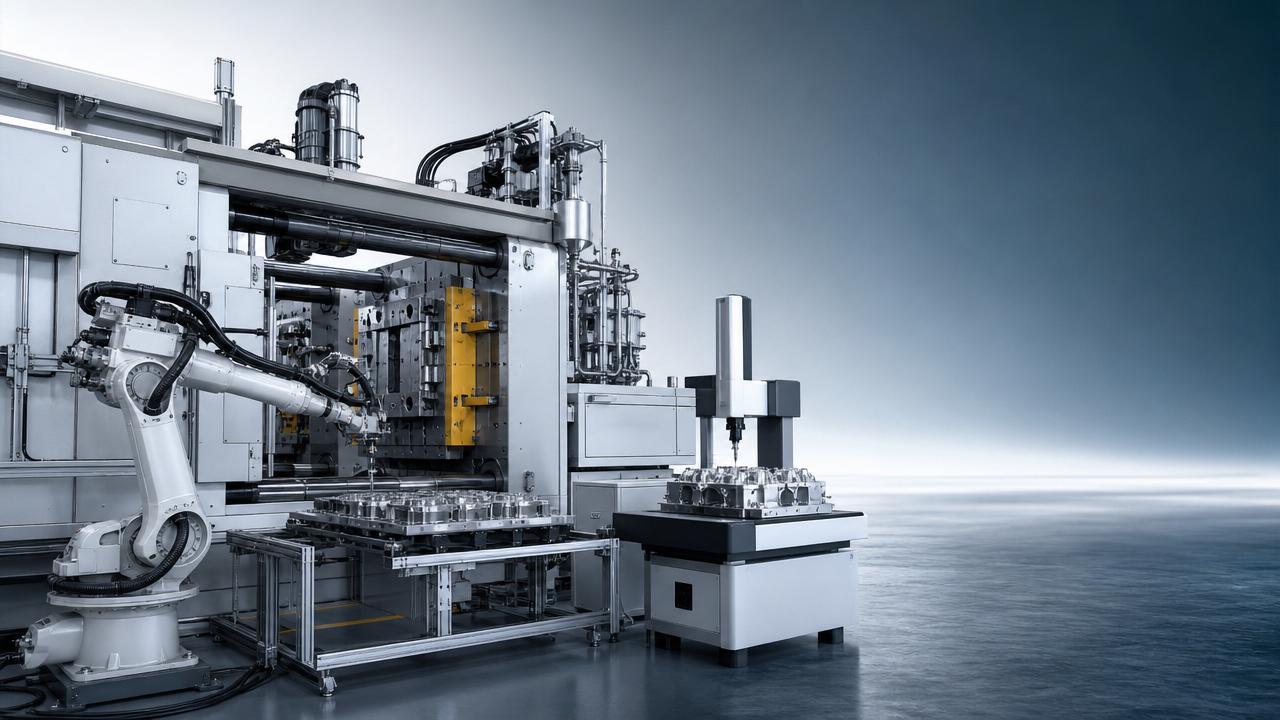
Choosing the right die-casting machine supplier can directly affect part quality, uptime, lead time, and total ownership cost. In precision manufacturing, supplier comparison should go beyond price. A structured review helps reveal whether a supplier can meet process stability, tooling compatibility, automation needs, and long-term service expectations across global operations.
Why a checklist matters when comparing a die-casting machine supplier
A checklist reduces bias and makes technical evaluation consistent. It also helps compare different machine platforms, service models, and commercial terms using the same decision logic.
For industrial buyers, this matters because die-casting projects involve tooling, alloys, cycle time, energy use, and downstream finishing. A weak die-casting machine supplier may look competitive at quotation stage but create hidden losses later.
GHTN follows this practical approach across hardware, electrical, and mold sectors: compare process capability first, then verify manufacturing discipline, and only then judge commercial value.
Core checklist to compare a die-casting machine supplier
- Verify machine range and tonnage coverage against current parts, future programs, cavity expansion, alloy type, and expected shot size stability.
- Check process capability data, including repeatability, injection control, clamping force consistency, scrap rate trends, and real production cycle benchmarks.
- Review tooling compatibility with existing dies, platen layout, tie-bar spacing, ejector setup, thermal balance, and quick die change readiness.
- Assess automation integration for ladlers, sprayers, extractors, trimming cells, conveyors, and data exchange with MES or factory monitoring systems.
- Confirm build quality through frame rigidity, hydraulic system design, servo efficiency, electrical cabinet layout, and major component brand traceability.
- Inspect safety and compliance support, including CE, local electrical standards, guarding logic, interlocks, emergency systems, and documentation completeness.
- Measure service responsiveness by spare parts availability, remote diagnostics, field engineer coverage, training depth, and escalation response commitments.
- Compare lifecycle cost, not only purchase price, by modeling energy consumption, maintenance intervals, consumables, uptime, and resale value.
- Request reference cases in similar industries, alloys, part sizes, and output targets to validate that claimed performance is repeatable.
- Audit commercial reliability through delivery records, contract clarity, warranty scope, installation planning, and change-order handling discipline.
How to score each checkpoint
Use a weighted scorecard. Give higher weight to process control, service support, and tooling fit than to list price. A low-cost machine can become expensive if scrap, downtime, or die wear rises.
A useful method is scoring each die-casting machine supplier from 1 to 5 on technical fit, manufacturing quality, after-sales support, and total cost. Add evidence notes beside every score.
Key technical areas that separate strong suppliers from risky ones
Injection and shot control
Stable filling behavior is central to porosity control and dimensional consistency. Compare plunger speed control, pressure curve repeatability, accumulator performance, and parameter recording functions.
A capable die-casting machine supplier should explain how the machine handles thin-wall sections, complex gates, and rapid solidification windows without vague claims.
Clamping and platen performance
Poor clamping uniformity affects flash, die life, and part stability. Ask for platen flatness limits, tie-bar load balance data, and guidance for large or asymmetric dies.
Controls, diagnostics, and digital support
Modern comparison should include HMI usability, alarm history, remote access, recipe management, and exportable production data. These functions support process tuning and preventive maintenance.
Comparison points for different application scenarios
High-volume automotive components
In automotive programs, consistency matters more than headline speed. Focus on cycle repeatability, OEE history, automated cell integration, and support for strict traceability requirements.
The right die-casting machine supplier should show experience with aluminum structural parts, leak-sensitive housings, or transmission-related components, depending on the target application.
General hardware and industrial parts
For mixed-product environments, flexibility is critical. Compare die change time, recipe switching, operator training burden, and the machine’s ability to handle frequent production variation.
This is especially relevant in the broader hardware ecosystem, where product batches may be shorter and tooling turnover faster than in dedicated automotive lines.
Export-oriented or multi-site operations
Cross-border operations require stronger documentation and service infrastructure. Evaluate spare parts lead time, multilingual manuals, local voltage adaptation, and remote troubleshooting capability.
A die-casting machine supplier with global references and structured commissioning support usually reduces startup risk in new markets.
Commonly overlooked factors and sourcing risks
Ignoring die and machine matching details
Some comparisons overlook tie-bar clearance, die height limits, nozzle alignment, or ejector matching. Small mismatches can delay installation and force costly die modification.
Assuming quoted cycle time is production reality
Quoted speed often reflects ideal conditions. Ask whether cycle data includes spray time, extraction, trimming handoff, stabilization loss, and alloy-specific operating windows.
Underestimating service depth
A supplier may offer basic installation but limited troubleshooting support. Compare preventive maintenance plans, spare kits, software backup procedures, and engineer arrival commitments.
Focusing too narrowly on machine price
The lowest quotation can hide higher energy use, weaker components, shorter seal life, or lower resale value. Total cost should be modeled over several years, not one purchase event.
Practical execution steps for supplier comparison
- Define part family, alloy, annual volume, quality target, and automation scope before requesting any quotation from a die-casting machine supplier.
- Prepare one standardized RFQ package so each supplier answers the same technical, commercial, and service questions.
- Request test data, machine layout drawings, utility consumption, and a full list of included and excluded equipment.
- Visit reference sites or arrange live running demonstrations using similar part complexity and alloy conditions.
- Interview service and controls teams, not only sales contacts, to judge practical support quality after installation.
- Use a cross-functional review sheet covering tooling, process, maintenance, electrical, and logistics impacts.
A simple evaluation table
Conclusion and next action
To compare a die-casting machine supplier effectively, start with measurable process requirements, then test every claim against evidence. Technical fit, service strength, and lifecycle economics should guide the final decision.
A disciplined checklist improves sourcing quality and lowers execution risk. In global industrial markets, the best supplier is rarely the cheapest one. It is the partner that delivers stable production, clear support, and repeatable value over time.
The next step is simple: build a scorecard, issue a standardized RFQ, and compare each die-casting machine supplier using the same technical and commercial evidence base.
Related News