
Mold Design for Die-Casting: Draft Angles, Cooling, and Defect Control

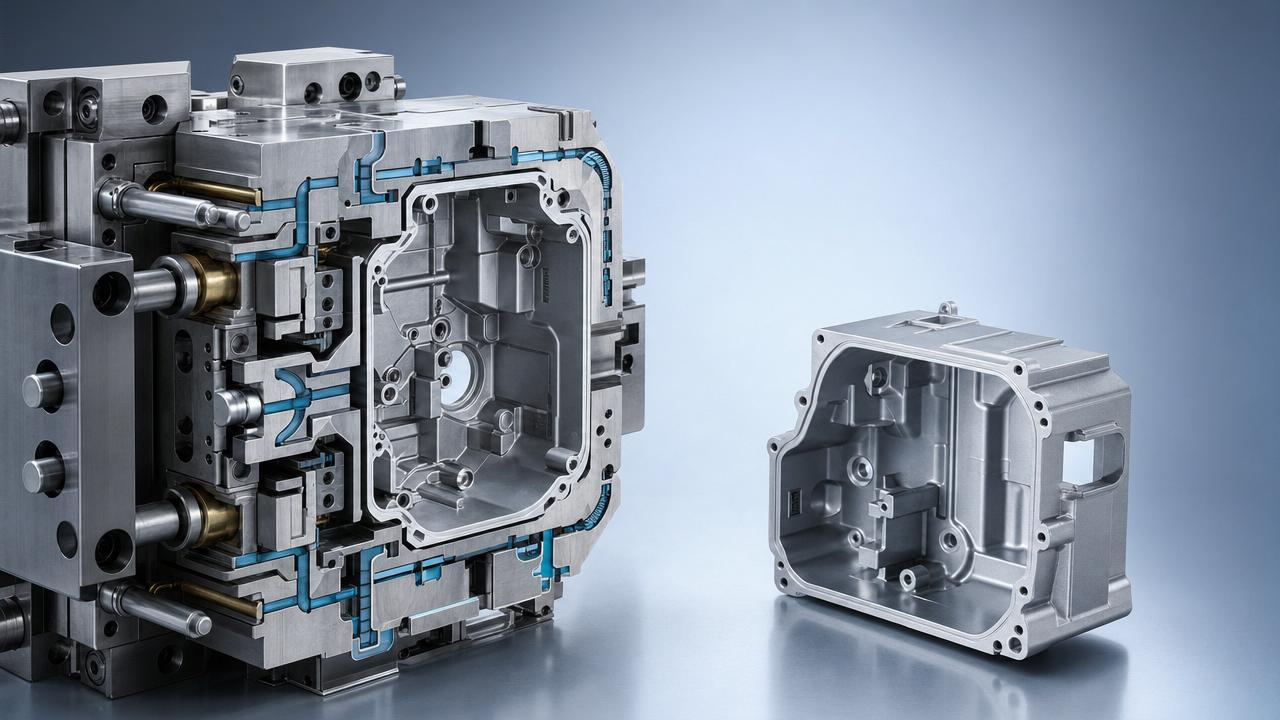
Mold Design for Die-Casting: Draft Angles, Cooling, and Defect Control
Effective mold design for die-casting directly shapes project cost, cycle time, part quality, and production stability.
As industrial programs demand lighter, stronger, and more consistent components, tooling decisions now carry greater strategic value.
Draft angles, cooling layouts, venting, gating, and defect prevention no longer sit only inside the toolroom.
They influence launch timing, inspection cost, machining allowance, energy use, and long-term production resilience.
For GHTN, mold design for die-casting represents a granular industrial capability behind reliable hardware, electrical housings, automotive parts, and precision assemblies.
Why Die-Casting Tooling Decisions Are Becoming More Critical
The die-casting sector is moving from volume-driven production toward stability-driven production.
Component programs increasingly require thin walls, tighter tolerances, cleaner surfaces, and predictable mechanical performance.
This shift changes the role of mold design for die-casting.
A mold is no longer only a cavity that forms metal.
It is a thermal system, flow-control system, defect-control system, and repeatability platform.
When draft, cooling, and ejection are weak, defects appear as operational problems.
Common symptoms include soldering, porosity, shrinkage, distortion, flash, cracking, and unstable dimensions.
These issues often originate before the first shot.
Early design choices determine whether later process adjustments can succeed.
Trend Signals Reshaping Mold Design for Die-Casting
Several signals show why mold design for die-casting is gaining more attention across industrial supply chains.
- More structural parts use aluminum or magnesium alloys to reduce weight.
- Electrical housings require better sealing, shielding, and heat dissipation.
- Automated inspection exposes small dimensional drift earlier than before.
- Energy pressure pushes plants to shorten cycle time without increasing defects.
- Global sourcing makes tooling documentation and design intent more important.
The result is clear.
Mold design for die-casting must support repeatable production, not only initial sampling success.
This creates stronger demand for simulation, thermal balancing, venting strategy, and early manufacturability review.
Draft Angles Are Becoming a Cost and Quality Lever
Draft angle decisions look simple, yet they strongly affect tool life, surface quality, and ejection stability.
In mold design for die-casting, insufficient draft increases friction between the casting and steel surface.
That friction can cause drag marks, deformation, sticking, and higher ejection force.
Excessive draft can also create problems.
It may reduce functional wall thickness, disturb assembly fit, or increase post-machining needs.
The practical trend is more selective draft planning.
Different surfaces need different draft values based on depth, alloy behavior, texture, and ejection direction.
Better draft planning reduces the hidden cost of secondary correction.
It also improves the stability of high-volume die-casting programs.
Cooling Layouts Are Shifting Toward Thermal Governance
Cooling is one of the strongest drivers of cycle time and dimensional repeatability.
In mold design for die-casting, cooling channels must remove heat without creating harmful thermal imbalance.
Hot spots can delay solidification and increase shrinkage porosity.
Overcooled regions can cause premature freezing, cold shuts, or poor filling.
The current direction is not simply adding more cooling lines.
The direction is controlled heat extraction around ribs, bosses, thick sections, gates, and slides.
Thermal mapping now supports smarter mold design for die-casting.
Simulation, temperature sensors, oil cooling, conformal inserts, and local intensification help stabilize metal flow and solidification.
Cooling Decisions That Influence Production Stability
- Place channels near thick masses while protecting mold strength.
- Avoid sharp temperature gaps between adjacent functional areas.
- Use baffles, bubblers, or inserts where straight channels cannot reach.
- Connect cooling design with gate location and filling direction.
- Monitor mold temperature during trial and production runs.
A stable thermal system supports shorter cycles without excessive scrap.
That is why cooling has become a strategic part of mold design for die-casting.
Defect Control Starts Before Process Troubleshooting
Many die-casting defects are blamed on machine settings.
However, the mold often limits what process optimization can achieve.
A strong mold design for die-casting considers defect pathways during layout development.
Porosity, for example, is influenced by flow speed, air entrapment, venting, overflow position, and solidification sequence.
Flash can reflect clamp force limits, parting-line condition, local pressure spikes, or weak steel support.
Soldering often relates to thermal load, alloy chemistry, surface treatment, and poor release behavior.
The practical lesson is direct.
Defect control should be designed into the mold, not inspected into the casting.
This defect-focused approach improves sampling efficiency and reduces late engineering changes.
The Drivers Behind the New Tooling Discipline
The evolution of mold design for die-casting is driven by several linked forces.
- Lightweighting: Thin-wall parts require cleaner filling and more precise thermal control.
- Electrification: Battery and electrical systems need durable housings with stable dimensions.
- Automation: Robotic handling exposes ejection inconsistency and part deformation quickly.
- Compliance: Traceable tooling decisions support quality audits and international sourcing.
- Sustainability: Lower scrap and shorter cycles reduce material waste and energy consumption.
These forces make die-casting mold engineering a competitive capability.
They also explain why early design reviews now carry greater operational weight.
Impact Across Design, Tooling, Production, and Quality
Improved mold design for die-casting affects several business and technical links at once.
Part design teams gain more realistic guidance on ribs, bosses, fillets, wall transitions, and machining stock.
Tooling teams can reduce rework by clarifying draft, venting, cooling, and insert strategy earlier.
Production teams benefit from wider process windows and fewer emergency adjustments.
Quality teams gain more stable dimensions, better surface consistency, and clearer root-cause evidence.
The strongest impact appears when these links share the same tooling assumptions.
That alignment turns mold design for die-casting into a cross-functional risk-control method.
Key Focus Areas for Better Die-Casting Outcomes
Several points deserve close attention before tool steel is cut.
- Confirm minimum draft by surface depth, texture, alloy, and ejection direction.
- Review wall thickness transitions to prevent shrinkage and turbulence.
- Validate gate location against filling path, pressure demand, and trimming needs.
- Place vents and overflows where trapped air naturally moves.
- Balance cooling channels around hot spots and sensitive tolerance zones.
- Design ejector pins to avoid bending, marks, and uneven release.
- Plan inserts for wear areas, complex cooling, and maintenance accessibility.
- Use simulation results as decision evidence, not decorative reporting.
These points help connect technical detail with measurable production performance.
They also support stronger communication with global tooling partners.
Practical Judgment Framework for Future Tooling Programs
A structured review can improve decisions before cost and schedule become fixed.
This framework supports fact-based adjustment instead of reactive troubleshooting.
It also makes mold design for die-casting easier to evaluate across regions and suppliers.
What GHTN Observes in the Next Phase
The next phase of die-casting tooling will place more value on connected engineering evidence.
Tooling decisions will increasingly combine simulation, sensor feedback, defect records, and maintenance history.
Mold design for die-casting will become more data-informed, but still dependent on practical steel-safe judgment.
The strongest suppliers will not only build molds.
They will explain why each draft, cooling channel, vent, and insert supports production stability.
This matches GHTN’s view of precision manufacturing.
The small decisions inside industrial components often determine the strength of larger systems.
Action Steps for More Reliable Die-Casting Programs
Start by treating mold design for die-casting as an early risk-management activity.
Review draft, cooling, gate layout, venting, ejection, and defect pathways before tooling release.
Document why each major decision was made.
Then compare trial results against those assumptions and refine the next program.
For industrial teams building global supply capability, this discipline supports better cost control and stronger part reliability.
GHTN continues tracking tooling practices, component trends, and precision manufacturing insights that link better design with future-ready production.
Linking Precision, Tooling the Future.
Related News