What makes a die-casting machine supplier reliable?

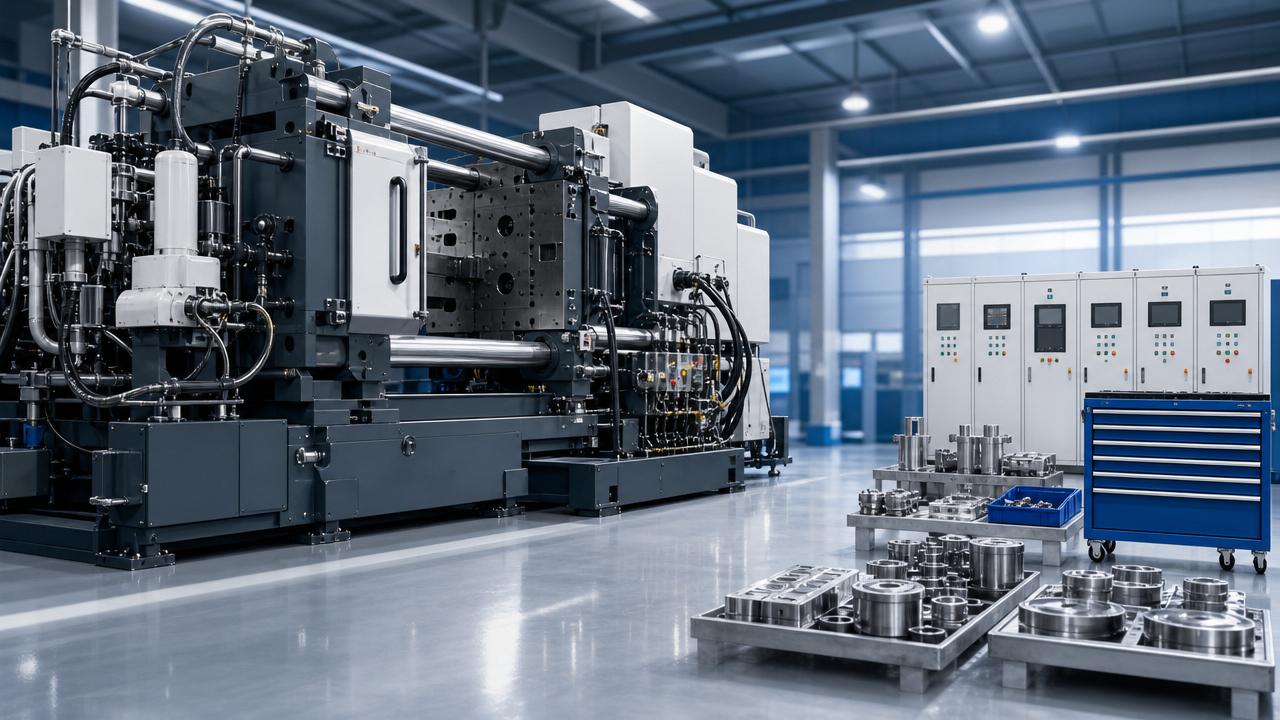
What makes a die-casting machine supplier reliable?
Choosing a reliable die-casting machine supplier is a strategic decision involving cost, uptime, part quality, and long-term production stability.
Beyond machine specifications and prices, reliability depends on engineering depth, quality control, service response, spare parts, and international compliance.
In precision manufacturing, faster cycles and tighter tolerances make supplier evaluation more important than a simple equipment purchase.
A dependable die-casting machine supplier helps reduce sourcing risks and protects value across the full equipment lifecycle.
What does reliability mean for a die-casting machine supplier?
Reliability means the supplier can consistently support stable casting output, predictable maintenance, and repeatable equipment performance.
A reliable die-casting machine supplier is not only a seller of machinery. It is a technical partner for production continuity.
This reliability usually appears in three areas: machine design, operational support, and long-term accountability.
- Machine design should support stable injection, clamping precision, and thermal control.
- Operational support should include commissioning, training, troubleshooting, and process optimization.
- Long-term accountability should cover parts supply, software updates, and service documentation.
In die casting, small equipment deviations can create porosity, flash, dimensional drift, or surface defects.
Therefore, the right die-casting machine supplier must understand how mechanical motion, hydraulic control, molds, and alloy behavior interact.
Price matters, but reliability is measured by stable output during years of demanding production.
How can technical capability be evaluated before purchase?
Technical capability is one of the strongest signs of a dependable die-casting machine supplier.
Evaluation should begin with the supplier’s ability to explain machine structure, process logic, and application limits clearly.
A capable die-casting machine supplier should discuss clamping force, shot control, platen rigidity, cycle time, and energy efficiency with practical evidence.
Technical discussions should also include mold compatibility, automation interfaces, ladling systems, extraction devices, and spraying units.
Which engineering questions reveal real competence?
The following questions can expose whether a die-casting machine supplier has genuine engineering knowledge.
- How is injection repeatability verified under continuous operation?
- What data supports platen parallelism and tie-bar performance?
- How does the control system manage pressure peaks?
- Which alloys and casting sizes match each machine series?
- How are servo, hydraulic, and safety systems tested?
Vague answers often indicate limited application experience. Detailed answers show familiarity with actual casting environments.
A qualified die-casting machine supplier should provide references, case studies, testing reports, or performance data when appropriate.
Technical capability also includes willingness to adapt solutions, rather than forcing one standard model into every application.
Why do quality control and manufacturing standards matter?
A die-casting machine supplier becomes more reliable when its own production system is controlled and traceable.
Machine quality depends on machining accuracy, assembly discipline, hydraulic cleanliness, electrical integration, and final inspection.
Reliable suppliers usually operate documented quality systems. They can show inspection records for key components and assembly stages.
Important checks include platen machining, guide rail alignment, injection cylinder performance, pump stability, and control cabinet wiring.
For international projects, compliance with CE, ISO, electrical safety, and local machine guarding requirements may be necessary.
A trustworthy die-casting machine supplier should explain which standards apply and which documents can be supplied.
What documents should be requested?
- Machine inspection reports and factory acceptance test records.
- Electrical diagrams, hydraulic diagrams, and operating manuals.
- Safety certification, conformity documents, and maintenance schedules.
- Spare parts lists with part codes and lead times.
- Warranty terms, service scope, and installation requirements.
Documentation is not a formality. It supports maintenance, audits, operator training, and future equipment upgrades.
A die-casting machine supplier that cannot provide clear documentation may create hidden risks after shipment.
How important is after-sales service in supplier selection?
After-sales service is often the difference between a good purchase and a costly production bottleneck.
A dependable die-casting machine supplier should offer structured support before, during, and after installation.
Service capability includes site preparation guidance, installation supervision, commissioning, operator training, and remote diagnostics.
Fast response is critical because die-casting lines involve molds, furnaces, robots, cooling systems, and finishing operations.
If one machine stops, downstream schedules and customer deliveries may also be affected.
What should a service plan include?
A realistic service plan should include response time, communication channels, spare parts access, and escalation procedures.
The die-casting machine supplier should define whether support is local, regional, remote, or factory-based.
Training should cover daily checks, lubrication, hydraulic maintenance, alarm handling, mold change procedures, and safety routines.
Remote support is useful, but some faults require experienced field engineers and available replacement parts.
A reliable die-casting machine supplier does not disappear after delivery. It remains accountable during the machine’s working life.
How should cost, lifecycle value, and delivery risk be compared?
The lowest initial price does not always mean the best value.
A reliable die-casting machine supplier should help compare total cost across installation, operation, maintenance, energy use, and downtime.
Lifecycle value depends on machine availability, cycle stability, scrap reduction, and spare parts predictability.
Delivery risk should also be reviewed. Delays can affect mold trials, facility planning, and production launch schedules.
A professional die-casting machine supplier provides realistic lead times instead of promising impossible delivery dates.
Which cost factors are often overlooked?
- Foundation preparation, lifting equipment, utilities, and installation labor.
- Energy consumption during continuous high-pressure casting cycles.
- Training time for operators, maintenance staff, and process technicians.
- Consumables, filters, seals, lubricants, and hydraulic components.
- Downtime caused by slow troubleshooting or unavailable spare parts.
Cost comparison should include these factors before signing a contract.
A transparent die-casting machine supplier can help calculate ownership cost instead of focusing only on quotation price.
What are the warning signs of an unreliable supplier?
Some risks appear early if the supplier evaluation is detailed enough.
An unreliable die-casting machine supplier may avoid technical questions, overpromise performance, or refuse to share verifiable references.
Another warning sign is a quotation that lacks configuration details, controller information, component brands, or testing standards.
Poor communication during the quotation stage often predicts poor communication after delivery.
Unclear warranty terms, vague delivery commitments, and missing documentation should be treated seriously.
Common mistakes to avoid
- Selecting only by machine tonnage and ignoring process requirements.
- Comparing prices without checking included accessories and service scope.
- Ignoring spare parts availability for hydraulic and electrical systems.
- Accepting verbal promises without written technical agreements.
- Skipping factory acceptance testing before shipment.
A reliable die-casting machine supplier welcomes structured evaluation because it demonstrates confidence in equipment and support capability.
FAQ checklist for evaluating a die-casting machine supplier
This checklist helps separate a capable die-casting machine supplier from a vendor focused only on closing a sale.
Conclusion: how to make a safer sourcing decision
A reliable die-casting machine supplier combines engineering capability, disciplined manufacturing, transparent documentation, and responsive lifecycle service.
The strongest suppliers can explain their machines in technical detail and connect equipment choices to real casting outcomes.
Before selecting a die-casting machine supplier, compare more than price. Review performance data, service capacity, compliance, and spare parts readiness.
For global hardware, tooling, and precision manufacturing ecosystems, supplier reliability directly affects competitiveness and production resilience.
GHTN supports smarter industrial sourcing by linking technical insight with practical trade evaluation.
The next step is simple: build a written evaluation matrix before negotiation begins.
Use it to verify each die-casting machine supplier against engineering proof, quality systems, service commitments, and lifecycle value.
Related News