
What manufacturing insights reveal about die casting scrap

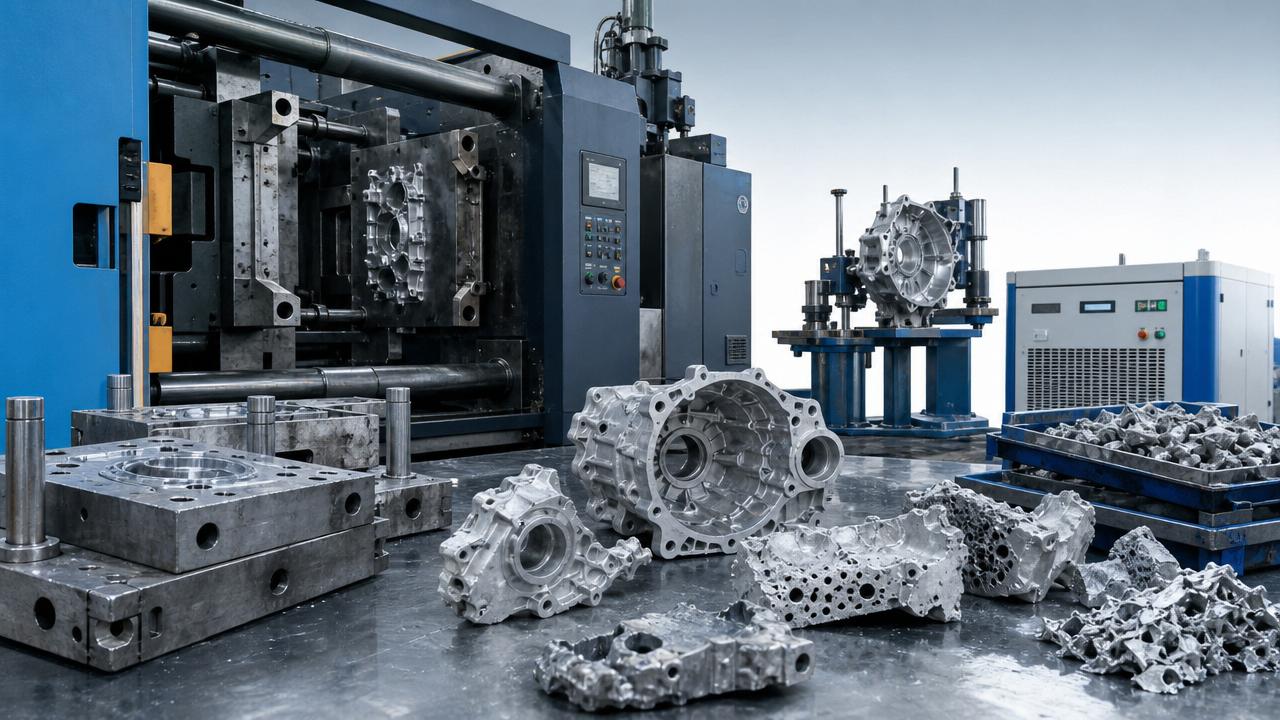
For quality control and safety teams, manufacturing insights into die casting scrap go far beyond counting defects. They reveal how material behavior, tooling wear, process variation, and compliance risks interact on the shop floor. This article explores the root causes behind scrap generation and shows how better analysis can improve consistency, reduce safety exposure, and support smarter production decisions.
Why die casting scrap matters more than its percentage suggests
For quality and safety professionals, die casting scrap is not just a yield problem. It is often an early warning signal that process stability, tooling condition, or operating discipline is starting to drift.
A scrap spike may appear as a simple production loss. In practice, it can point to unstable melt quality, trapped gas, die temperature imbalance, lubricant misuse, trimming hazards, or maintenance gaps.
That is why useful manufacturing insights do not stop at categorizing defects. They connect scrap patterns to process causes, operator exposure, equipment condition, and the potential for larger quality failures downstream.
In many plants, scrap reporting stays too superficial. Teams count porosity, flash, cold shuts, or misruns, but they do not always link those outcomes to shot parameters, alloy condition, die wear, or shift-specific behavior.
When the analysis remains shallow, corrective action becomes reactive. Parts are sorted, rework increases, and production resumes without removing the underlying cause. The same defects then return in the next batch or shift.
For target readers such as QC personnel and safety managers, the central question is straightforward: what does the scrap reveal about hidden process risk, and how quickly can that risk be controlled?
What manufacturing insights actually reveal about scrap generation
Strong manufacturing insights turn scrap into operational intelligence. Instead of asking only how many parts were rejected, teams ask when the defect appeared, where it formed, and what changed before the rejection rate moved.
This approach helps distinguish random variation from systemic failure. If porosity rises only after a tool change, the likely cause differs from porosity that gradually worsens throughout a long production run.
It also highlights whether the scrap is driven mainly by material, machine, tooling, method, measurement, or manpower. That structure gives cross-functional teams a practical way to organize root-cause investigation.
For example, a rise in flash may suggest die wear or clamping issues. A rise in cold shuts may indicate metal temperature loss, poor flow design, or inadequate venting. Burn marks may point to gas entrapment.
These are not isolated technical details. They affect dimensional compliance, leak-tightness, fatigue performance, surface finish, machining behavior, and in some sectors, product safety and regulatory acceptability.
The most valuable insight is that scrap rarely comes from one variable alone. It usually results from interactions between alloy quality, thermal control, die condition, injection behavior, lubrication, and human execution.
Which scrap patterns quality teams should treat as high-priority signals
Not all scrap deserves the same urgency. Quality teams should prioritize defect patterns that indicate a worsening process trend, high customer risk, or a defect mode that may escape normal inspection controls.
Internal porosity is a prime example. It may not always be visible during basic visual checks, yet it can compromise pressure retention, strength, machining integrity, or coating quality later in the process.
Cold shuts and misruns also deserve attention because they often reflect unstable fill conditions. Even when parts pass appearance checks, flow-related weakness can reduce functional reliability in service.
Excessive flash is another important signal. Besides dimensional impact and trimming burden, it may indicate die mismatch, wear, or clamping inconsistency, each of which can escalate if left unresolved.
Soldering and sticking should not be dismissed as routine nuisance issues. They may suggest poor thermal balance, unsuitable release agent application, or alloy-die interaction that accelerates surface damage and downtime.
Cracks, deformation, and ejection damage are especially important where handling safety and operator intervention increase. Scrap caused by manual force or unstable extraction can reveal both quality failure and ergonomic risk.
How material behavior contributes to die casting scrap
Material condition is one of the most underestimated drivers of scrap. Even with a stable machine setup, inconsistent alloy chemistry, contamination, or poor melt handling can shift defect rates quickly.
Oxide formation, dissolved gas, and inclusions can all reduce casting integrity. If melt cleanliness is not controlled, defects may appear as porosity, weak sections, poor surface quality, or unexpected machining failures.
Recycled material usage requires particular discipline. Scrap return can support cost control, but excessive or poorly managed return ratios may increase contamination risk and widen variability in metal behavior.
Temperature control also matters at every stage. Overheated metal may increase die attack and gas issues, while underheated metal can worsen flow behavior and raise the chance of misruns or cold shuts.
For QC teams, this means scrap analysis should include furnace records, holding times, transfer practices, and degassing history. For safety teams, it also means reviewing whether abnormal melt handling increases burn or splash risk.
When plants treat material quality as a background condition rather than a monitored variable, they often miss one of the clearest manufacturing insights available from recurring scrap patterns.
What tooling wear and die condition are telling you
Tooling condition often explains why a previously capable process begins to drift. A die may still produce acceptable parts overall while already showing subtle wear patterns that forecast rising scrap.
Parting line erosion, vent blockage, thermal fatigue cracking, and localized surface damage can each affect metal flow, gas evacuation, and dimensional consistency. Scrap is frequently the first visible symptom.
When flash increases slowly over time, teams should examine die alignment, locking surfaces, and clamp force interaction rather than focusing only on operator adjustments. Otherwise, temporary fixes may hide progressive wear.
Similarly, repeated porosity in the same zone may signal vent degradation or hot spots rather than a general process issue. Mapping defects by cavity and location is often more revealing than aggregate scrap figures.
Predictive maintenance becomes much more effective when tied to scrap intelligence. Instead of waiting for obvious tool failure, teams can use defect trends to time inspection, refurbishment, and component replacement more precisely.
This improves not only quality stability but also safety. Dies operating in poor condition can create more manual intervention, unstable part release, and unexpected production disturbances that raise exposure on the floor.
Why process variation is often the real story behind scrap
Many plants know their nominal die casting settings but do not always control actual process variation tightly enough. Scrap emerges when the process window exists on paper but shifts in real operation.
Shot speed, intensification pressure, fill time, die temperature, spray volume, cycle time, and cooling behavior must work together. Variation in one factor can amplify the effect of another.
For example, excessive spray may cool the die unevenly and contribute to cold shuts. Inadequate lubrication may increase sticking. Long cycle interruptions may shift thermal balance and create a wave of start-up scrap.
That is why manufacturing insights should include time-based analysis. Teams should review scrap by machine cycle, startup phase, maintenance interval, shift, operator group, and ambient conditions where relevant.
Statistical process control can help, but only when the selected variables reflect actual defect mechanisms. Monitoring dimensions alone may not reveal the process changes that are driving internal casting defects.
For quality teams, the lesson is clear: if scrap is recurring, investigate variation patterns before assuming isolated human error. For safety teams, recurring variation also signals unstable operating conditions that deserve review.
How scrap analysis supports both quality assurance and safety management
Quality and safety are often managed in parallel, but die casting scrap shows why they should be linked more closely. The same conditions that create defects can also increase operator exposure or unsafe interventions.
Sticking parts may lead operators to use extra force at removal stations. Flash problems can create sharper edges during handling and trimming. Temperature imbalance may increase splash events or contact hazards near the cell.
Frequent manual sorting, rework, and emergency adjustments also add risk. The more unstable the process becomes, the more often personnel enter non-routine tasks where safety incidents are more likely.
From a compliance perspective, scrap can indicate whether documented process controls are actually effective in daily operation. If defects repeatedly exceed action limits, management should review both quality discipline and safety adherence.
Joint review meetings between QC, maintenance, production, and EHS teams can be especially effective. They move scrap discussion beyond percentages and into practical risk control, accountability, and preventive planning.
In this sense, manufacturing insights provide value far beyond production efficiency. They help organizations reduce hidden operational risk while strengthening process capability and audit readiness.
What data should be captured to make scrap analysis useful
Useful scrap reduction starts with better data, but not necessarily more data. Teams need records that connect defects to decisions, conditions, and events on the floor rather than just monthly totals.
At a minimum, scrap logs should include defect type, machine, die number, cavity if applicable, shift, operator team, alloy batch, process settings, and whether the issue appeared suddenly or gradually.
It is also helpful to tag events such as tool maintenance, insert replacement, parameter adjustment, start-up after downtime, furnace refill, or release agent changes. These often explain sudden pattern shifts.
Photo documentation and defect location mapping add further value. Visual evidence helps distinguish between similar defect categories and improves communication between QC personnel, die technicians, and process engineers.
Where possible, teams should separate in-process scrap, final inspection rejects, customer returns, and rework-generated losses. Combining them can hide the true source of the problem and delay corrective action.
The goal is not administrative burden. The goal is traceability that enables fast, evidence-based decisions. Without that, even experienced teams may rely too heavily on assumptions or anecdotal explanations.
Practical actions for reducing die casting scrap without losing control
Effective action begins with ranking defect modes by business risk, customer impact, and recurrence. Trying to attack every defect at once usually spreads resources too thin and weakens accountability.
Next, verify that the defect definition is consistent. Different inspectors may classify the same issue differently, which can distort trend analysis and create confusion about whether countermeasures are working.
Then connect each high-priority defect to a short list of probable drivers. For porosity, that may include melt quality, venting, fill profile, and thermal balance. For flash, it may include die wear and clamp behavior.
Use controlled trials rather than broad parameter changes. If several settings are changed at once, teams may reduce scrap temporarily without learning which factor actually solved the problem.
Standard work is equally important. If one shift performs spray application, start-up warmup, or trimming checks differently from another, variation can return even after technical corrections are introduced.
Finally, close the loop by measuring whether the action reduced not only scrap volume but also process instability, rework time, manual intervention, and safety exposure. That is where the real operational value lies.
What broader business value manufacturing insights create
For industrial organizations, die casting scrap is often discussed as a direct cost issue. Yet the broader value of manufacturing insights is that they improve decision quality across operations.
Better insight supports more accurate maintenance timing, more stable scheduling, fewer customer complaints, lower inspection burden, and stronger evidence during supplier or customer quality reviews.
It also helps justify investment. When teams can show that specific scrap modes are linked to die refurbishment cycles, melt treatment upgrades, monitoring systems, or training gaps, capital decisions become clearer.
For companies serving demanding OEMs, this matters even more. Customers increasingly expect data-backed process control, traceability, and continuous improvement rather than simple promises of acceptable quality levels.
From the perspective of GHTN’s industrial audience, this is where technical understanding meets commercial competitiveness. Insight into precision manufacturing waste supports stronger quality positioning and more resilient supply performance.
In other words, scrap is not just what the process lost. It is also what the factory can learn, if the information behind that loss is captured and interpreted correctly.
Conclusion
Manufacturing insights into die casting scrap reveal much more than defect counts. They expose how material condition, tooling wear, process variation, and human execution interact under real production conditions.
For quality control and safety teams, that insight is highly practical. It helps identify hidden failure modes, prioritize corrective action, reduce unstable interventions, and strengthen both process capability and workplace protection.
The most effective plants do not treat scrap as an isolated quality statistic. They use it as a structured source of intelligence that guides maintenance, standardization, risk control, and long-term improvement.
When die casting scrap is analyzed in that way, it becomes a decision tool. And that is what meaningful manufacturing insights are supposed to deliver: clearer causes, smarter actions, and better industrial outcomes.
Related News