
Which technological trends are reshaping die casting

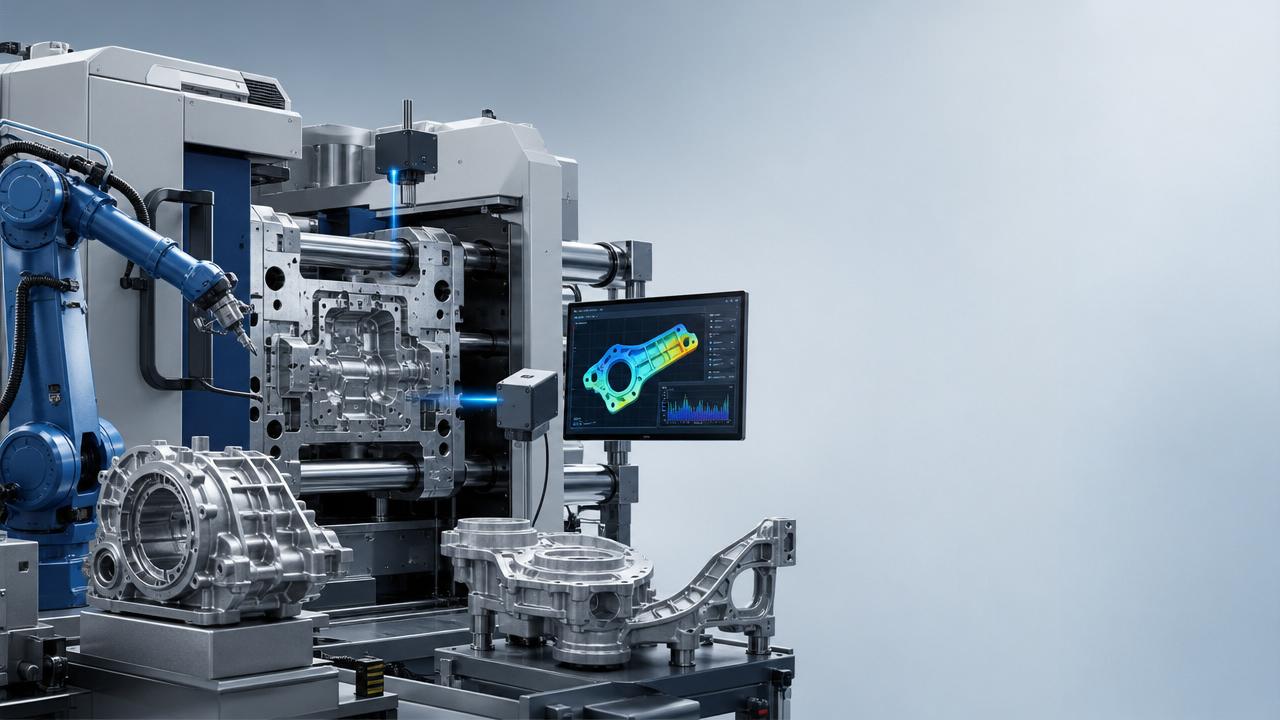
From AI-assisted process control to lightweight alloy innovation and real-time quality monitoring, technological trends are redefining die casting at every production stage. For technical evaluation in the broader industrial sector, these changes affect tooling life, dimensional stability, scrap rates, energy use, and compliance risk. Understanding which technological trends matter most helps connect process decisions with production economics and long-term manufacturing resilience.
Why a checklist is essential for judging technological trends in die casting
Die casting is no longer shaped by one variable alone. Alloy selection, machine control, thermal balance, mold design, sensor feedback, and downstream finishing now interact in real time.
A checklist approach prevents trend watching from becoming vague. It turns broad technological trends into measurable review points tied to quality, throughput, maintenance, and market readiness.
This matters across hardware, electrical housings, automotive subcomponents, appliance frames, and precision mold applications, where die casting decisions influence assembly performance and field reliability.
Core checklist: technological trends reshaping die casting
Use the following checklist to assess whether current die casting operations align with the most important technological trends in production and tooling strategy.
- Adopt AI-assisted parameter control to stabilize shot speed, pressure curves, and fill timing, reducing variation caused by operator adjustment and changing thermal conditions.
- Evaluate smart sensors that track cavity pressure, melt temperature, die temperature, and cooling response, then connect those signals to alarms and corrective actions.
- Prioritize lightweight alloys and advanced material formulations that support thinner walls, improved strength-to-weight ratio, and better compatibility with electrified products.
- Upgrade mold design using simulation tools that predict turbulence, porosity, air entrapment, and thermal imbalance before steel is cut or inserts are revised.
- Check vacuum-assisted die casting capability where structural integrity matters, because lower gas entrapment can improve pressure tightness and downstream machining confidence.
- Review conformal cooling, localized thermal control, and die surface engineering to extend die life while improving cycle time and dimensional repeatability.
- Integrate automated trimming, deburring, extraction, and robotic handling to reduce manual inconsistency and protect castings with tight cosmetic or dimensional requirements.
- Deploy real-time quality monitoring with SPC, machine vision, and traceability systems so defects can be isolated by cavity, shot history, or batch conditions.
- Measure energy efficiency at machine, furnace, and auxiliary levels, since sustainable die casting increasingly depends on lower melt loss and smarter power management.
- Confirm digital connectivity between casting machines, tooling records, maintenance logs, and ERP or MES systems to support faster root-cause analysis.
- Assess secondary process compatibility, including machining, coating, thread forming, leak testing, and assembly, because technological trends must improve the total process chain.
- Track compliance-related trends such as recyclability, material transparency, emissions control, and documentation quality for cross-border industrial supply requirements.
Key trend areas explained in practical terms
AI and closed-loop process control
Among all technological trends, AI-enabled control is one of the most transformative. It shifts die casting from reactive correction to predictive adjustment.
Instead of relying only on fixed recipes, advanced systems compare live process data with acceptable windows. They then refine injection profiles, thermal balance, or hold pressure behavior.
This is especially valuable for complex parts where a small drift in melt temperature or die temperature can trigger porosity, flash, or unstable fill.
Lightweight alloys and new material strategies
Another major force in technological trends is material innovation. Aluminum and magnesium systems continue to evolve to support thinner sections and lighter assemblies.
This trend is not limited to transport applications. Electrical enclosures, heat-dissipating housings, portable equipment structures, and precision hardware all benefit from better material efficiency.
However, alloy upgrades require matching changes in die lubrication, gate design, cooling layout, and post-cast machining strategy.
Simulation-led tooling development
Tooling simulation is now central to die casting competitiveness. It reduces trial-and-error work and identifies defect mechanisms before production launch.
Flow analysis, solidification modeling, and thermal mapping help refine runner geometry, overflow placement, venting logic, and insert protection.
For the industrial tooling ecosystem, this means faster mold validation, fewer engineering changes, and clearer communication across design and production stages.
How technological trends apply in different die casting scenarios
Precision housings and electrical enclosures
For housings that require dimensional stability and EMI-related design consistency, technological trends in thermal control and real-time quality monitoring are critical.
Small distortions can affect sealing, connector alignment, or downstream assembly. Smart monitoring reduces hidden drift before large batches move into machining or coating.
Structural or pressure-tight components
Where internal soundness matters, vacuum systems, cleaner melt handling, and simulation-based gating become the most relevant technological trends.
These controls help reduce trapped gas and shrinkage-related defects, improving confidence in leak performance and mechanical reliability.
High-volume commodity hardware
In fast-cycle production, the strongest technological trends are automation, predictive maintenance, and energy efficiency. Margins depend on uptime and repeatability.
Even minor gains in cycle time, scrap reduction, or die maintenance intervals can materially improve annual output economics.
Commonly overlooked risks when following technological trends
One common mistake is treating new software as a complete solution. If sensors are poorly placed or calibration is weak, digital outputs can mislead process decisions.
Another overlooked issue is mismatch between alloy innovation and tooling readiness. A new material may increase soldering tendency, thermal fatigue, or machining difficulty.
A third risk is isolated automation. Robotic handling improves consistency, but only when linked with die condition, lubrication timing, and trim quality control.
Documentation gaps also matter. As technological trends move toward traceability and greener manufacturing, weak data records can limit customer acceptance or compliance confidence.
Practical execution steps for evaluating die casting upgrades
- Map the defect pattern first, then connect each defect to relevant technological trends such as thermal control, vacuum support, or AI parameter tuning.
- Baseline current performance using scrap rate, cycle time, die maintenance frequency, leak failure rate, and dimensional capability.
- Pilot one high-impact improvement at a controlled scale, rather than changing alloy, tooling, automation, and inspection systems at once.
- Verify gains across the full production chain, including machining yield, coating adhesion, assembly fit, and final field performance.
- Build a data feedback loop linking machine records, mold history, quality events, and maintenance actions for continuous optimization.
Conclusion and next action
The technological trends reshaping die casting are not isolated innovations. They form an interconnected system covering materials, molds, machines, data, automation, and compliance.
A disciplined checklist helps turn these technological trends into actionable evaluation criteria. It also clarifies which upgrades improve part quality, which reduce cost, and which strengthen long-term competitiveness.
The most effective next step is to review one active die casting program against the checklist above, identify the weakest control point, and prioritize a measurable improvement plan.
For industrial intelligence platforms focused on precision tooling and component manufacturing, tracking technological trends this way supports smarter decisions from mold development to market delivery.
Related News