
What matters most in mold design for die-casting

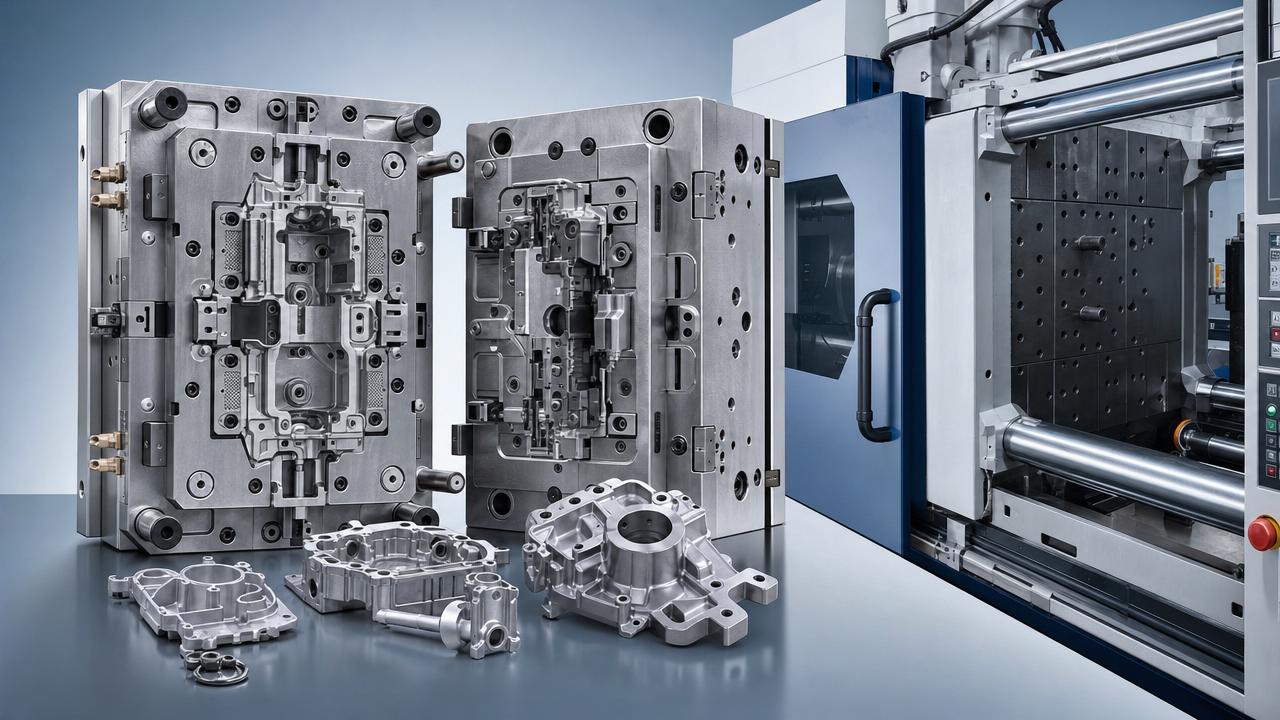
What matters most in mold design for die-casting is changing with production demands
In high-pressure manufacturing, mold design for die-casting directly affects part quality, cycle time, tool life, and daily operating stability.
It is no longer enough to focus only on shape accuracy.
Today, thermal balance, venting, gate layout, and maintenance access shape real production results.
As casting programs become faster and more complex, mold design for die-casting must support consistency, not just initial feasibility.
This shift matters across the broader industrial chain, from tooling strategy to downstream assembly reliability.
For sectors tracked by GHTN, the best die-casting tools are designed around repeatability, service life, and process control.
The strongest trend signal is the move from “fillable molds” to “stable molds”
A mold that fills once is not enough for current industrial expectations.
Programs now demand lower scrap, tighter tolerances, and fewer unplanned stops.
That is why mold design for die-casting is increasingly judged by how it performs over thousands of cycles.
The design must resist soldering, heat checking, flash growth, porosity, and dimensional drift.
This trend also reflects wider manufacturing pressure.
More lightweight parts, thinner walls, and stricter leak standards leave less room for design weakness.
As a result, mold design for die-casting has become a strategic issue, not only a tooling detail.
The key drivers behind better mold design for die-casting are practical and measurable
Several forces are pushing die-casting mold design toward higher precision and smarter decisions.
These drivers show why mold design for die-casting now requires stronger integration between part design, tooling layout, and process targets.
The design factors that most often decide real die-casting performance
Flow path and gate geometry decide whether filling stays controlled
Metal must enter fast, but not chaotically.
Poor gate thickness, wrong location, or uneven runner distribution can trap air and create turbulence.
Good mold design for die-casting uses gate geometry to guide metal toward critical zones first.
It also considers trimming convenience and gate removal marks.
Venting and overflow design often separate stable tools from problem tools
Air evacuation is one of the most underestimated parts of die design.
If gas cannot escape quickly, porosity, cold shuts, and burns become more likely.
Strong mold design for die-casting places vents at true last-fill areas, not assumed ones.
Overflow wells should capture cold metal and contamination without wasting excessive material.
Thermal management is central to dimensional consistency and tool life
Uneven die temperature causes distortion, sticking, and local wear.
Cooling lines must support repeatable heat removal around thick sections, cores, and hot spots.
In advanced mold design for die-casting, thermal mapping is used early to prevent unstable cycle behavior.
This improves both casting quality and lubricant efficiency.
Ejection and part release must protect both surface quality and productivity
A part that sticks can stop a line or damage a cavity.
Draft angles, surface finish, ejector distribution, and core movement must work together.
Reliable mold design for die-casting avoids concentrated ejection forces that leave marks or distort thin walls.
Steel selection and insert strategy shape long-term economics
Not every area of the die faces the same stress.
Critical zones may need premium hot-work steel, surface treatment, or replaceable inserts.
This approach in mold design for die-casting reduces downtime and makes maintenance more predictable.
These design choices affect more than the mold itself
Tooling decisions influence several connected business results across industrial production.
- Part quality improves when flow, venting, and cooling are balanced.
- Cycle stability improves when thermal conditions remain consistent.
- Secondary machining becomes easier when porosity and distortion are reduced.
- Maintenance planning becomes clearer when inserts are modular.
- Overall equipment effectiveness rises when sticking and flashing are minimized.
For industrial networks such as GHTN, this is why mold design for die-casting connects upstream material choices with downstream assembly performance.
A weak die can create hidden costs far beyond the casting cell.
The most important checkpoints deserve attention before steel is cut
Many recurring defects begin with decisions made too early to notice and too late to change cheaply.
Before finalizing mold design for die-casting, these checkpoints should be reviewed carefully.
- Confirm the real critical surfaces, sealing zones, and machining allowances.
- Map likely last-fill regions using simulation and practical casting logic.
- Check whether cooling channels truly reach heat-intensive areas.
- Evaluate draft and ejection for thin ribs, deep pockets, and cosmetic faces.
- Plan insert replacement paths for wear-prone areas.
- Leave enough maintenance access for vents, cores, and water circuits.
- Align die layout with machine size, clamping force, and shot profile.
A practical response is to judge mold design for die-casting by risk, not only geometry
A modern review process should ask where failure is most likely over time.
This risk-based method makes mold design for die-casting more resilient in actual production.
The next step is to connect design intent with production evidence
The best tooling decisions come from combining simulation, shop-floor feedback, and maintenance records.
When recurring defects are traced back to gate wear, hot spots, or poor vent access, future designs improve faster.
That feedback loop is now essential in mold design for die-casting.
For industrial decision-making, the goal is simple: design molds that fill cleanly, cool evenly, release reliably, and remain serviceable over long runs.
GHTN continues tracking the technical signals shaping precision tooling, helping the industry link precision, performance, and long-term competitiveness.
If mold design for die-casting is under review, start with defect history, thermal behavior, and maintenance pain points.
Those three areas usually reveal what matters most, and where the next gains can be made.