
Why the global value chain is shifting in die casting

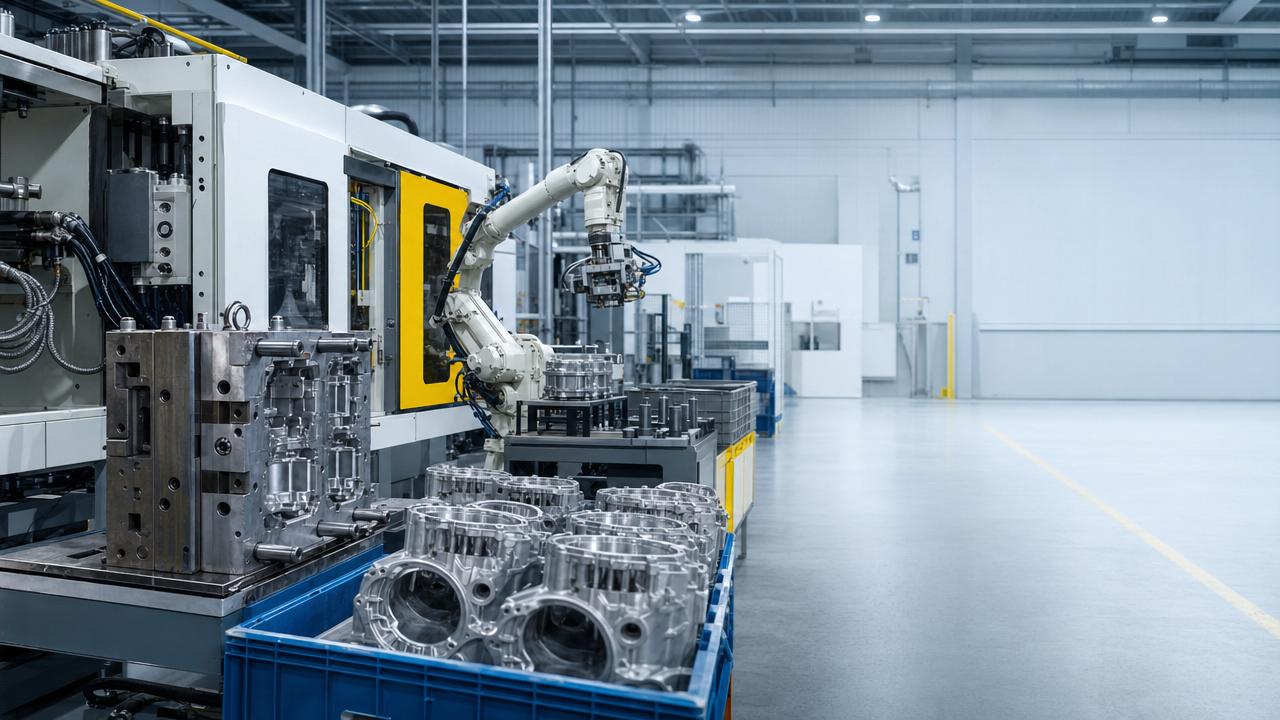
The global value chain in die casting is being reshaped by cost pressures, regionalization, stricter compliance, and the push for higher-precision manufacturing. For business evaluators, understanding where value is moving—from tooling expertise and material innovation to supplier resilience and market access—is essential for smarter sourcing and investment decisions. This article explores the forces behind the shift and what they mean for competitive positioning in industrial manufacturing.
For OEM sourcing teams, component buyers, and investment reviewers, die casting is no longer a simple low-cost production category. It now sits at the intersection of tooling capability, alloy performance, automation maturity, logistics risk, and regulatory readiness. In many programs, the difference between a viable supplier and a risky one appears not in quoted unit price, but in scrap rate, mold life, process control, and response speed across a 12–24 month product cycle.
This shift matters across the broader industrial ecosystem covered by GHTN, where molds, fasteners, electrical interfaces, and precision tools all depend on stable upstream manufacturing logic. In die casting, value is increasingly captured by suppliers that can combine micron-level tooling discipline, consistent metallurgical control, and resilient regional delivery networks.
Why the global value chain in die casting is moving
For years, the global value chain in die casting favored scale, labor arbitrage, and export efficiency. That model still matters, but it is being rebalanced by four forces: cost volatility, regionalization, compliance expansion, and precision requirements. Each one shifts value away from commodity capacity and toward control-intensive capability.
1. Cost pressure is exposing hidden production economics
Business evaluators often compare suppliers on quoted piece price, but die casting economics depend on at least 6 variables: alloy input cost, energy consumption, tooling amortization, cycle time, scrap rate, and secondary machining. A supplier that is 5% cheaper on quotation can become 8%–12% more expensive when trimming loss, porosity rework, and delayed PPAP support are included.
In high-volume aluminum die casting, cycle-time differences of 3–8 seconds can materially affect output over a 10,000–50,000 unit order window. Likewise, mold life variation between 60,000 and 120,000 shots changes total program cost far more than small differences in labor rates. This is one reason the global value chain is shifting toward suppliers with stronger process engineering, not simply cheaper capacity.
2. Regionalization is changing sourcing logic
Many industrial buyers are redesigning sourcing footprints into “China plus one,” “Asia plus local,” or dual-region supply models. In die casting, this affects not only where castings are made, but where molds are built, qualified, serviced, and repaired. A mold transfer delay of 2–4 weeks can interrupt an entire launch schedule.
Nearshoring and regional assembly growth are increasing the value of suppliers that can support shorter transit windows, faster engineering feedback, and localized inventory buffers. For business evaluation, this means the global value chain should be reviewed as a network, not a single-factory transaction.
3. Compliance has become a value driver, not an afterthought
Environmental, material, and traceability expectations have tightened across automotive, electrical, and industrial equipment sectors. Requirements linked to RoHS, REACH, conflict minerals review, and customer-specific quality documentation now affect bid eligibility. Suppliers that cannot provide material traceability, lot history, and process records within 24–72 hours create downstream commercial risk.
This is especially important when die cast parts interface with electrical housings, pneumatic systems, or safety-relevant assemblies. In those applications, compliance capability is part of the value chain itself because it influences market access, warranty exposure, and approval lead times.
4. Higher precision is redistributing margins
As products become lighter, more compact, and more integrated, die casting tolerances and surface demands are tightening. In many industrial applications, dimensional control within ±0.05 mm to ±0.15 mm in key features is increasingly expected after secondary operations. Thin-wall structures, heat dissipation demands, and cosmetic standards also raise tooling complexity.
That shifts value to mold designers, simulation capability, venting strategy, thermal management, and post-casting machining coordination. In other words, the global value chain is moving upstream toward engineering-intensive activities, not just downstream production volume.
The table below shows how value capture is changing across the die casting chain and where evaluators should focus their attention during supplier review.
The key takeaway is that value is moving from visible cost to controllable risk. For evaluators, the strongest die casting suppliers are those that reduce uncertainty across tooling, production, quality, and delivery at the same time.
What business evaluators should measure now
Because the global value chain in die casting is shifting, evaluation criteria must also change. A sourcing scorecard based only on price, annual capacity, and sample approval is no longer sufficient. A more useful framework includes at least 5 dimensions: process capability, tooling depth, supply continuity, compliance readiness, and commercial flexibility.
Process capability and defect control
Ask how suppliers control porosity, flash, shrinkage, and dimensional drift over multiple production runs. A robust supplier should define critical process windows for melt temperature, injection speed, die temperature, and shot consistency. Even if exact values vary by alloy and part design, the existence of controlled operating bands is essential.
For many industrial programs, practical review points include first-pass yield, scrap trend by cavity, Cpk on critical dimensions, and response time for corrective action. If a supplier needs more than 7 days to return a structured root-cause report, program risk increases significantly.
Tooling capability and mold governance
In die casting, tooling is often where the global value chain creates or destroys margin. Business evaluators should examine tool design review depth, preventive maintenance intervals, spare insert strategy, and mold ownership terms. A low initial tool quote can become expensive if repairs require 10–14 days and engineering changes trigger repeated downtime.
For higher-complexity housings and structural parts, it is useful to check whether the supplier coordinates die design with downstream trimming, CNC finishing, leak testing, or surface treatment. Fragmented tooling governance often leads to tolerance stack-up and schedule loss.
Supply continuity and regional resilience
The global value chain is increasingly judged by resilience. Evaluators should review the supplier’s backup plan for alloy sourcing, machine uptime, power interruption, subcontract processing, and cross-border shipping. One practical benchmark is whether the supplier can sustain 2–6 weeks of critical material planning and maintain alternative logistics routes during disruption.
Suppliers that can support dual-shift operations, buffer stock, or regional warehousing may not always offer the lowest piece price, but they often lower the total cost of interruption. For industrial customers with line-stop exposure, that distinction is commercially meaningful.
Commercial flexibility and market access
Another sign that the global value chain is shifting is the growing importance of commercial adaptability. Buyers should assess MOQ flexibility, engineering change support, launch-phase ramp planning, and documentation readiness for export or regulated sectors. A supplier that can handle pilot lots of 500–2,000 units before scaling to 20,000+ often supports faster market entry.
This is especially relevant for SMEs and niche equipment manufacturers, where order profiles are less stable than in mass automotive programs. Value increasingly belongs to suppliers that can bridge prototype, pilot, and serial stages without losing process consistency.
The following scorecard can help business evaluators compare die casting suppliers using criteria aligned with the current global value chain environment.
Used properly, this scorecard moves sourcing discussion beyond headline price. It helps evaluators identify where true value sits in the die casting chain: in stability, engineering depth, and execution discipline.
How the shift affects sourcing, investment, and supplier strategy
The changing global value chain is not just a manufacturing story. It directly affects sourcing models, capex decisions, supplier development, and market entry timing. For companies buying cast housings, brackets, heat sinks, covers, or tooling-linked subcomponents, strategy now requires a more layered review.
Sourcing implications for OEMs and distributors
Procurement teams should segment parts by risk, not only by spend. A simple 3-tier model often works well: low-risk commodity castings, medium-risk precision castings, and high-risk application-critical castings. Each tier should have different approval depth, stock policy, and supplier redundancy requirements.
- Low-risk parts: focus on cost competitiveness and stable lead times of 3–5 weeks.
- Medium-risk parts: review tooling maintenance, process control, and secondary machining coordination.
- High-risk parts: require deeper audit coverage, traceability review, and contingency sourcing plans.
This approach fits the current global value chain because not all castings deserve the same governance. Targeted evaluation reduces unnecessary audit cost while protecting launch-critical programs.
Investment implications for manufacturing stakeholders
For investors or strategic reviewers, attractive die casting suppliers increasingly share several traits: stronger toolroom integration, better automation discipline, faster engineering response, and customer mix diversity across 2–4 end markets. These signals often matter more than simple tonnage growth.
Investment quality improves when a supplier can demonstrate repeatable value capture in design-for-manufacture support, not just machine utilization. In a shifting global value chain, upstream technical influence frequently produces more durable margins than pure output expansion.
Common misread by evaluators
A frequent mistake is assuming that regional expansion alone guarantees resilience. In practice, adding a second geography without harmonized tooling records, material standards, and quality methods can create duplication risk. A two-site model only works when process knowledge transfers reliably within 30–60 days and documentation is kept current.
Supplier strategy in the new value chain
Suppliers that want stronger positioning should invest in three capabilities. First, tighter process visibility through real-time monitoring or disciplined manual recording. Second, better tooling lifecycle management, including planned maintenance and revision control. Third, stronger customer-facing engineering support during RFQ, sample approval, and change management.
- Shorten quotation-to-feasibility review cycles to 3–5 business days where possible.
- Build clearer mold maintenance schedules based on shot count and defect trend.
- Standardize traceability records for alloy lot, cavity history, and secondary process routing.
- Create regional service communication paths for customers in different time zones.
These changes help suppliers participate in higher-value portions of the global value chain, where customers pay for reliability, speed, and engineering confidence rather than for raw output alone.
Practical questions to ask before selecting a die casting partner
A strong evaluation process should test whether the supplier can support both current volume and future complexity. The questions below are useful for RFQ review, onsite audit preparation, or strategic sourcing comparison.
Technical and operational questions
- What is the expected mold life range for this part family, and what maintenance interval is recommended?
- Which defects are most likely for this geometry, and what controls are used to manage them?
- How are dimensional changes monitored across the first 3 production lots?
- What secondary processes are performed in-house versus outsourced, and how is tolerance continuity maintained?
Commercial and supply chain questions
- What is the standard lead time for tooling, T1 samples, pilot lots, and serial release?
- Can the supplier support MOQ flexibility during the first 6 months of ramp-up?
- What backup plan exists for alloy disruption, machine downtime, or freight delay?
- How quickly can engineering changes be assessed and quoted?
Documentation and market access questions
Ask for sample records rather than verbal assurance. Useful items include material declarations, inspection plans, process flow charts, control plans, and corrective action examples. In today’s global value chain, documentation maturity is often a proxy for execution maturity.
For business evaluators, the goal is not to create paperwork for its own sake. It is to confirm whether the supplier can scale from quotation to stable delivery without losing transparency, speed, or quality control.
The global value chain in die casting is shifting toward suppliers and buyers that understand value as a combination of tooling intelligence, process stability, regional resilience, and compliance readiness. For business evaluation teams, the most important move is to stop treating die casting as a pure cost category and start assessing it as a strategic manufacturing capability with measurable risk and margin implications.
GHTN helps industrial decision-makers interpret these shifts with a component-level view of molds, precision tools, hardware, and production systems. If you need deeper sourcing insight, supplier comparison support, or a tailored perspective on die casting and adjacent industrial components, contact us today to explore more practical solutions.
Related News