
How manufacturing technology is cutting mold lead times

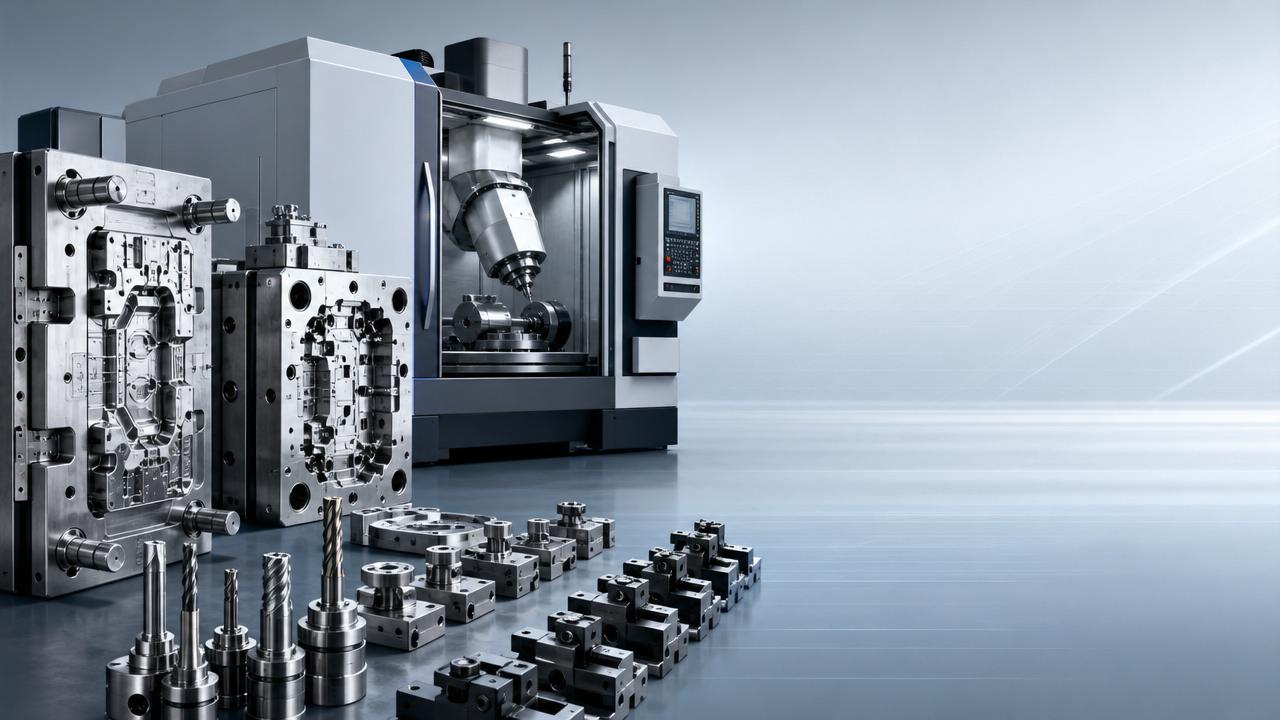
For project managers under pressure to launch faster, manufacturing technology is becoming the key to shorter mold lead times and fewer costly delays. From digital design validation to automated machining and smarter process control, today’s tooling workflows are evolving rapidly. Understanding where these gains come from helps engineering leaders make better sourcing, scheduling, and investment decisions in competitive manufacturing environments.
In practical terms, mold lead time is no longer reduced by working harder alone. It is reduced by removing avoidable rework, compressing decision cycles, improving machining efficiency, and controlling variation across design, tooling, and qualification stages.
For engineering and project leaders, the main question is not whether manufacturing technology matters. It is which technologies create measurable schedule gains, where the risks remain, and how to judge whether a supplier can truly deliver faster tooling.
Why mold lead time is still a project bottleneck
Mold lead time affects far more than tool delivery dates. It influences pilot runs, validation windows, customer approvals, and the timing of production ramp-up. When mold schedules slip, downstream milestones often collapse together.
Many delays are not caused by one dramatic failure. They come from accumulated friction: design ambiguity, late engineering changes, manual quoting, machine scheduling conflicts, electrode bottlenecks, trial failures, and slow feedback between stakeholders.
For project managers, this means that cutting lead time requires a systems view. The biggest gains usually come from technologies that improve workflow continuity, not just technologies that make one machine cut faster.
This is why manufacturing technology has become central to competitive mold programs. It helps teams identify problems earlier, make decisions with better data, and reduce the hidden idle time between one process step and the next.
Where manufacturing technology delivers the biggest time savings
The strongest lead time reductions usually appear in four areas: digital design validation, process automation, advanced machining, and production visibility. Together, these improvements reduce uncertainty before steel is cut and accelerate execution after work begins.
Digital validation tools help teams detect parting issues, undercuts, cooling conflicts, draft errors, and filling risks before they become shop-floor problems. Catching these issues early is often the fastest way to save weeks later.
Automation matters because many tooling delays happen between operations. Automated data transfer, CNC programming workflows, electrode preparation, and machine monitoring reduce waiting time that often remains invisible in traditional schedules.
Advanced machining technologies shorten cycle times while improving repeatability. High-speed milling, five-axis machining, hard milling, and optimized toolpath software can reduce manual finishing and compress critical-path manufacturing stages.
Visibility tools also matter more than many buyers assume. Real-time job tracking, digital dashboards, and integrated workflow systems help project leaders understand whether a tool is truly on track instead of relying on optimistic verbal updates.
How digital design and simulation reduce rework before tooling starts
One of the most valuable uses of manufacturing technology is preventing costly tool corrections. In mold manufacturing, every issue discovered after machining begins tends to consume more time, cost, and organizational energy than expected.
Modern CAD, CAE, and mold flow simulation tools allow teams to test manufacturability earlier. They can evaluate gate location, shrinkage behavior, weld lines, air traps, cooling layout, warpage tendencies, and cycle-time implications before final release.
For project managers, the benefit is not only technical accuracy. It is decision speed. When design teams, suppliers, and customers can review the same validated model data, approvals happen faster and change requests become more disciplined.
Digital twin approaches are also expanding. While adoption varies by supplier maturity, the principle is powerful: simulate tooling performance, machining sequences, and process risks in a digital environment before physical execution consumes time.
This does not eliminate all surprises. Material behavior, customer revisions, and application-specific tolerances still create risk. But better simulation sharply reduces preventable iterations, which is one of the most reliable ways to cut mold lead times.
How automation compresses the tooling workflow
When buyers hear automation, they often think first about robots. In tooling environments, however, automation also includes CAM integration, automated feature recognition, tool library management, standardized programming templates, and digital work instructions.
These improvements matter because mold shops often lose time in engineering handoffs. If designers, programmers, machinists, and quality teams work in fragmented systems, each transition creates delay, clarification loops, and error potential.
Automated CNC programming can significantly reduce preparation time for standard features and repeat work. Standardized process libraries also help less-experienced programmers produce reliable output without rebuilding machining strategy from scratch every time.
Electrode automation is another meaningful lever in complex molds. Automated design extraction, electrode measurement, and EDM scheduling reduce queue times and improve coordination between milling and discharge machining processes.
Shop-floor automation adds further value through pallet systems, tool changers, lights-out machining, and robotic handling. These systems do not only increase machine utilization. They also stabilize output when labor availability is tight or scheduling changes suddenly.
For project leaders, the key takeaway is simple: automation reduces lead time most when it removes waiting and inconsistency across the entire workflow, not when it is treated as an isolated equipment upgrade.
Why advanced machining technology changes the schedule, not just the cut speed
Project managers sometimes evaluate machining technology too narrowly, focusing on spindle speed or hourly capacity. In reality, the strategic value lies in how advanced machining reduces downstream work and improves schedule confidence.
High-speed machining can shorten roughing and finishing operations, especially for hardened steels and complex cavity geometries. Better surface quality from the machine often means less manual polishing, bench work, and correction later.
Five-axis machining offers additional schedule benefits by reducing setups. Fewer setups mean less fixture preparation, fewer alignment risks, and better access to difficult features. This can be decisive in molds with deep ribs or intricate parting surfaces.
Hard milling also helps in selected cases by replacing some EDM operations or reducing post-heat-treatment processing. When used appropriately, it can simplify the routing and shorten the critical path for inserts and core components.
Cutting software is part of the story too. Smarter toolpath optimization, collision avoidance, and adaptive milling strategies improve machine efficiency while protecting tool life. That creates more predictable execution under tight deadlines.
However, faster equipment alone does not guarantee shorter delivery. The real advantage appears when machining capability is matched with strong process engineering, realistic capacity planning, and effective quality control.
How smarter process control improves first-pass success
Lead time is not only about how quickly a mold is built. It is also about how quickly it passes trial, correction, and approval stages. This is where process control technologies make a major difference.
In-tool sensing, dimensional inspection systems, machine monitoring, and SPC-based quality practices help teams identify variation earlier. The earlier variation is detected, the less likely it is to create major trial delays or repeated adjustment loops.
Measurement integration is especially important for precision molds. CMM data, in-process probing, and digital inspection records allow teams to verify geometry before final assembly, reducing the chance that fit issues emerge too late.
Trial-stage data collection can also accelerate debugging. When mold temperature, pressure behavior, cycle consistency, and part quality data are captured systematically, the root cause of defects becomes easier to isolate and correct.
For engineering leaders, this means a technology-enabled supplier can often offer not just shorter nominal lead times, but shorter time to stable production. That difference matters more than the shipping date of the tool alone.
What project managers should ask suppliers before trusting aggressive lead-time promises
Not every supplier marketing fast turnaround has the operational foundation to support it. Project managers need to test whether claimed manufacturing technology is integrated into daily execution or simply listed in a capability brochure.
Start by asking how design validation is handled before release. Does the supplier use mold flow analysis, DFM review, and formal risk checkpoints? A short lead time without strong front-end validation often leads to correction delays later.
Next, ask where automation is actually deployed. Is programming linked to design data? Are there standardized machining templates? Is machine utilization monitored in real time? Can the supplier run unattended operations on critical jobs?
Then review quality and trial control. How are dimensional checks recorded? How many trial loops are typical for similar tools? What data is captured during sampling? Faster mold completion means little if qualification remains unstable.
Capacity planning is another critical filter. Even a technologically advanced shop can miss deadlines if too many urgent projects compete for the same machines, EDM resources, polishing teams, or assembly specialists.
Finally, ask for evidence from comparable projects. Suppliers should be able to explain how manufacturing technology reduced lead times in molds of similar size, complexity, material, and tolerance profile. Specific examples are more trustworthy than general claims.
How to decide where technology investment or sourcing strategy will pay off
For organizations managing repeated mold programs, the best decision is often not to chase the lowest quoted lead time. It is to identify which technologies reduce total program risk across multiple launches.
If your projects suffer from late design changes and repeated engineering debates, digital validation and collaborative review tools may create the biggest impact. If bottlenecks occur in machining and electrode preparation, workflow automation may matter more.
If tool completion is acceptable but trials are unstable, invest attention in process control, quality integration, and data-based debugging. Lead time should be measured from concept release to production-ready performance, not only from PO to shipment.
A segmented sourcing strategy can also help. Some companies reserve fast-turn prototype or bridge tools for highly digital suppliers, while placing mature, less complex programs with cost-optimized partners that still meet acceptable timing standards.
Internally, project managers should build lead-time reviews around three metrics: engineering release quality, manufacturing execution reliability, and first-pass trial success. These indicators reveal whether schedule compression is truly sustainable.
The strategic takeaway for engineering and project leaders
Manufacturing technology is cutting mold lead times, but the biggest gains do not come from any single machine or software package. They come from linking design validation, automation, machining capability, and process control into one disciplined tooling system.
For project managers, that is the most useful lens. Shorter lead times are usually a result of better information flow, fewer corrections, stronger predictability, and faster problem resolution across the entire mold lifecycle.
This is also why supplier evaluation must go beyond equipment lists. The real question is whether a supplier uses manufacturing technology to reduce friction at every stage, from DFM review to trial approval and production readiness.
In a market where launch windows are tighter and errors are more expensive, mold programs need more than speed. They need controlled speed. The right technology stack makes that possible by improving both schedule and confidence.
For leaders responsible for delivery, budget, and customer commitment, the clearest conclusion is this: manufacturing technology creates the most value when it turns mold building from a reactive craft sequence into a transparent, data-driven project system.
Related News